“I used to be very proactive,” one officer told us. “Now, I act like a fireman. I sit and wait for a call, go take that call, then go back to waiting for the next call. I, and most cops, no longer do ANY proactive policing.”
Milwaukee County Executive David Crowley sued the Milwaukee Police Department, accusing its officers of racism. The ACLU said in a press release that Crowley and five other plaintiffs were “victims” of the Milwaukee police. The lawsuit ended in a $1.9 million payment from the city to pay for litigants’ attorney’s fees and litigation costs.
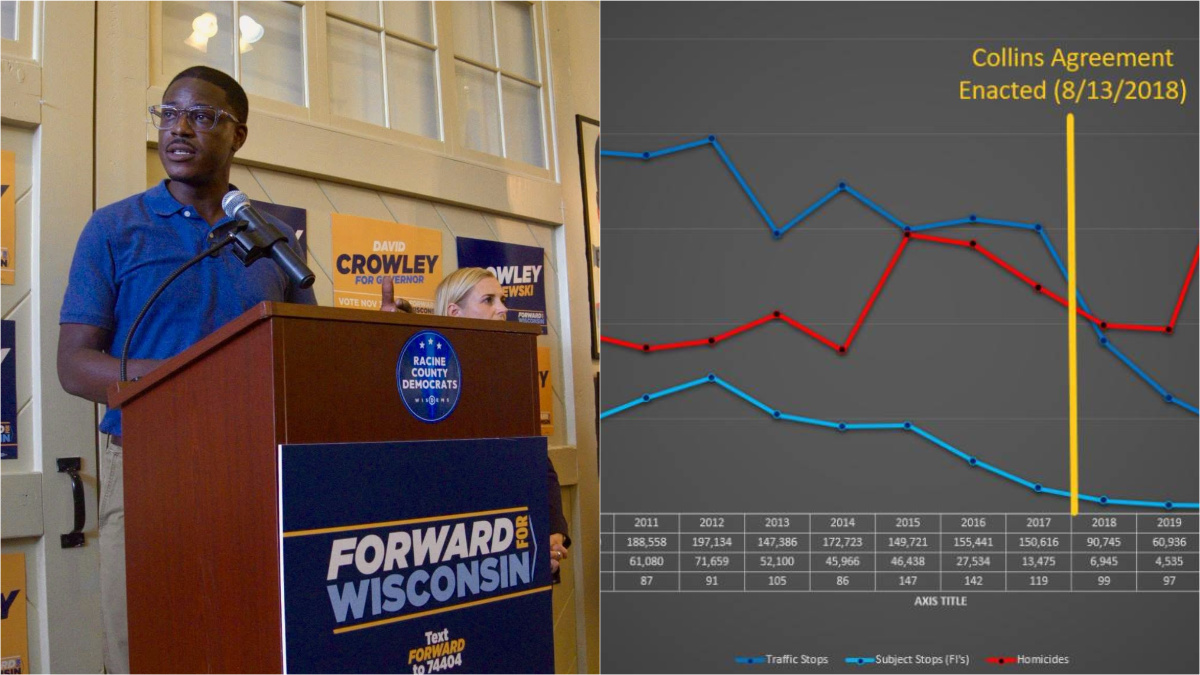
The lawsuit also led to a settlement called the Collins Agreement, which officers say has dramatically handicapped their ability to effectively do proactive policing in Milwaukee, helping cause reckless driving to spike and costing lives. After the Collins Agreement went into place, traffic stops and field interviews plummeted in Milwaukee.
In 2017, the very liberal ACLU announced that Crowley, then a leftist Assembly person, was joining its lawsuit against MPD as a plaintiff. The ACLU lawsuit targeted the MPD “over its police department’s vast stop-and-frisk program.” The lawsuit was called Collins v. City of Milwaukee. The ACLU and Crowley alleged that Milwaukee police officers were subjecting blacks to unconstitutional stops and searches due to their race.

Milwaukee Police Chief Jeffrey Norman, who is also black, called for the Collins Agreement to “absolutely” be “heavily modified” in 2025. Norman agreed that the “cumbersome” requirements of the controversial 2018 ACLU-fueled settlement have harmed proactive policing.
“I absolutely do believe that the Collins agreement should be modified. It should be heavily modified,” Norman said in 2025 during a panel, of the agreement, which a federal court entered into, creating independent monitors and a host of requirements.
The chief said the Collins Agreement carries a “cumbersome, burdensome administrative process that does hurt proactive policing.”
Among other requirements, per the ACLU, officers must “document every stop and every frisk conducted by officers, the reason for the encounter, and related demographic information, regardless of the outcome of the stop.” Sounds like no big deal? Officers told us that, in practice, most just stopped doing the stops because of the laborious requirements.
“The Collin agreement has a number of administrative burdens,” explained Norman. Asked specifically what should be modified, he said traffic stop requirement. “And so to think about these particular type of requirements is a challenge of saying, man, to do this is I’m going to have to be burdened with this particular report at the end of my shift. Amongst all the other reports, there’s cost associated with this. That’s overtime being used. So there’s a lot of things that we can lean into on this particular effort. And I’m not afraid to say it.
The ACLU touts the Collins Agreement on its website, claiming it was sparked by the Police Department’s “vast and unconstitutional stop-and-frisk program” and alleged rampant racial profiling. The city paid the ACLU $3.4 million as a result of its so-called “stop-and-frisk” policy.
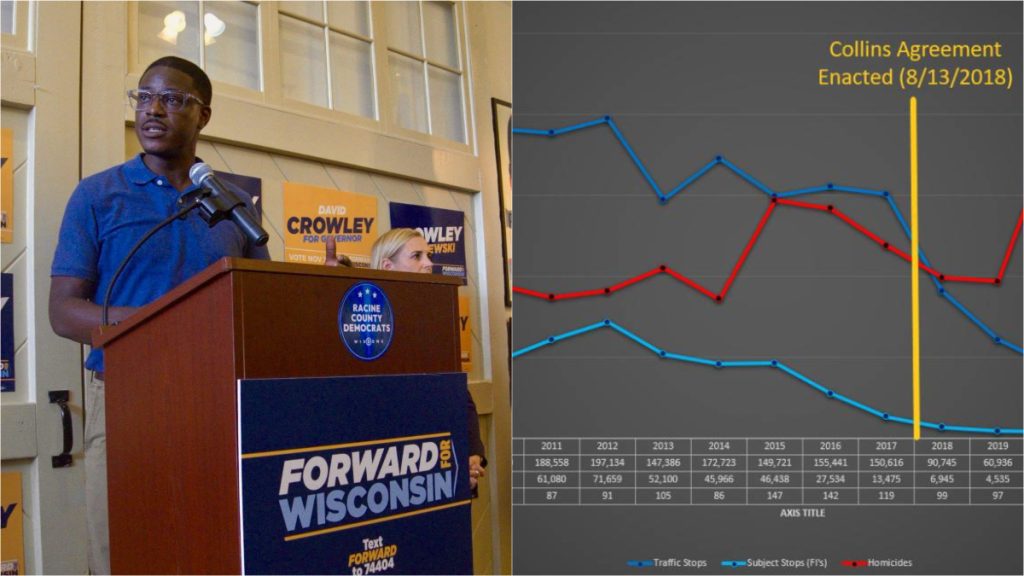
Crowley says on his LinkedIn page that he was “Chair, Vice Chair” of the extremely liberal ACLU of Wisconsin- Milwaukee Chapter from January 2010 to present. The ACLU has been a thorn in the side of police for years. In 2016, he described himself as an “ACLU board member.”
The lawsuit ended in a settlement called the Collins Agreement; we previously wrote about the damaging effects that Agreement had on officers’ ability to do proactive policing. Read our story on the Collins Agreement here.
In 2023, we reported the following:
-
Since the 2017 ACLU lawsuit that resulted in the Collins Agreement against the Milwaukee Police Department, field interviews conducted by Milwaukee police officers have decreased 90%.
-
Since 2012, the year after a Milwaukee Journal Sentinel expose started putting the pressure on by implying police were racist, field interviews, also known as “subject stops,” plummeted a shocking 98%.
-
Field interviews are now so rare that MPD only did 41 of them in December 2022. In 2012, MPD conducted 71,659 field interviews.
-
Traffic stops decreased 79% since the ACLU lawsuit against MPD.
-
Reckless driving has become a crisis. Homicide numbers exploded.
-
Retired and current Milwaukee police officers described a nightmarish scenario of retribution, plummeting morale, and stifling rules that have all but stalled proactive policing in the city.
Officers unloaded in that story, telling us that the Collins Agreement’s laborious reporting requirements for field interviews and traffic stops had made it impossible to do effective, constitutional policing in the city. “Why be the only variable in the broken justice system who cares, only to our own personal detriment? I’m just counting the days to retirement. Then they can pay me to stay away until I die,” a Milwaukee police officer told us.
“The revised complaint adds three named plaintiffs to the lawsuit, one of whom is Representative David Crowley, a state legislator representing Wisconsin’s 17th Assembly District. Like the other named plaintiffs and tens of thousands of other Milwaukeeans of color, Rep. Crowley has been subject to an unconstitutional stop and frisk by the Milwaukee police without reasonable suspicion of criminal activity and based on racial profiling,” the ACLU wrote.
One night while walking in Milwaukee, Crowley said he heard gunshots and was stopped with another man and frisked by police who were responding to the shooting. They asked for his ID. He accused police of behaving unconstitutionally.
The Milwaukee Police Department “conducts far more stops and frisks in neighborhoods that are predominantly Black or Latino than in other parts of the city,” the ACLU wrote. Those are also the neighborhoods with the highest victimization and violent crime rates in the city. The focus on areas with higher disorder and crime follows the Broken Windows theory of law enforcement, which holds that active intervention and cracking down on lower offenses prevents larger crimes from occurring.
Table of Contents