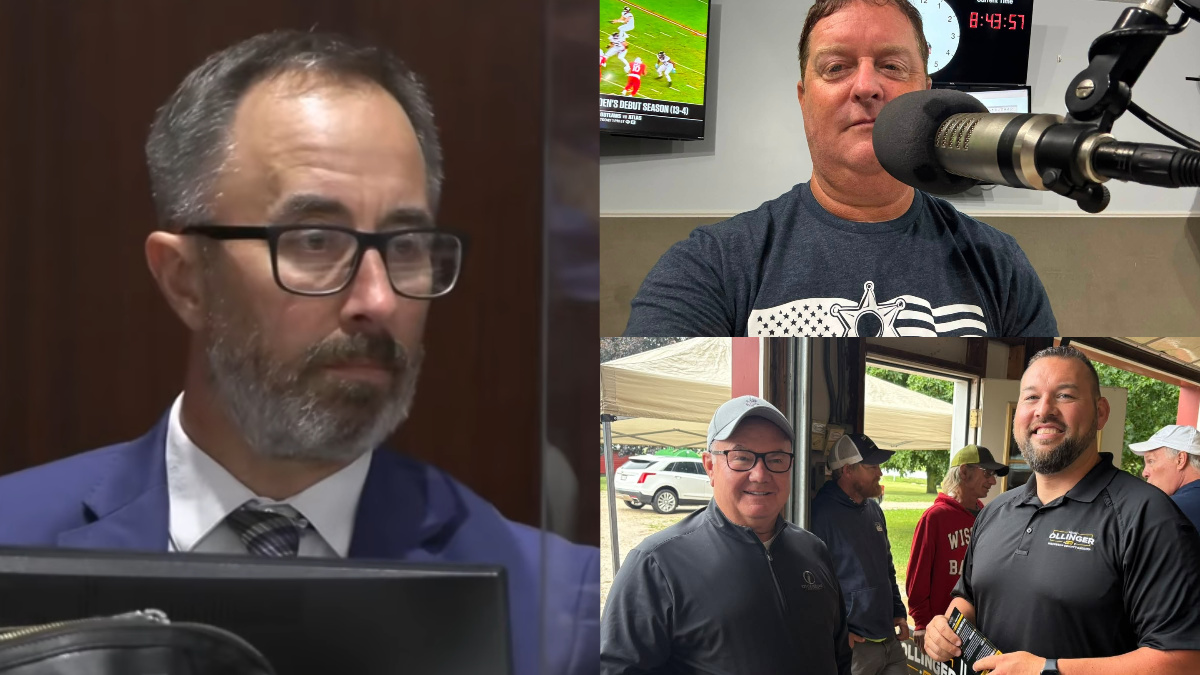
This is part 3 in a multi-part series on the Waukesha County Sheriff’s race. The primary is Aug. 11. Read part 1 here: “Eric Severson Ponders His Legacy as a Primary Rages” and part 2: “Nick Ollinger, John Gscheidmeier Open Up on Themselves-And Eric Severson” and part 3: “John Gscheidmeier, Nick Ollinger Discuss the Issues, From Body Cams to Flock” here.
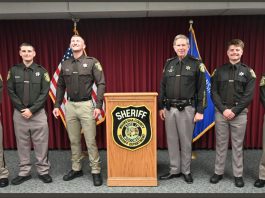
It turns out that deputies not being able to wear baseball caps and black uniforms are key bones of contention in the Waukesha County Sheriff’s primary.
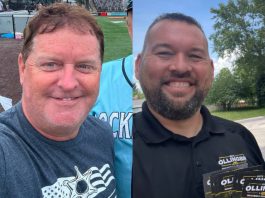
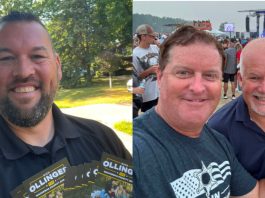
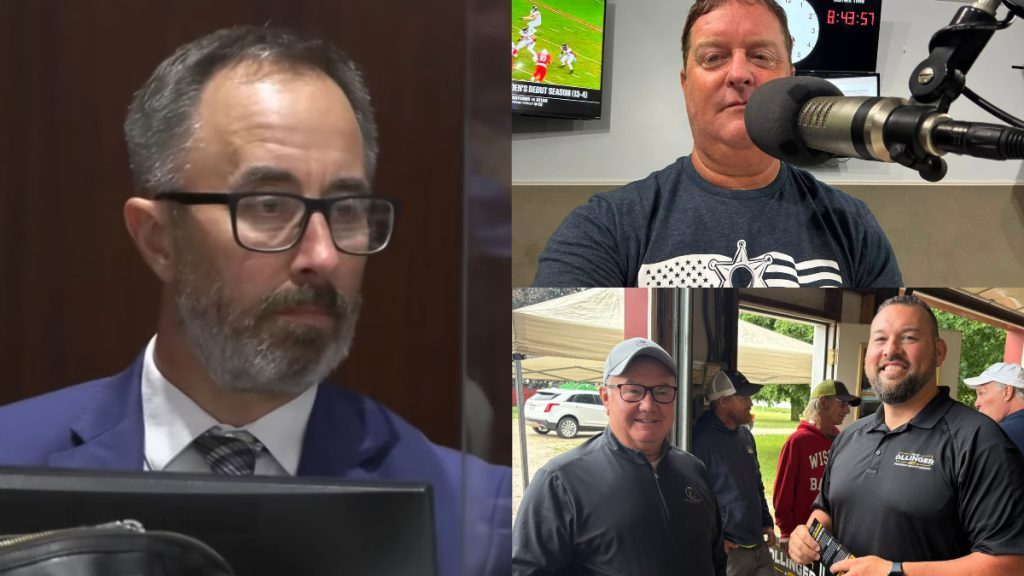
It’s time for the Waukesha County Sheriff’s Deputy Labor Union to have its say. Their endorsement is the biggest plus sign in realtor John Gscheidmeier’s column, and it’s the biggest negative against Capt. Nick Ollinger, the Sheriff Eric Severson-endorsed candidate who runs the detective bureau. The endorsement is oft-cited as the key piece of evidence that the department is in shambles and a supposed cauldron of frustration.
Ollinger counters with a big endorsement of his own: The Waukesha County Chiefs of Police Association. In truth, the prominent endorsements have split. But the deputies union is obviously a big one.
To be sure, the union endorsed someone else first: retired FBI supervisor Danny Day, who suddenly quit the race. The union then voted to do a revote, and Gscheidmeier won.
Just 3 Years Ago, Everything Seemed Fine
Severson points to a 2023 accreditation document by the Wisconsin Law Enforcement Accreditation Group, in which then union Vice President Brian Fredericks, now president, said: “Assessor Ferguson had the opportunity to talk with Detective (Brian) Fredericks, the union vice-president. Det. Fredericks stated that they have a good relationship with Sheriff Severson and the command staff and that any issues can usually be addressed informally,” it says. Fredericks is now the union president.
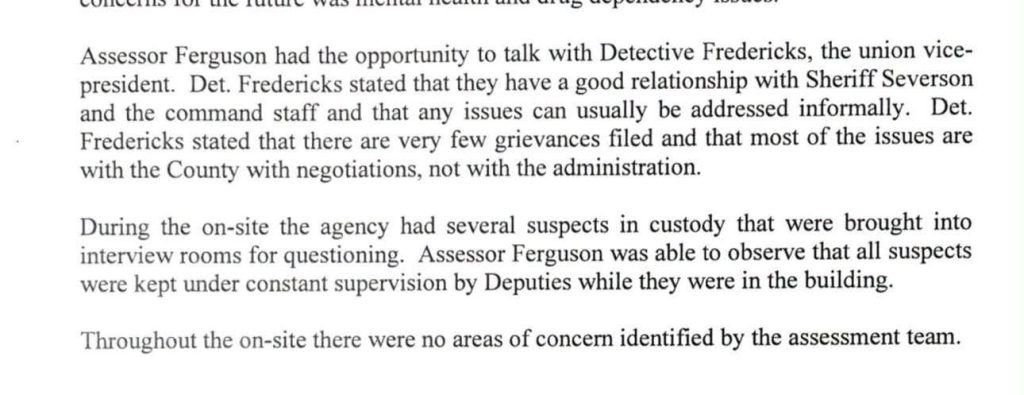
“Det. Brian Fredericks stated that there are very few grievances filed and that most of the issues are with the County with negotiations, not with the administration,” the report says. The assessors concluded that the Sheriff’s Department didn’t need improvement and cited the positive camaraderie.

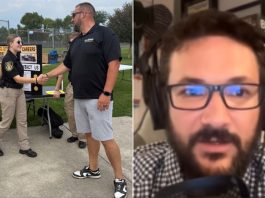
I wrote the union president, Fredericks, and asked why they prefer Gscheidmeier and what concerns they have with Severson. I also asked them why their stance changed since the assessment.
“With regard to your questions about the ‘union’s concerns about Severson,’ the union’s concerns center on him not implementing some of the membership’s input over the years on certain things. We recognize that as the agency’s Chief Executive, he has the final say on matters within his department,” Fredericks wrote.
 “However, the members have been pretty vocal on their desire to have body worn cameras. We’ve been told it’s a financial issue which was only remedied in the past few months. Another example is the patrol deputies have asked repeatedly for years to wear baseball caps. Those requests were disregarded, and then, recently cowboy hats were authorized,” Fredericks said. (Severson says the county board/executive so trimmed down his budget that it didn’t keep up with the costs of inflation and he had to choose between body cams or saving deputy positions, so he chose the latter.)
“I recognize that some may feel the baseball hat issue is “petty” but the vast majority of area departments allow baseball hats and it’s an easy change to make that would help boost morale, much like allowing beards did for our male members,” Fredericks wrote. “We’ve long asked for modern uniforms, dark blue or black but we remain in out-dated brown uniforms. I’m told (I haven’t been in uniform since 2011) that replacing these uniforms due to wear and tear isn’t easy or quick.”
He added: “I will say that this administration has taken steps forward for employee wellness, including improvements to the department gym, mental health services for members and their family and increased Chaplain numbers and presence.”
Fredericks added: “As for the second endorsement vote for John, I think he articulated his plans for the department if elected more clearly than Captain Ollinger did. I’ve heard the concern from members that Captain Ollinger would be ‘more of the same’ since he’s a part of Sheriff Severson’s command staff. I’ve spoken with Captain Ollinger, at length and he has assured me he intends to make changes day 1.”
I also asked what happened with the union’s 2022 “no confidence vote” against Severson since the results were never released. That came in the midst of a heated primary between Severson and a former union president; Severson ended up winning handily.
“You asked about the 2022 ‘no confidence vote.’ I for one was vocally opposed to that vote, and I was not the union president at the time. No confidence votes in my opinion have no teeth, and only serve to unnecessarily strain relationships between management and the union,” he added. “The union has no real relationship with Sheriff Severson as we don’t see or interact with him. The day to day operations are overseen by the Inspector and Deputy Inspector, and that is who the union interacts with. I would point to my above comments for your question as to what changed since the audit.”
Fredericks declined to comment about the accusations between the female deputy and Gscheidmeier over his comments on audio that she filed a complaint years ago accusing him of being “involved with (adult) students,” when he was teaching at MATC, which he denies, although he married a former student. He told a sheriff’s captain that, if elected, he would sit down with the deputy and tell her “this ends today,” although she adamantly denies filing the complaint (she remembers one was filed by someone else.)
“I can say that myself and the vast majority of the membership are anxiously awaiting the end of this election Tuesday night so we can go back to some semblance of normal around the Department. Thanks for reaching out with your questions,” added Fredericks
You can read the candidates’ endorsements here and here.
What Were the Vote Totals?
Initially, the union endorsed Day, who received 64% of the vote (68) to Gscheidmeier’s 25% (26) and Ollinger’s 11% (12).
But then Day suddenly quit the race, and the union shifted its endorsement to Gscheidmeier, a former Glendale police officer who is a county supervisor. Gscheidmeier and Day were running in the same lane, as outsiders railing about departmental problems and Severson. Day has since endorsed Gscheidmeier.
The union took another vote when Day quit. According to the union, Gscheidmeier won the vote 74 to 26 percent.
“John Gscheidmeier is the only candidate in this race with an actual plan. While others offer no platform and no specifics, Gscheidmeier has laud out the Gscheidmeier 5 Pillar Plan, a detailed roadmap for countywide partnerships, professional development, accountability, officer wellness, and modern technology,” the union wrote. “Change is coming to the Sheriff’s Department on day one.” This is clearly Gscheidmeier’s strongest calling card. He has harnessed the intense desire held by a segment of the agency for change, becoming the receptacle of those hopes, much as Day was before. You can download Gscheidmeier’s plan on his website.
However, there’s a catch. Ollinger says that, out of the 170 staff members on the Waukesha County Sheriff’s Department, there are 131 members who voted in the union election; he noted that about 25 people who can’t vote are command staff. “John got 67, and I got 24,” he says. That means Gscheidmeier can’t claim support from even half of the department, although Ollinger can claim even less.
I received an email from a person inside the department, who didn’t want their name printed, but who alerted me to this angle, claiming, “Gscheidmeier does not have the support of the Sheriff’s Department that he thinks he does….He has the support of the new hires who have not interacted with him enough to judge his character.” This employee alleges that “many veteran deputies in all levels of positions have begun looking at different job opportunities,” partly because they fear Gscheidmeier will promote or favor only those who overtly support him.
I asked Fredericks about these numbers, and he responded, “The poll was not sent to 170 members of the department. It was sent to approximately 130 dues paying, union members who are not supervisors. The final vote numbers he cites are accurate.”
When I asked Severson about the union’s endorsement of Gscheidmeier, he said the union has battled the sheriff since Ray Klink, who retired in 1992. It’s true that labor unions often despise law enforcement executives; in Milwaukee, the battles have been heated and ugly at times. Still, the numbers were jarring.
The union’s comments come as the race gets increasingly ugly.
The media have almost entirely withdrawn their reporting troops from Waukesha County as resources and advertising revenue dwindle. The Milwaukee Journal Sentinel used to have about 15 reporters in a Waukesha bureau; today there is no bureau at all. Television used to rip and read the Journal Sentinel reporting; now, they dive in and out. Thus, there has been almost no news coverage of the Sheriff’s primary, save for a few boilerplate stories in the Waukesha Freeman and local television, which just repeat the candidates’ talking points.
Because of the withdrawal of traditional media, the only real conversation is playing out on Facebook, where people hide behind fake identities, tell lies, lack journalistic standards, hide their agendas and backstories, and generally avoid any accountability for it.
Tragedies Strike the Force
One of the most sensitive and contentious claims against Severson revolves around the accusation that he is somehow responsible for the suicides of four deputies. People have put this claim all over social media. He declined to comment out of sensitivity to the families. The Badger Report, which often reports stories that are not favorable to law enforcement, did a big write up on the topic in February.
Gscheidmeier acknowledged that, although this topic has “blown up online and everyone wants to blame the Sheriff’s Department,” he doesn’t think “you can blame” the Sheriff’s Department solely but “it needs to be addressed.”
The publication reported that the deputies had all voluntarily resigned at the time of their tragic deaths, which occurred when they were no longer on the force and over six years. The central claim is that the agency didn’t do enough to address the men’s mental health needs and may have mistreated them through the disciplinary process.
The deaths of these former deputies are clearly horrifically sad; whether that should be laid at the feet of Eric Severson is much less clear, and Nick Ollinger, even less so. I’ve received multiple messages from people who are familiar with the back stories in at least one of these cases, and they allege that the story is far more complex that it’s being painted online, as suicides often are.
The Badger Report alleged that one of the men struggled with opioid addiction and another had recently lost his son. Others dealt with PTSD from incidents on the job. One family said they didn’t blame the Sheriff’s Department at all, one wouldn’t talk to Badger Report, and two families said the men didn’t get enough help from the agency before they resigned. None of the families sued the department, with the most vocal critic telling Badger Report that she missed the deadline (she has been one of the most angry critics of Ollinger and Severson online).
“All of them struggled with trauma, from their jobs, personal lives or both, resulting in mental health issues,” the Badger Report wrote of the four men. “Some family members and other former deputies blame the sheriff’s department leadership for forcing out the deputies when they were struggling rather than helping them get treatment.”
To truly understand what led to the men leaving the department, one would need to do a full review of their personnel files, which seems beyond the purview of this story and perhaps even an insensitive thing to do.
There’s no question that officers have a higher risk of suicide due to their exceptionally grueling jobs (studies bear this out), and agencies need to have support systems to help them with that. The Sheriff’s Department says it has such services and even enhanced them after the deputies died. The story lists some of it: “Consultations with a chaplain, and programs in mental and physical wellness, peer support and employee assistance mental health therapy…post-employment mental health therapy.” The wife of one of the men has told the media that she missed signs that her husband was struggling with mental health, and she ended up disabled.
She’s now on the crusade to blame the Sheriff’s Department for what she says they missed at a time he was no longer on the force. WTMJ-TV reported that this officer was referred for the DA’s Brady List at the time. These points are being made simply to underscore the complexity of these cases.
Severson ticks off a similar list of programs, saying that the department has implemented many programs to support deputies, including an internal peer counseling program and contracted mental health counselor. Ollinger and Gscheidmeier both stressed their desire to boost support systems for deputies.
Stay tuned for story 5.
Table of Contents