
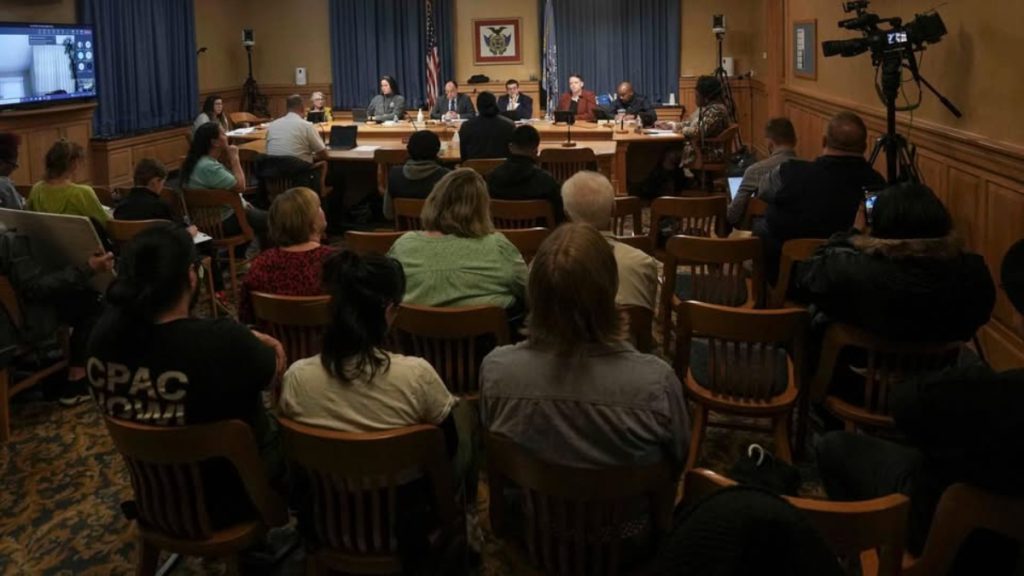
Milwaukee Police Chief Jeffrey Norman has banned the use of facial recognition technology that the department has previously used to solve homicide and sexual assault cases, caving to a small cabal of angry activists who slammed him for hours at a Fire and Police Commission meeting.
That decision, and another limiting police pursuits, ignited concern and disappointment at the Milwaukee Police Association, which says MPD leadership has made decisions “that significantly limit the tools available to Milwaukee police officers: the implementation of new restrictions on vehicle pursuits and the voluntary moratorium on the use and acquisition of facial recognition technology.”
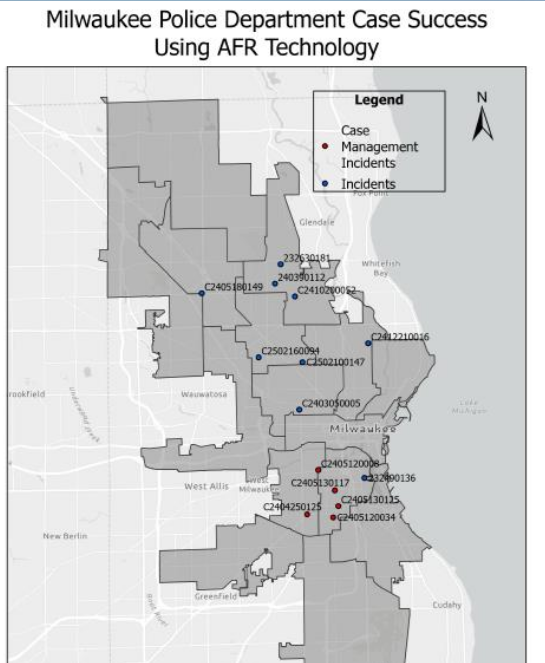
In a PowerPoint presentation last April, obtained by Wisconsin Right Now, the department advocated for the technology, citing homicide and sexual assault cases that were solved as a result; the department has used the technology in the past but had to seek help from other departments to do so. MPD was seeking to purchase its own technology to expand the use of the investigative tool.
“The use of facial recognition software has resulted in successful identifications of suspects for homicides, shootings, robberies, burglaries, and assaults across the country,” MPD said in a presentation last spring. “As a point of reference, in 2019, the New York Police Department (NYPD) received 9,850 requests for comparison and identified 2,510 possible matches across all crime categories.”
Now that’s all screeched to a halt here.
“Both vehicle pursuit authority and modern investigative technology are critical tools that help officers protect the public, solve violent crimes, and safely apprehend dangerous offenders,” MPA President Alex Ayala wrote in a news release. “Removing or restricting these tools does not eliminate crime or danger – it risks shifting that danger onto Milwaukee residents and the officers sworn to protect them.”
Chief Jeffrey Norman Cites the ‘Public Trust’ as Being ‘More Valuable’ Than Solving Violent Crimes
Chief Jeffrey Norman, who has been hammered by angry anti-Israel and anti-police activists at recent meetings, has now banned the technology by putting a “moratorium” on it. That’s even though a department memo also admitted that facial recognition technology helps officers apprehend “violent criminals.”
Activists claimed that people will be afraid to attend protests if MPD has the technology, although the case studies in the MPD presentation focus on homicide and sexual assault cases, and more. In the memo obtained by Channel 12, Norman essentially admitted that public pressure trumped public safety when making the decision.
“Despite our belief that this is useful technology to assist in generating leads for apprehending violent criminals, we recognize that the public trust is far more valuable,” the department memo obtained by WISN 12 News said. The chief has issued a “moratorium” on the technology, WISN confirmed. “MPD will not proceed with the acquisition of any facial recognition software at this time,” the memo read.
How Facial Recognition Technology Solved a Milwaukee Homicide & Sexual Assault Case Before It Was Banned
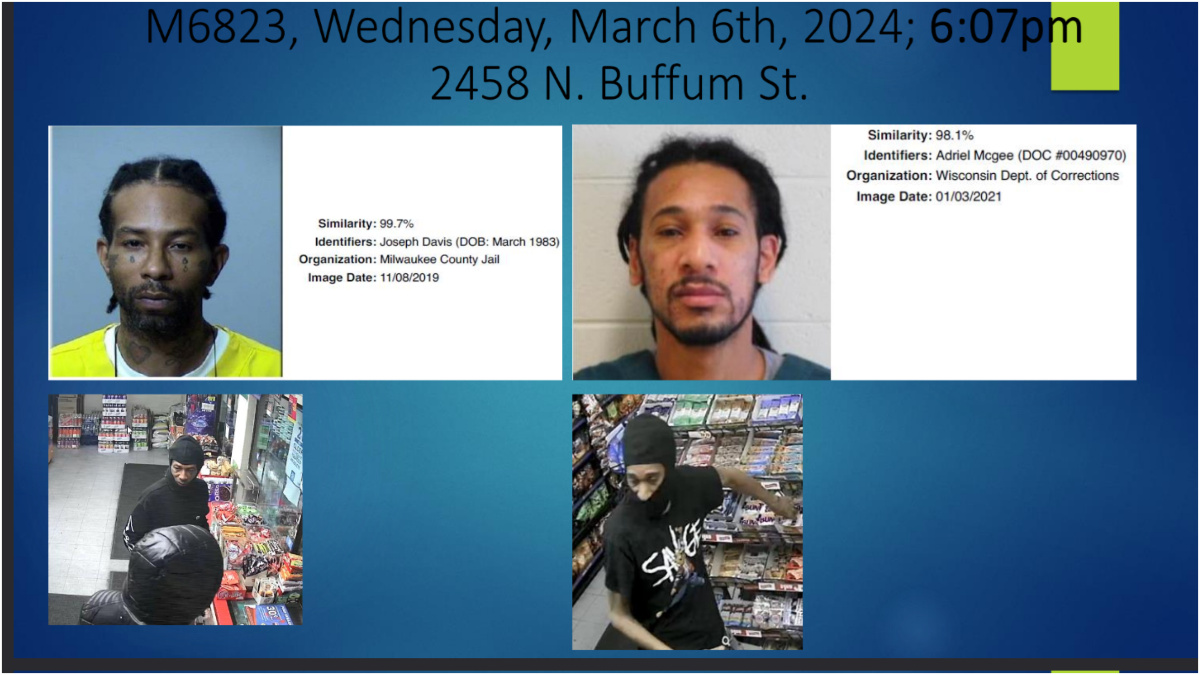
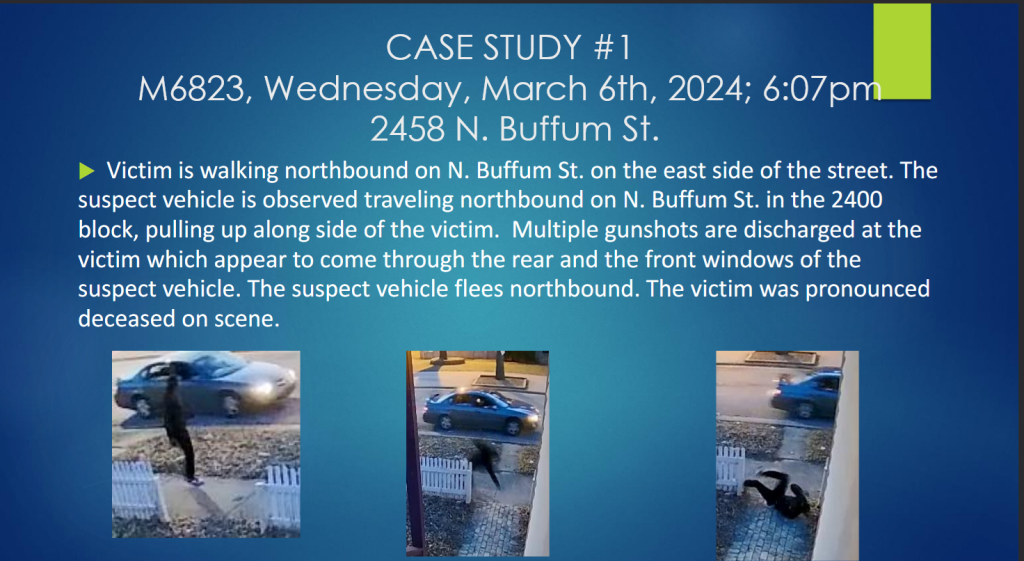
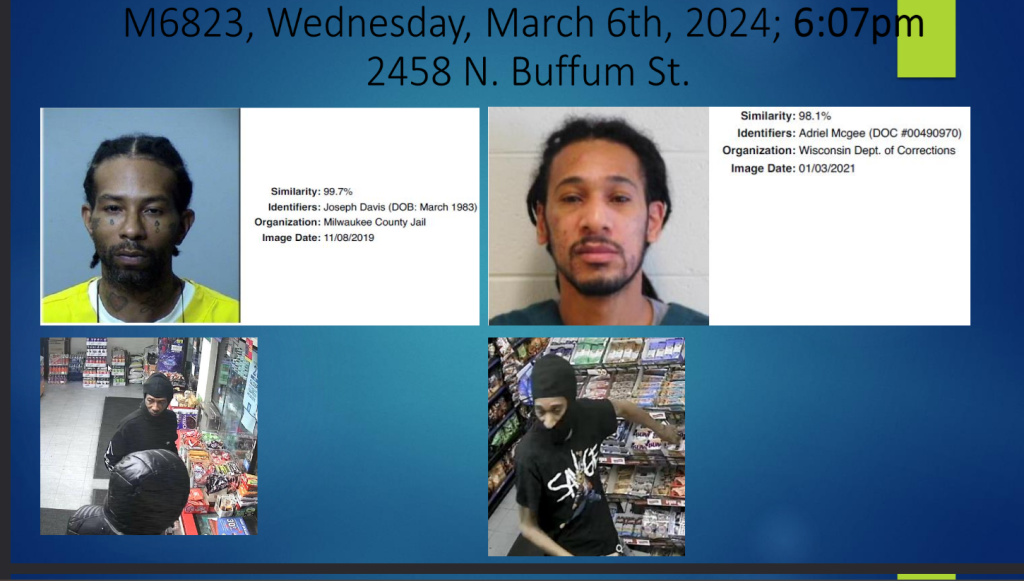
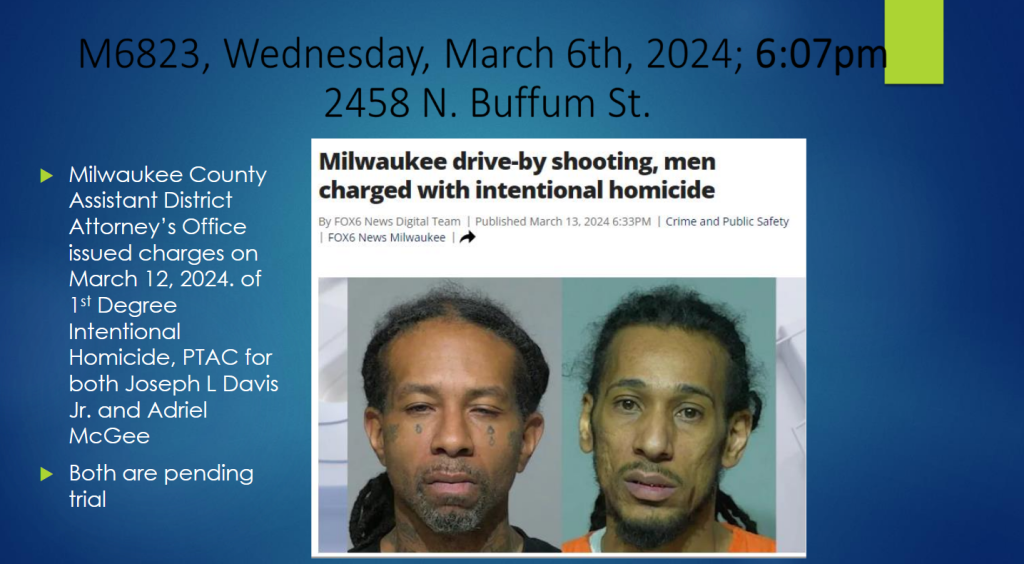
Last April, the department explained how the technology had helped solve past crimes in Milwaukee. In the first case study, surveillance video captured homicide suspects talking to a victim at a gas station six minutes before the victim was shot in a drive-by shooting. The facial recognition technology allowed MPD to get a lead on the identities of the alleged killers and to then confirm their identities through Corrections, tattoos, and confiscation of the murder weapon, the presentation said.

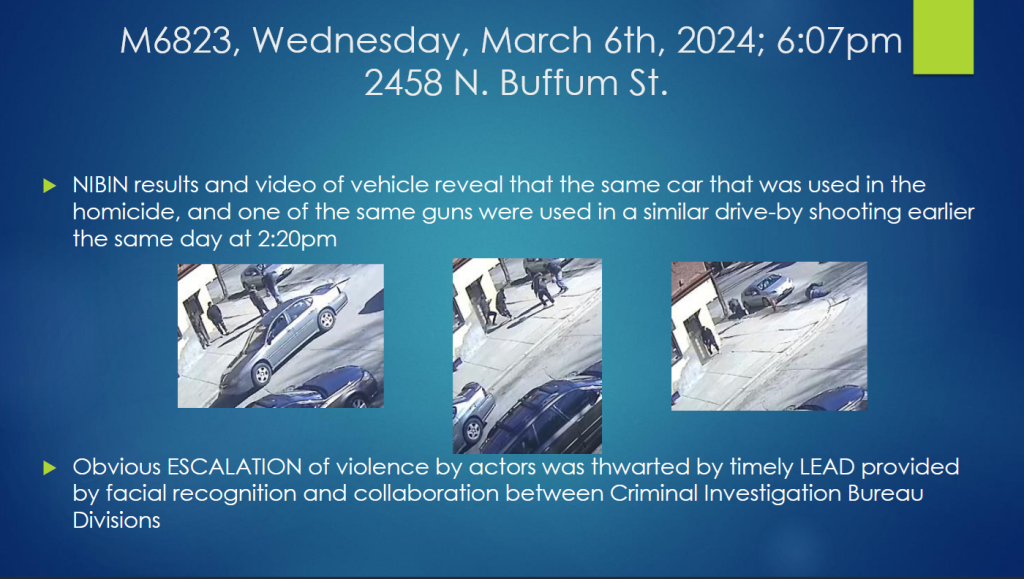
MPD determined that video of the vehicle and ballistics testing results indicated the same car was used in a similar drive-by shooting. A “timely lead” provided through facial recognition technology allowed MPD to thwart “obvious escalation of violence,” the PowerPoint says. Surveillance photos of the suspects matched jail booking and Department of Corrections prison photos, leading to the suspects’ identities, MPD said.
Both suspects, Adriel McGee and Joseph Davis, were charged with homicide. McGee was later convicted of first-degree intentional homicide and received a life prison term, as was Davis. Davis was on federal crime supervision and wearing a GPS bracelet when the shooting occurred. They were later identified by a witness. The victim was a 41-year-old man.
The second case study is a sexual assault at gunpoint, in which a suspect forced a woman into a garage.
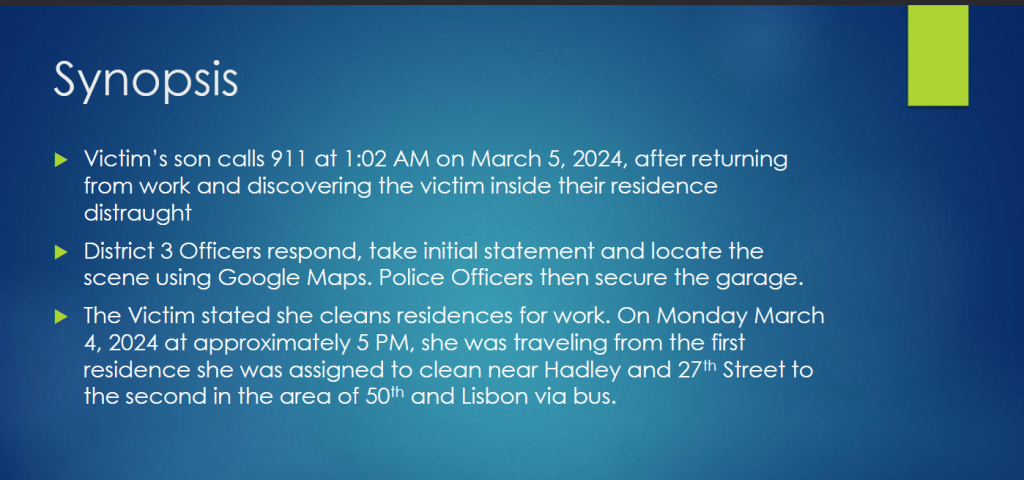
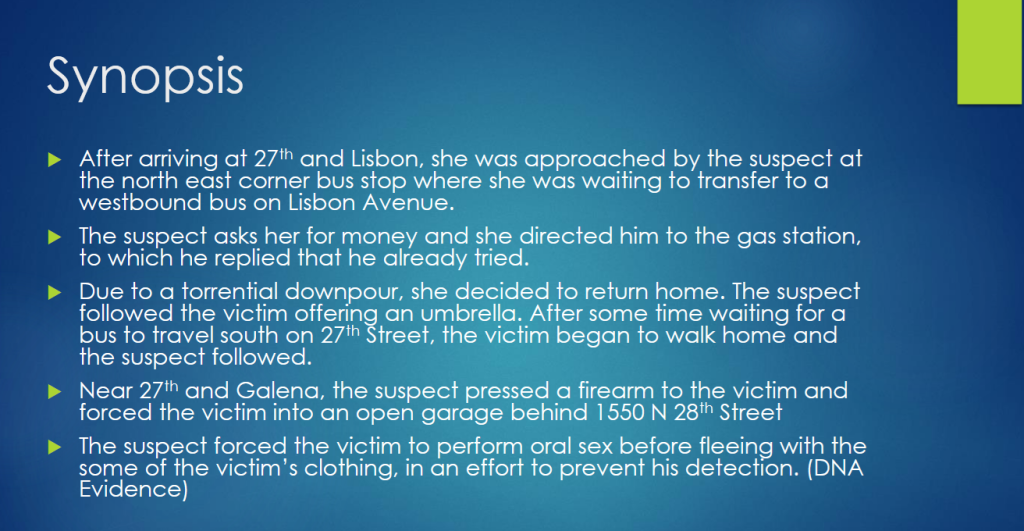
The victim provided a detailed suspect description; detectives then obtained surveillance video of a man who matched it, and they were able to get a match using the Wauwatosa PD’s facial recognition technology, the presentation says. A suspect was identified: Kevin B. Grant.
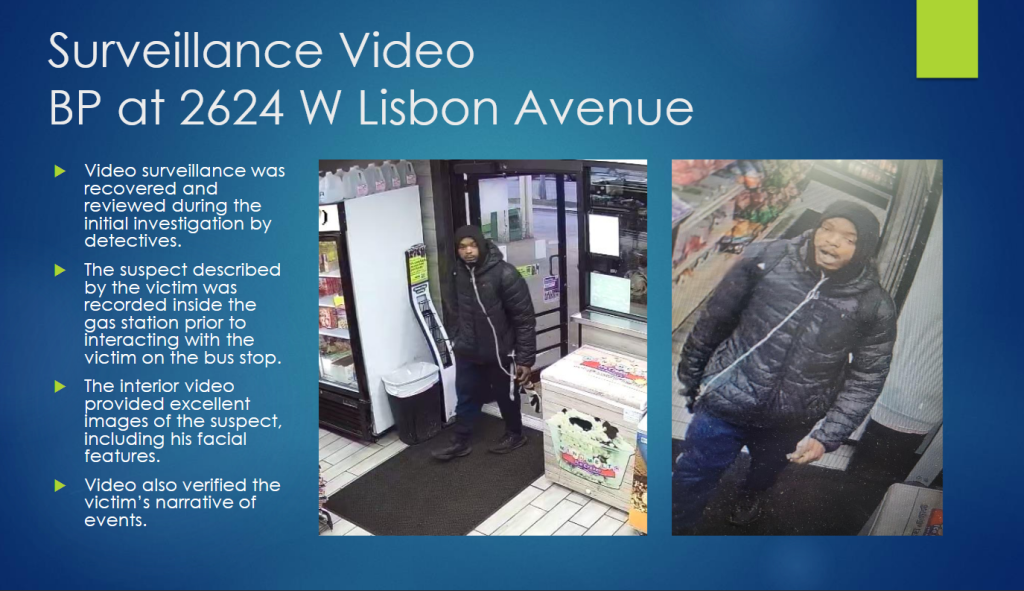
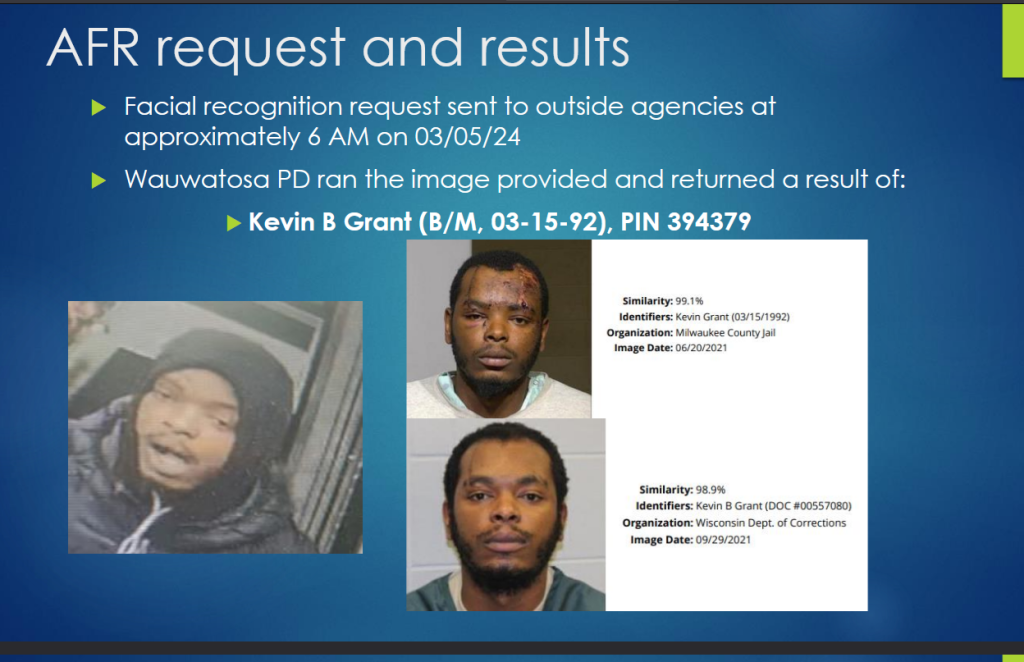
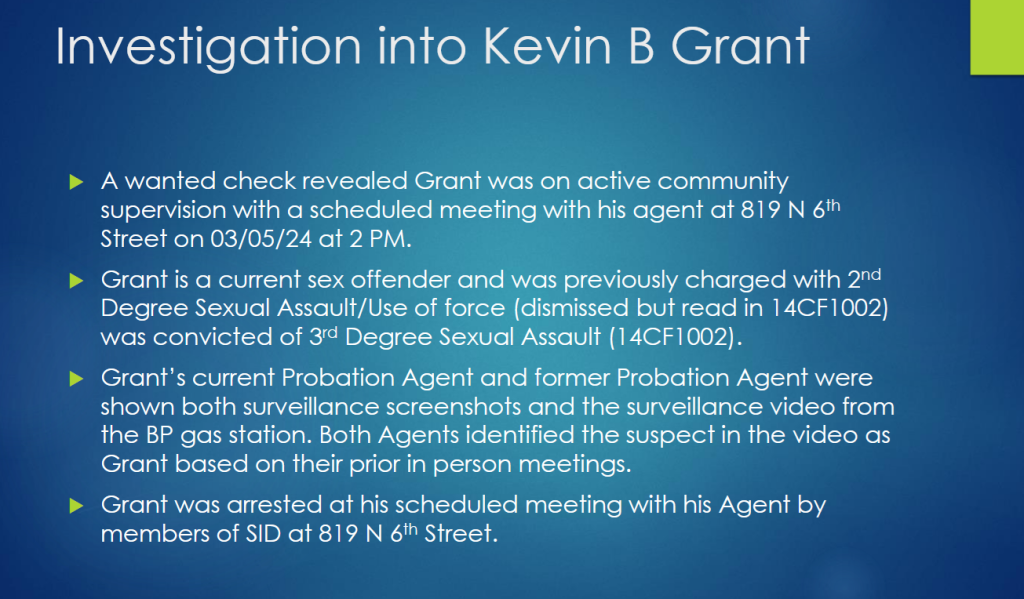
It turned out that Grant was a current sex offender on probation. He was then identified by two probation agents.

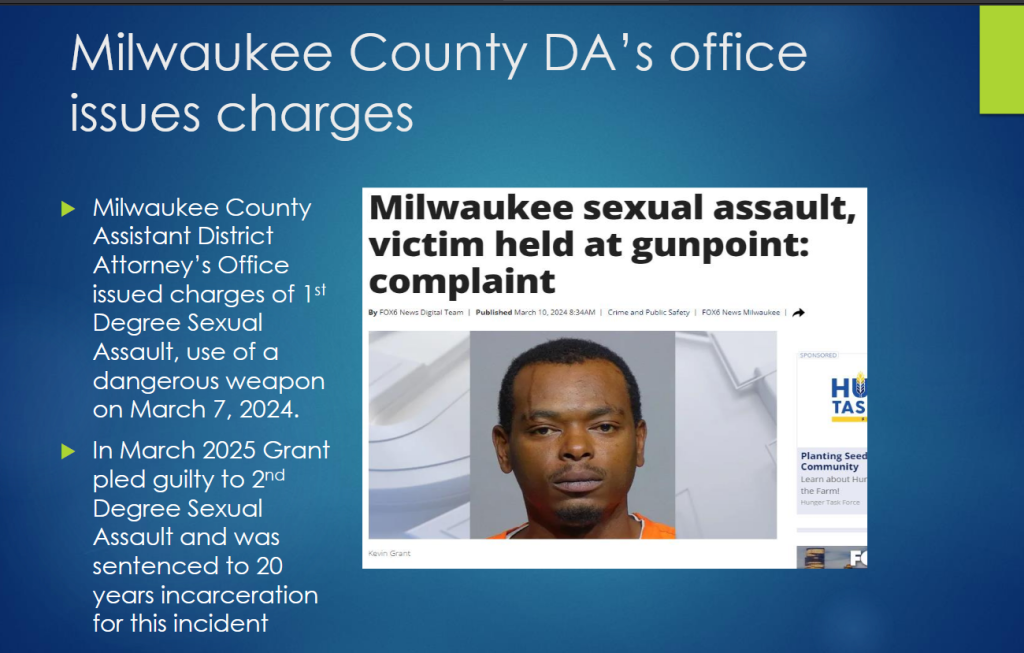
The victim identified Grant after facial identification technology pinpointed his name. He was criminally charged.
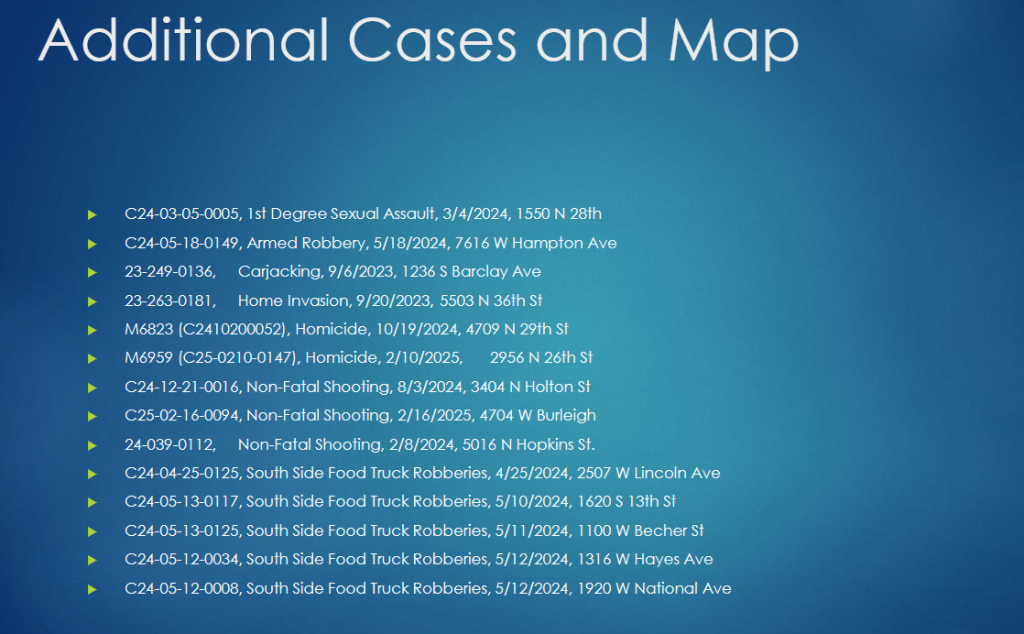
The PowerPoint also contains a list of other crimes solved with the use of facial recognition technology.
The Milwaukee Police Association Raises Public Safety Concerns
The MPA made it clear that public safety is at risk.
“Vehicle pursuits are among the most difficult decisions officers make. Milwaukee police officers receive extensive training to evaluate risk, traffic conditions, and public safety before initiating or continuing a pursuit. Policies that prevent officers from pursuing individuals engaged in extremely dangerous driving behavior can embolden offenders who believe they can evade accountability simply by fleeing at high speeds. Reckless drivers do not become safer when officers are forced to disengage; they continue to pose a threat to neighborhoods, businesses, and families,” the MPA added.
“Similarly, facial recognition technology is an investigative tool that can assist detectives in generating leads in violent crime cases. It does not replace traditional police work or serve as a basis for arrest without further investigation. When used responsibly and with appropriate safeguards, this technology can help identify violent offenders, support victims, and improve case clearance rates,” the union added.
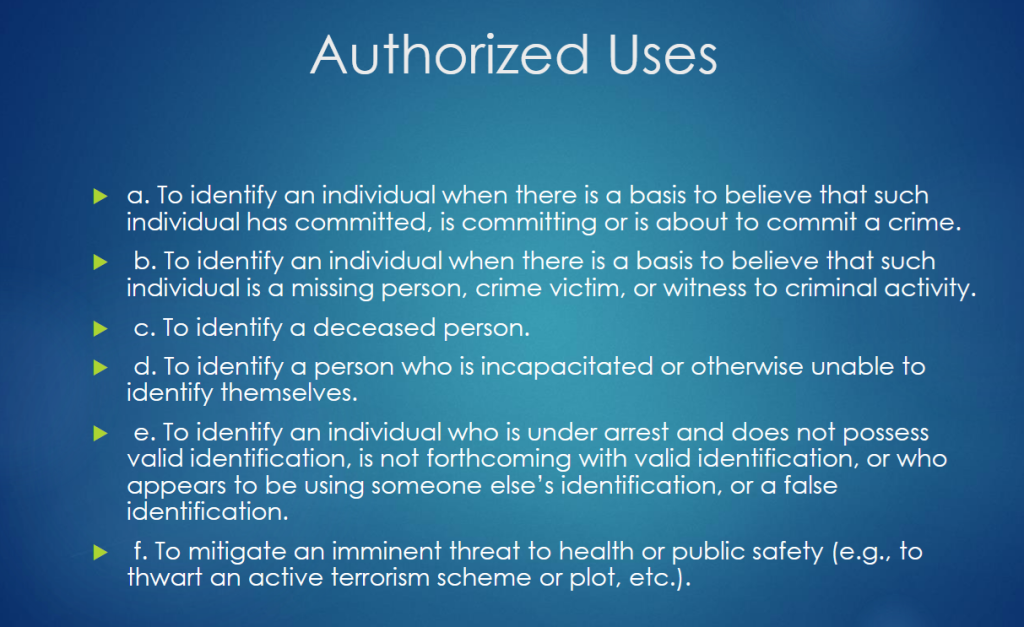
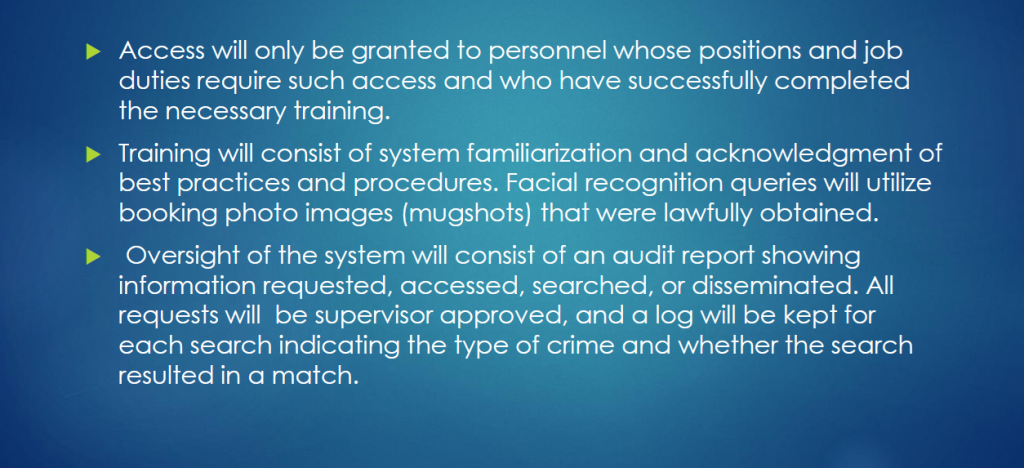
“The MPA fully supports thoughtful policy development, transparency, and community input regarding policing practices and emerging technology. However, removing critical tools altogether – rather than implementing responsible oversight and safeguards – unnecessarily limits law enforcement’s ability to keep the community safe,” the union wrote.
“Public safety requires a balanced approach that provides officers with strong training, modern technology, and reasonable discretion to respond to dangerous and rapidly evolving situations. Milwaukee residents deserve effective policing strategies that prioritize both community trust and the ability to hold violent offenders accountable,” the MPA added. “The MPA remains committed to working with department leadership, policymakers, and community stakeholders to develop policies that protect civil liberties while ensuring officers retain the tools necessary to safeguard our city.”
Table of Contents