
This is an opinion column.
Book Recommendation: 1929 by Andrew Ross Sorkin takes you through the details of why and how the stock market crash of 1929 occurred. Spoiler – it wasn’t Hoover and it wasn’t tariffs. The Fed plays heavily in the opening chapters… (source: 1929)
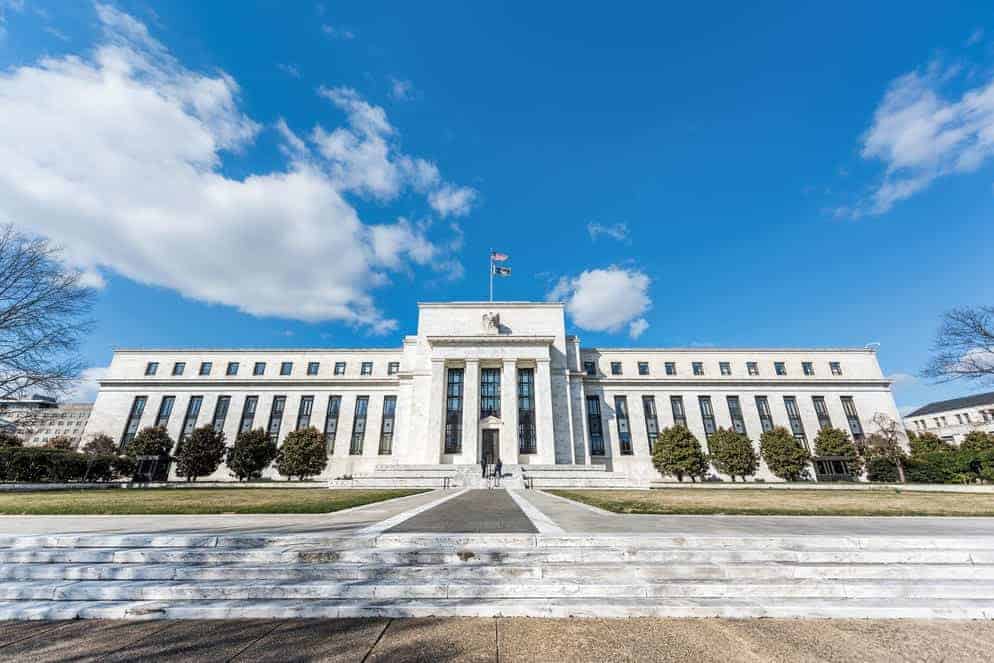
Chairman Moe, err, I mean, Powell of the Fed recently said that you should slow down when driving in a fog, implying the Fed should slow down in lowering interest rates, but the only person in a fog is Powell.
Apparently, he can’t steer the Fed without the highly inaccurate and notoriously unreliable government economic data. Never mind there is plenty of private sector data available that is far more accurate, but hey, Powell’s attitude seems to be – why look at that?
Likewise, a Fed governor recently spoke publicly about the lack of government data making their decision-making more difficult, but ahh, excuse me, but haven’t we learned that the government statistics are 100% wrong the first time out? Maybe later, after additional time and data, it may be more a little less wrong. But why does the Fed sit on its hands and not pursue other (private sector) sources of data, that frankly, would be more accurate because that kind of data is real and doesn’t rely on opinion surveys.
The stock market in 1929 was heavily speculative in nature, and even before Hoover got into office, the Fed was ready to pop the bubble. The discount rate in early 1929 was 5% and the Fed wanted to raise it to 6%. Think about that. That’s exactly where the Fed was at less than a year ago.
While buying stock on credit and selling short is prohibited today for individual investors like you or me, the big corporations and investment banks can still do it. Ironically, today, because of apps like Reddit, individual investors can gang up on the short-sellers and make them regret their negative position.
Back 100 years ago, though, an individual like you could borrow about 90% of the stock value, putting up only 10% equity, and then watch the stock price and your gain skyrocket, until it didn’t. This also meant that a reduction of a mere 10% of the stock value would completely wipe out your equity, and once that happened, if the stock kept declining, you were required to put up the loss in cash.
Ahh, and what about the stock loan? Well, when things were going up, it was no problem, you just sold some stock to pay the interest on the loan, or you sold a minor part of your stock and paid off the entire loan. But when things were going down, and when they went down, they went down fast, you had to ‘cover the loss’ by putting up cash to pay down the loan. Of course, the more it went down, the more cash you had to come up with, so you sold more stock into a declining market, putting even more downward pressure on the stock and the overall market, thereby creating a viciously downward spiral.
(I got an early lesson in this when I visited my uncle as a pre-teen at the Chicago Board of Trade where he and my grandfather traded wheat on behalf of clients. But they never traded on behalf of their own account, because they saw how fast the market could move.)
The stock market crash of 1929 reminds me a lot of both the cryptocurrency (I like to call it cyber currency since it can’t be seen) and the stock market trading in AI-perceived stocks. Big firms like hedge funds and private equity have bought into crypto. (Crypto literally means secret or covert, so that should be a clue.) And now that the big guys have bought into crypto, it’s really, really tough for them to get out without crashing the market.
In fact, I would say that they can’t exit – because to do so would cause a reduction in the value of crypto, which in turn would crash the value of their remaining cryptocurrency. So they’re trapped, just like in 1929. So watch out!
Remember, I like to pride myself on connecting disconnected dots. If the stock market drops too much, those big guys in crypto (or even the small guys) could panic and try to exit crypto before the other guys do. This would result in a massive crash in crypto, which in turn would trigger a massive crash in the stock market as funds try to raise capital to shore up losses.
Likewise, all those tech titans that have promised to spend trillions of dollars on A.I., far more than their businesses could ever generate in profits over the next ten years, and well, that tells me that they aren’t going to be spending/investing all that money. And since A.I. doesn’t produce any profits yet, and won’t for probably a decade, they’re betting the farm, i.e. they’re betting today’s and tomorrow’s profits and far more than that into the future on A.I.; that A.I. will some day pan out. And it might, but if a world event scares any of these guys, like China attacking Taiwan, all bets are off.
Which is why I think, just like what happened every time there has been a new technology that has come along in history, A.I. “implied stocks” will get bid up, and then once reality sets in, will come crashing down. As a student of history, I can tell you that this has happened every time throughout history. Investors hype up the new technology until it becomes overpriced relative to its potential future income stream, and then the crash comes as investors realize they’re not going to get their dividends or future earnings out of it, so they take their capital gains. When the recent college grad is investing in crypto, you know it’s time to get out.
Now circle back to the Fed. Would someone in Washington or NYC tell the Fed how the real world works? Please. The Fed is causing inflation and the board of governors seems to be clueless to this. Interest rates are one of the biggest cost inputs of any product. If interest rates are higher, then the cost to manufacture a product will be higher. It’s just that simple.
Higher interest rates mean higher rents because more cash flow is needed to cover the cost of the monthly debt service payment and the debt coverage ratio. So that means raising rents and higher housing rents are a direct input into the inflation calculation. No magic there, but apparently these idiots at the Fed don’t get that simple equation. (Being a developer, Trump is astutely aware of this.)
Likewise, if higher interest rates hold back a manufacturer from expanding their plant or building a new manufacturing facility because the marginal analysis tells the owners that the numbers don’t work. That leads to less new supply, and less supply leads to higher prices. The inverse is that with lower interest rates, which is what the Fed should be providing right now during this time of higher tariffs (more on that in a minute), lower interest rates make the marginal analysis of building a new manufacturing plant or a new apartment building feasible, increasing product supply here at home when tariffs are higher.
So for the Fed to squeeze out the last bit of inflation (to bring the inflation rate down to its arbitrary and blue-sky target of 2%), the Fed will need to lower interest rates. Just take the office market for example, those developers that have large portfolios of office space are seeing a major decline in their physical and leased occupancy levels, declining rents, and major tenant improvement dollars having to go in just to keep reduced-size tenants, and all that is occurring when the interest rates on their office loans is doubling. Many of those loans are or were at about 3%, but now the rate has jumped to around 6.5% (or 7.5% a year ago), doubling their debt service payments at a time when cash flow is crimped due to declining occupancies. (Note: I own only a tiny amount of office space, including my own office.)
This means the Fed is pushing the entire nation’s supply of office space into default, which in turn will also jeopardize the banks or insurance companies or government agencies that hold those loans. As we have already seen this year, a number of office properties have been ‘given back’ to their lenders because their owners can’t make the payments. And hey, don’t blame the owners, they didn’t sign up for the sudden and arbitrary roller coaster ride in interest rates.
It’s not fair to them, or to apartment owners whose interest rates have increased as well. Yes, I have a portfolio of almost 2,000 apartments, but I started increasing rents years ago – exactly when the Fed started increasing interest rates, because I knew we would need to get rents up a lot to cover the cost of a doubling our debt service cost once those loans came up for refinancing. (Hmm, higher rents = higher inflation.) (Of course, we locked a low interest rate on every single loan that we could back in 2022 in anticipation of this situation given the Fed’s posturing at that time.
My bankers tell me we were the only developer making advance plans like this, to protect ourselves from the Fed’s wild swings.) I’m telling you this in the hopes that someone in the Fed reads this column (or maybe Trump will tweet it out again on Truth Social) and begins to understand how business works and has to respond to wild swings in interest rates. Business owners are not going to take on risk in an increasing-interest-rate environment. They’re just not. They’re not going to build more supply.
Now let’s tie in tariffs. For the first time in decades, the president has deliberately increased tariffs so as to bring manufacturing home after the big exodus caused by Clinton signing NAFTA and letting China join the World Trade Organization. (Talk about dumb, but then Clinton had other things on his johnson, err, I mean his mind.) Trump’s plan is for higher tariffs to provide protection for American manufacturers to take the risk and ramp up product supply by building new manufacturing plants here, in the good old U.S. of A.
Now, those tariffs need to stay in place for a longer period of time to convince manufacturers that making the investment to build more capacity here in the U.S. is a wise, long-term investment. They can’t and won’t build more facilities if they think that those tariffs will come down, because that would allow foreign nations to once again kill off American manufacturing by dumping low-priced products here. They have to be able to count on the tariffs remaining in place.
But the second most important component of manufacturing is interest rates. If we want manufacturers to take advantage of those new tariffs, we need lower interest rates too!
Hello Fed!! Wake-up time. Doing so will create more supply and provide for lower inflation long-term!!!!
The third component, as one very large manufacturer in Wisconsin recently informed me, is labor. (Of course.) This is one area where I disagree with the president. (Trump – are you reading my column again?) Charging $100,000 for an H1B visa is not helping American manufacturers. At a time when illegal immigration has virtually been cut off, now is not the time to also cut off lawful immigration. Yes, some of these people are stealing Americanjobs. I get it. Trump is right on that.
So Mr. President, you could cut off the visa authority of universities so they can’t hire foreigners over Americans while at the same time increasing the allowed number of lawful immigrants via all types of visas. Hell, even our own landscaping company that we contract with can’t get enough labor to do the job. Likewise, with Wisconsin farmers who desperately need more labor, and affordable labor at that. I bet readers don’t know that employers using those visas are being swindled by middlemen who charge huge fees to secure H1B and other types of visas for foreign labor. Increase the allowance of lawful unskilled foreign labor on a temporary annual basis (i.e. for part of the year, each year), while lowering the visa cost and outlawing middle-visa-men from preying on American companies that need labor. Ask any American manufacturer or farmer or restaurant. They all need unskilled labor for jobs that young Americans do not want to do. (Maybe ‘cause they all think they’re going into A.I.?)
So that’s it. It’s really that simple. Let’s Go!
Final Note: For those of you who may not be aware, when you decide to sell a mutual fund, you receive the end-of-the-day value (based upon the value of the stock in the fund). So even if you order a sale of the fund at 10 am or at noon because you see a declining market, you’ll receive the end of day aggregated price of the fund, which means if the fund is dropping fast, your price will be significantly lower than when you placed the sell order.
This means it’s impossible for you to exit a rapidly declining fund or market if you are in a mutual fund. You have to sell early, before the market starts to decline. You have to be willing to give up some of the upside in order to protect your downside. And that means being a little less greedy.
P.S. Has anyone notice some airlines have discontinued the peanuts in favor of gluten snacks? Arrg. Thanks a lot. And why do I have to pay $100 for my bag being 11 pounds over the limit the airline picked (50 lbs), when someone who weighs 100 pounds more than me doesn’t get charged more? This is a script for a comedy show. Mind the gap, and carry on.
Wisconsin Right Now is a news organization focused on covering the news from a conservative point of view, in particular on politics and policy issues through analysis and opinions, and is protected by the First Amendment of the United States Constitution. WRN does not make endorsements of candidates or direct readers to vote for or against any candidate or issue. On October 18 and November 23, 2023 Donald Trump tweeted out on Trump’s Truth Social account T. Wall’s October 6th column on Trump’s property valuations. T. Wall has appeared on Fox News, Jesse Waters Show on Fox, Newsmax, CBS, NBC, Spectrum News 1, USA Today, X.com, YouTube, and numerous Madison and Milwaukee news programs and local newspapers (Wisconsin State Journal, Capital Times, Middleton Review, Middleton Times Tribune, and Milwaukee Journal Sentinel and a dozen other Wisconsin papers) and previously wrote a column for InBusiness magazine and the Middleton Times Tribune for five years each. T. Wall holds a degree from the UW in economics and an M.S. in real estate analysis and valuation and his full-time career is as a real estate developer. Disclaimer: The opinions of the writer are not necessarily those of this publication or the left!