
When we wrote our award-winning investigative series about the heinous killers and rapists who were released by Tony Evers’ former two-time Parole Commission appointee several years ago, the media leaped into action with their hard-hitting exposes pompously entitled, “This is how the parole process works.”
 Heinous is not an exaggeration; one of the killers who was released on parole cut his wife’s head off and put it in a stove. One of the most disturbing things about the Evers’ appointee’s paroles, though, was that, in multiple cases, the victims’ families weren’t notified by the state, as required by law. We will never forget calling the son of a nurse who was brutally murdered to see if he wanted to comment on a parole, and realizing that he didn’t even know it happened. The other media weren’t much interested in that story.
They ignored most victims’ families in favor of dry process stories that seemed designed to muddle the issue in the middle of the last gubernatorial election. We are going to save the media the trouble this time around. Thus, we hereby present: “Here is how the commutation process really works.”
This time, we get to warn families BEFORE the commutations happen, so they can fight them if they want. Thus, we are going to monitor this entire process to make sure there is transparency this time. Our last series changed state law, and resulted in greater transparency for victims. We are proud of that.
What’s new: On Good Friday, Evers issued an executive order creating a new commutation board and process to reignite gubernatorial commutations in Wisconsin, which had not occurred for 25 years (and only 7 times in 39 years.) Evers, a politician, will have the final say about whether to free inmates, but the board will make recommendations. The guidelines he posted on his website revealed that some of the state’s most horrific killers now qualify to ask Evers for release, even those serving life without parole. This means that victims and their families – who believed offenders, including cop killers, would never see the light of day – suddenly have lost that certainty. They will face the renewed trauma of fighting to prevent release.
Here’s how the process works:
Wait, is Steven Avery really being released?
That’s up to Gov. Evers if Avery applies for a commutation. Evers could say no. Maybe Avery chooses not to apply. But, based on the criteria that Evers posted on his website, it appears that Avery, as we reported, now qualifies to apply for release even though he is serving a life prison term.
That’s also true of some notorious cop killers and other murderers. The only caveat would be whether they – or Avery – have had violent incidents IN prison during the past five years while serving their homicide sentences, which is unclear. Evers said people with such incidents in the past five years don’t qualify. But they could try again if they behave in prison for five years.
Bottom line: Avery qualifies to ask for a release under the criteria that Evers set, although whether it’s now or in five years depends on his prison behavioral record.
But this commutation process is just for non-violent drug offenders, right?
No. Evers is allowing violent criminals to apply as well. He’s even allowing homicide lifers to qualify. He only exempted a few categories of criminals. He said registered sex offenders or those who would be one upon leaving prison don’t qualify. Evers also prohibited offenders from qualifying who committed:
Sexual assault.
Physical abuse of a child.
Sexual exploitation of a child.
Trafficking of a child.
Incest.
Soliciting a child for prostitution.
People who have less than 1 year of their incarceration term remaining.
Criminals have to serve at least half of their incarceration term or at least 20 years of a life sentence to qualify. Here’s proof from Evers’ own website:
 People with any unresolved criminal charges or outstanding warrants in any jurisdiction don’t qualify. People with incidents of violent misconduct within the last 5 years of their current incarceration term.
That’s it.
Juvenile offenders qualify to seek release if they were age 19 or younger at the time of conviction, were tried as an adult, and received a life sentence or a sentence in excess of 39 years of incarceration.
There is a provision in Evers’ executive order that says the governor can reject particularly egregious offenses, but it leaves it up to the governor to determine what that means. And Evers’ application and website only list the above exclusions.
You’re lying. This is propaganda!
Well, no, we are not. We don’t print what we can’t prove. But we also aren’t going to obfuscate what’s really happening. We tell people the truth. It’s true that homicide offenders are only a small part of the inmate population; you can consider that context. Many other inmates who are in prison for very serious violent crimes also qualify to seek release, though. A large portion of the prison population is going to qualify to apply, not just homicide offenders or lifers.
You don’t have to believe us. Go read Evers’ website, the commutation application he posted, or his executive order. It’s all there. Criminal defense attorneys have started advising inmates about what it all means.
Didn’t these people get life without parole or without the possibility of release? How can people like that get another chance?
Some of them, yes. Evers is allowing people convicted of homicide – even first-degree intentional homicide – to seek release. Unless they fall under the exempted categories listed above. Again, they must serve half their sentence, or 20 years if lifers. And again, this also applies to every offender in the prison system except those on the short list of exemptions above.
So, you’re just talking about really old cases, right?
No. Any inmate can seek release if they meet the guidelines described above.
 To show you how this works: Maxwell Anderson was convicted in Milwaukee of murdering a young woman named Sade Robinson and scattering her dismembered remains around the city. He got a life prison term without the chance of release in August. He received short prison terms as well for a couple of other charges. However, now, once he serves about 24.5 years, he qualifies to seek release.
Similarly, Milwaukee Police Officers Matthew Rittner and Michael Michalski were murdered recently. Their killers received life prison terms with no possibility of release. However, now, they can seek release after serving 20 years for the homicides. As a result, Rittner’s killer now qualifies to seek release in about 20 years, and Michalski’s in about 13, because they’ve already served some time. This is greatly upsetting Milwaukee police officers who knew these beloved officers.
Let’s use a couple less egregious cases. Let’s say someone gets a 10 year sentence for armed robbery or any other offense that isn’t a sex offense or physical abuse of a child. As long as they meet the other conditions, they could seek release in five. It appears that each conviction would be handled separately, but the website doesn’t expressly say that. Sometimes offenders are sentences on multiple charges at once.
C’mon. Evers isn’t really going to release cop killers, Maxwell Anderson, or Steven Avery. Stop fearmongering!
Well, he could say no. But he’s the one who is giving them the chance to seek release. Why do that if they don’t have a chance? Why not just exclude first-degree intentional homicide cases?
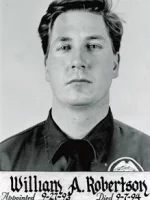
Furthermore, he has openly stated that he thinks people who were minors should be given priority consideration. One cop killer, Curtis Walker, was 17 when he ambushed and murdered Milwaukee Police Officer William Robertson.
Also, Evers’ past actions and comments don’t inspire confidence.
His appointee previously freed killers who were just as bad as Anderson, Curtis Walker, and Avery with zero concern from the governor until it blew up in the media years later. So, he has a track record of being okay with this kind of thing. He’s also approved a record-breaking number of pardons (those are different than commutations; pardons occur AFTER people serve their time, and commutations occur during it). Furthermore, Evers promised to reduce the prison population by 50%. When people tell you who they are, believe them.
This isn’t really new, though, right?
Well, it hasn’t been done for 25 years and was only done 7 times in the 14 years before that. And Gov. Evers rolled out a NEW executive order, website, and application on Good Friday that created a NEW process for restarting it, including a list of which offenses don’t qualify.
But Tommy Thompson did it! Evers said so in his press release!
Tommy only issued 7 commutations in 14 years as governor and then ushered in landmark truth-in-sentencing reforms.
Haven’t many other governors done this, too?
Yes. But not for 25 years, as noted. Governors Jim Doyle, Scott Walker, Scott McCallum (and, until now, Tony Evers) chose not to use their commutation powers at all. In fact, 13 Wisconsin governors, not including Evers, chose to issue zero commutations.
Many prosecutors and police officers we have spoken to expect Evers to fast-track a historic volume of cases through this process.
Bottom line: Governor Evers is making a choice to restart the commutation process. He doesn’t have to do this at all.
The Legislative Reference Bureau, which is non-partisan, wrote a detailed history sketching out how past governors have handled executive clemency. Here are the total commutations by Wisconsin governor, per the LRB memo:
Nathan Dewey 2
Leonard Falwell 0
William Barstow 0
Arthur McArthur 0
Coles Bashford 0
Alexander Randall 0
Louis Harvey 0
Edward Salomon 3
James Lewis 0
Lucius Fairchild 1
Cadwallader Washburn 1
William Taylor 4
Harrison Ludington 5
William Smith 4
Jeremiah Rusk 1
William Hoard 0
George Peck 0
William Upham 0
Edeward Scofield 4
Robert La Follette Sr. 3
James Davidson 22
Francis McGovern 49
Emanuel Philipp 123
John Blaine 229
Fred Zimmerman 51
Walter Kohler 22
Philip La Follette 434
Albert Schmedeman 80
Julius Heil 95
Walter Goodland 59
Oscar Rennebohm 33
Walter Kohler Jr. 59
Vernon Thomson 10
Gaylord Nelson 27
John W. Reynolds 18
Warren Knowles 45
Patrick Lucey 117
Martin Schreiber 3
Lee Dreyfus 10
Anthony Earl 32
Tommy Thompson (term started in 1987) 7
Scott McCallum 0
Jim Doyle 0
Scott Walker 0
Tony Evers 0 (until now)
So, big deal. It looks rare. What’s the concern?
The concern is that Evers will do with commutations what he’s done with pardons. He’s dramatically escalated the number of pardons issued beyond what any Wisconsin governor has done before. He’s promised to reduce the prison population by half. His appointee released horrific killers before. No one really believes he’s going to create this entire board and process and then release 7 people like Tommy. Plus, the process seems pretty fast-tracked. Inmates have to notify the DA and judge only three weeks before.
As of late 2025, Evers had granted more than 1,800 pardons, breaking the total of the next closest governor by a lot. Julius Heil is second with 943.
Yeah, but this power is in state law and the state Constitution. So, he’s not doing anything except creating a process. Get off his back! Evers didn’t create the Constitution!
You’re right that all Wisconsin governors possessed the authority to commute inmates’ sentences for almost all crimes. And future ones will as well. That’s in the Constitution and state law.
But they don’t all use that power the same way.
According to the non-partisan Legislative Reference Bureau, Article V, section 6 of the Wisconsin Constitution “vests the governor with the power to grant reprieves, commutations, and pardons to individuals who have been convicted of a crime, except in cases of treason and impeachment.”
There are Wisconsin statutes relating to the PARDON process, which is different from commutations. Wisconsin statute also “authorizes the governor to take actions that have the same effect as a pardon issued under the governor’s constitutional authorities.”
However, again, Evers is making several choices here.
-
- He is choosing to use gubernatorial commutation power when no governor has used it for 25 years. He doesn’t have to do that.
- The state Constitution says governors can put restrictions, conditions, and limitations on which commutations they grant as they deem “proper.” They can also choose to grant none. Evers created the guidelines listed above. He didn’t have to include lifers or killers.
- Tom Tiffany has made it clear that, as governor, he would NOT do this, which proves the point.
But I thought Evers paroled brutal killers already?
Evers’ appointee to the Parole Commission, John Tate, did. They were terrible cases. People freed on parole included:
An Oconomowoc man who cut his wife’s head off and put it in a stove.
A biker who raped and cut the throat of a Green Bay woman, leaving her to die.
A sniper who killed an elderly dog walker in a random Wauwatosa ambush.
A man who strangled, raped, and stabbed a La Crosse nurse and young mother he saw randomly through a picture window in the middle of the day.
A man who murdered a pregnant teen.
A Dairy Princess who strangled a woman with a belt.
A man who stabbed his wife in the heart.
A man who executed two Milwaukee tourists in an I-94 ditch.
A man who strangled his baby son with a cord.
A man who murdered a Burlington police sergeant in a traffic stop and then tried to throw him off a cliff.
Evers reappointed Tate after he paroled some of the brutal killers and rapists. While it’s true Evers eventually asked Tate to resign, and Tate did, he only did so after the topic blew up in the media during Evers’ election and years after some of the killers were released, with zero concern expressed by Evers along the way. It all finally blew up in the media when a courageous victim’s family went to the media over Tate’s plan to free a brutal killer who had stabbed his wife to death in front of his kids. That release got revoked after the hue and cry, and Tate stepped down.
So John Tate is involved in this commutation process?
No. He ended up quitting after the hue and cry. The commutation process is different. Parole was eliminated under truth-in-sentencing reforms in Wisconsin in 2000. So, the people who qualify for parole are only those sentenced before 2000. Evers is creating the new board to advise him on commutations, but the ultimate decision is up to Evers, not any board or appointee. And inmates sentenced after 2000 qualify too, as do criminals who received sentences of life without parole.
But I thought Evers is retiring?
He’s not running for re-election again. The new board starts in June. If Tom Tiffany wins, he’s made it clear he opposes Evers’ commutation choices, as noted. The Democrat governor candidates we reached out to didn’t return requests for comment. But Sara Rodriguez is part of the current Evers’ administration that approved this. A socialist group praised Francesca Hong for her clear stance in favor of prison and police abolition. Mandela Barnes once said reducing the prison population was “sexy.” So it seems unlikely that they would deviate from Evers’ approach, but that’s speculation.
Who will be on the advisory board?
People with the “necessary experience, background, and qualifications, including individuals who have expertise within the criminal justice system, the rights of victims and their families, the law and law enforcement, and incarceration, courts and the judicial process, and treatment,” Evers wrote.
The 14 people will serve at the governor’s pleasure and the chair will be the governor’s chief legal counsel or a designee. Corrections veteran Cindy O’Donnell is on the panel too, but the rest haven’t been released yet.
Will hearings be held in every instance?
The chair has the discretion to forward an application directly to the governor with a non binding recommendation without a hearing or executive action by the Board if the application meets the eligibility requirements and complies with sections 2 and 3 of the executive order and “sufficient time has elapsed to preclude depreciation of the severity of the applicant’s offense.” That’s according to the executive order.
Sections 2 and 3 deal with eligibility criteria, require the inmate to notify the judge and DA, and require notification of victims who registered for the service that notifies them.
When held, the hearings will be held publicly and at the discretion of the chair, on a date and at a place set at least three weeks in advance, and must include five members including the chair, according to the executive order.
The Board will meet in closed session to generate a recommendation, if it meets at all.
What is the board supposed to consider?
The impact of a commutation on victims, survivors and community members. Whether a commutation is consistent with public safety and in the interests of justice. An applicant’s prison conduct record. An applicant’s personal growth and development since conviction, including the completion of rehabilitative programs, treatment, education and work history during their incarceration. That’s according to the executive order.
If commutation is granted, will people be released from prison immediately?
The board will recommend to Evers whether a person should be eligible for parole sooner, whether their sentence should be reduced, or whether part of their sentence should be converted to extended supervision in the community.
Can the District Attorney and Judges stop the releases?
No. The governor has the final say. DAs and judges can submit their opinion and object, but Evers can overrule them.
Will the District Attorney and Judges be notified?
The INMATES are supposed to notify them, according to Evers’ website. Yes, the inmates.
Will victims be notified?
The governor’s office or the Office of Victim Services and Programs “shall provide notice to victims registered with OCS and facilitate input from such victims on applications for commutation.” The notice will constitute a “reasonable attempt to provide this notice at least three weeks before the hearing of the application,” and the notice will be published in a newspaper in the county where the offense was committed, at least once a week for two successive weeks before the hearing. Although they can weigh in, the victims can’t block the release in and of themselves. Victims have previously criticized short turnaround times for notifications; this speeds it up even more.
What’s Evers’ side?
He argues that executive clemency reflects a “21st century approach to the criminal justice system that many other states are taking, which recognizes that evidence-based-data-driven practices can help improve safety by reducing the likelihood that someone might reoffend when they reenter our communities” and that granting commutations promotes rehabilitation and encourages incarcerated people to “be accountable, take responsibility, make amends, “ and so on. You can read his explanation in his executive order.
However, we would note that Gov. Tony Evers’ administration expanded the state’s earned release program in multiple ways even though more than 40% of earned release and challenge incarceration inmates are re-arrested within two years, endangering public safety, Wisconsin Right Now documented. Again, those were not supposed to be for violent offenders, and they’re different from commutations.
So, it’s the end of truth in sentencing?
As we know it, for many inmates, yes, at least in this way: Truth in sentencing reforms were passed in the wake of a series of heinous crimes in the 1990s. Essentially, they eliminated parole. The goal was to give victims and their families certainty in sentencing. Life meant life. 20 years meant 20 years. The new process saw sentences divided into two categories. Judges now give defendants a term of confinement and a term of extended supervision in the community. The confinement time is set. People don’t get parole anymore. It’s been like that since 2000. Evers has presided over some other release programs, but those were supposed to be for non-violent substance abusers.
Liberals have criticized truth-in-sentencing. They believe it has harmed minority communities.
Conservatives point out that crime declined for years in the wake of it, including in minority communities, saving lives, although many factors contribute to this.
What Evers has done here is remove that certainty for many victims and their families, with the exception of the inmates who fall under the few exempted categories.
By creating what is essentially an end run around the certainty that was the core goal of truth in sentencing, he has gutted it to the point that it’s ended as we know it. He doesn’t have the power to repeal truth-in-sentencing laws, but he’s short-circuited them by erasing the certainty for victims and their families.
However, his executive order and new commutation process won’t change how inmates are sentenced in court; they will still get terms of both confinement and extended supervision because the truth-in-sentencing approach remains on the books. Critics of Evers feel he’s using the commutation process to get around the fact the Republican-controlled Legislature would never repeal truth-in-sentencing laws.
It’s really unfair of you not to consider the inmates as people. Some of them have changed.
Sure. But many Wisconsinites, although by no means all, believe that there are some offenses so egregious that a person should forfeit their right to live in society no matter how much they change behind bars. If you do the crime, do the time, they argue.
For example, if you cut your wife’s head off and put it in a stove, many Wisconsinites would argue that you shouldn’t ever get out, even if you find God, take some training courses, and proclaim that you’ve changed. Many people think murdering a police officer is a direct assault as the rule of law and societal order, and must be punished severely, and, if a judge gave you life without parole, there was probably a good reason. Other Wisconsinites believe that the local sentencing judge, who heard all of the evidence and victim testimony at the time, was better poised to make the decision about how long the person should serve, not a politician. Societal acceptance probably grows as seriousness of offense lessens, which is why Evers including homicide offenders raised eyebrows. Prosecutors we spoke with say the executive order came as a surprise to them.
But Trump commuted people’s sentences in the federal system
Yeah, and we didn’t agree with commuting Larry Hoover’s sentence either, so…
Table of Contents