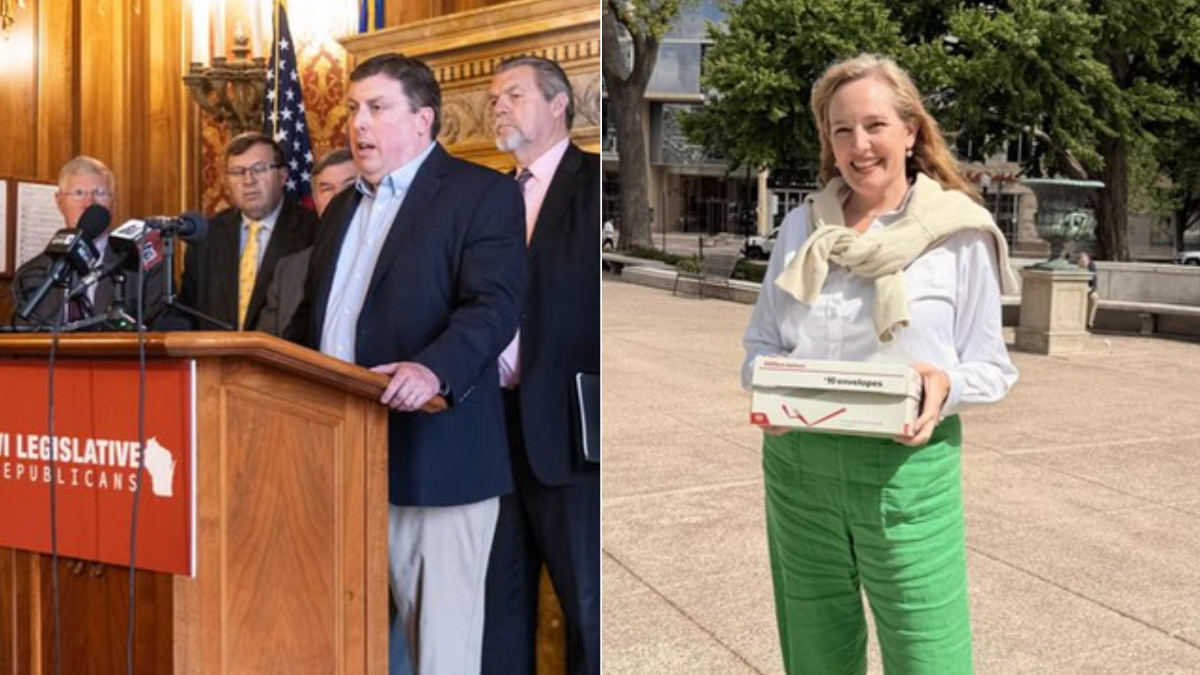

The Assembly’s co-chair of the Joint Finance Committee is explaining why the Democrats’ growing narrative that the surplus deal would have created an unmanageable “deficit” is “junk” and misleading to the point of being “dishonest.” He said that the deal was based on responsible revenue projections that are even less than the average growth for the past five years, Wisconsin’s economy remains strong, and the false narrative is designed to bail Democrats out from their votes opposing help for schools and taxpayers.
Some Democratic gubernatorial candidates, legislators, and bloggers have been aggressively pushing the “but there would be a structural deficit” narrative ever since all Senate Democrats and three Republicans killed a bipartisan deal reached between Gov. Tony Evers and Republican legislative leaders. The deal would have fixed a funding formula problem for special education programs in schools; given property tax relief to disabled vets; handed taxpayers tax rebate checks; exempted tips and overtime from taxation (for perpetuity); and provided disaster relief. This led Evers to lash out at his fellow Democrats for sinking the bipartisan plan.
“It’s junk,” Born flatly said of the Democrats’ argument that the plan deserved killing because it would create a “structural deficit.”
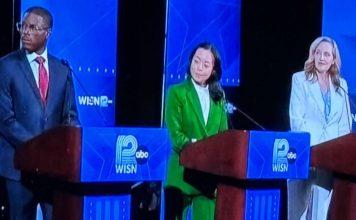
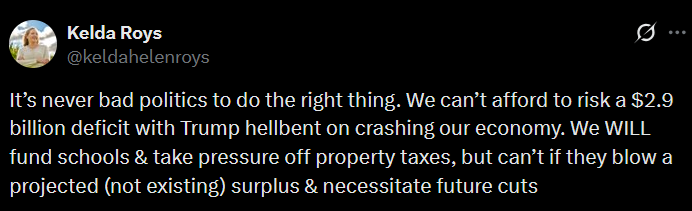
“When I saw (Democrat governor candidate and state Rep.) Kelda Roys doing it (furthering the deficit angle), I laughed out loud when I saw her social media,” said Born. “That’s because Tony Evers’ proposed budget had a $4.5 billion deficit, and Kelda is on the finance committee so she voted for every bit of that in the Dem budget. But now this year she is running for governor and doing the silliness the Dems are doing on this argument.”
“It’s misleading,” he contended of the Democrat claims. Here’s why.
The structural deficit argument “assumes new growth and that is unlikely to happen, and on top of it, we still have a $2.1 billion rainy day fund as well. It’s misleading. That’s a kind way of putting it. I think it’s kind of dishonest; we have to look at how strong this economy has been, that our growth has been.”
Obviously, it’s political poison for Democrats to position against helping schools, disabled vets, and taxpayers, especially since the surplus consists of people’s own money, and Democrats have long claimed they are for schools. To create the counter-narrative, they’ve increasingly latched onto the deficit claim, and it’s now being echoed in the news media. For example, Wisconsin Public Radio ran a misleading headline that says, “Failed surplus deal would have sent Wisconsin budget into the red, analysis finds.” The story is written by former Vox and PBS reporter Anya van Wagtendonk.
Sounds terrible in isolation, but Born explains why it’s misleading. He says that the legislature’s fiscal bureau “always scores” it this way. They assume “no new revenue of any kind” for the next budget, which temporarily creates a structural deficit on paper. But everyone knows there will be new revenue, and that’s based on year after year of proof. So it’s basically a phantom deficit that never actually happens, and everyone knows this.
Although it’s always scored that way, revenue growth always occurs, and so the budget ends up balanced. Thus, it’s a red herring argument because evidence shows that’s most likely to happen, Born stressed.
“It just tells you what your costs will be and your current revenue stream and what the shortfall is assuming no new money,” Born said of the fiscal bureau memo, which has been widely shared. “No assumptions are made regarding revenue modifications in 2027-29 due to such unknowns as future law changes or economic factors,” the memo says.
Why then is it responsible to predict that there will be some revenue growth, as Tony Evers AND Republican legislative leaders assumed?
“No new money really never happens. Even in an economic slowdown we still have some growth,” Born explained.
The Wisconsin Economy Remains Strong, Born Said
Born also said there is a false belief that the Wisconsin economy is not strong. But that’s not true, he said, while acknowledging federally caused concerns like gas prices, which are very visible to taxpayers and affect them.
According to Born, “Right now and for the last 5-7 years in the state, it’s (the economy’s) been super strong. We’ve been having some years where annual growth is 11 percent, some years 7, and 3.”
He said that state revenue collections have averaged more than 5 percent over the past five years, mostly from income and corporate taxes, and that you would need only about 4 percent growth to cover the structural deficit proposed in the surplus deal.
“We are very comfortable with it. One reason is that we are nine months into tax collections for this two-year budget, so we already know what collections have been coming in,” he said. “DOR (the Department of Revenue) announced last week that we are running way ahead of our projections, about $300 to $350 million ahead, and that’s new money on top of what we were already projecting on this budget. We were projecting growth.”
Born believes Democrats are trying to capitalize on the fact that it’s complicated to explain. But the bottom line is, he said, the structural deficit is “assuming no new money. We already know the tax we are collecting is $1.2 billion ahead of where we were; that’s 40 percent already. If this growth trend continues, we will be in very good shape.”
This, Republicans and Evers felt, would be irresponsible to let the surplus sit in Madison when it could go to help Wisconsinites and schools.
According to Born, “We have been running huge surpluses because the growth has been so strong. The revenue is still there. We have shown it for a decade now. We put the money back in the hands of the business community and families of Wisconsin. They continue to grow this economy.”
 The Democrat argument “flies in the face of how things have been working,” continued Born. “They (Democrats) are hoping the economy will collapse, but we just are not hearing that,” he said. “This is still a strong economy. Our manufacturing is still really strong in Wisconsin, wages are climbing really fast. Labor is a problem, so companies are having to pay more so workers are paying more in income tax. That’s part of what’s driving it.”
He said that there are “workforce challenges, and fuel costs are not helpful, but it doesn’t mean companies aren’t making products.”
And although they are controversial, he said that part of the revenue growth is coming from “the data center boom. Metal manufacturers in my area are making products for the Microsoft facility down east. They are doing some of the biggest orders they’ve done.”
He said the media often mischaracterizes structural deficits and believes reporters could use more financial literacy.
Born said that voters should understand “historically the success we’ve had with cutting taxes. When you do that in a budget, it looks like you’re going to slow growth but when you trust the business community and families, they show they will invest in Wisconsin and that brings more growth. We’ve had a decade of success now, going back to Scott Walker’s first budget.”
“We’re very confident in this model and confident in the Wisconsin economy,” said Born.
As for how the bipartisan deal was reached, Born said the “governor’s priority is always just finding money for education, and we were focused on returning money to the taxpayers. Those were the two key discussion points.”
Table of Contents