“What the state did here is that kind of stuff conspiracy theories are made from,” wrote Victor Huyke, publisher of the El Conquistador Latino newspaper in Milwaukee. “Not even the Epstein files have these many black lines.”
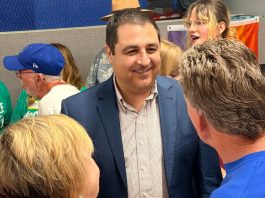
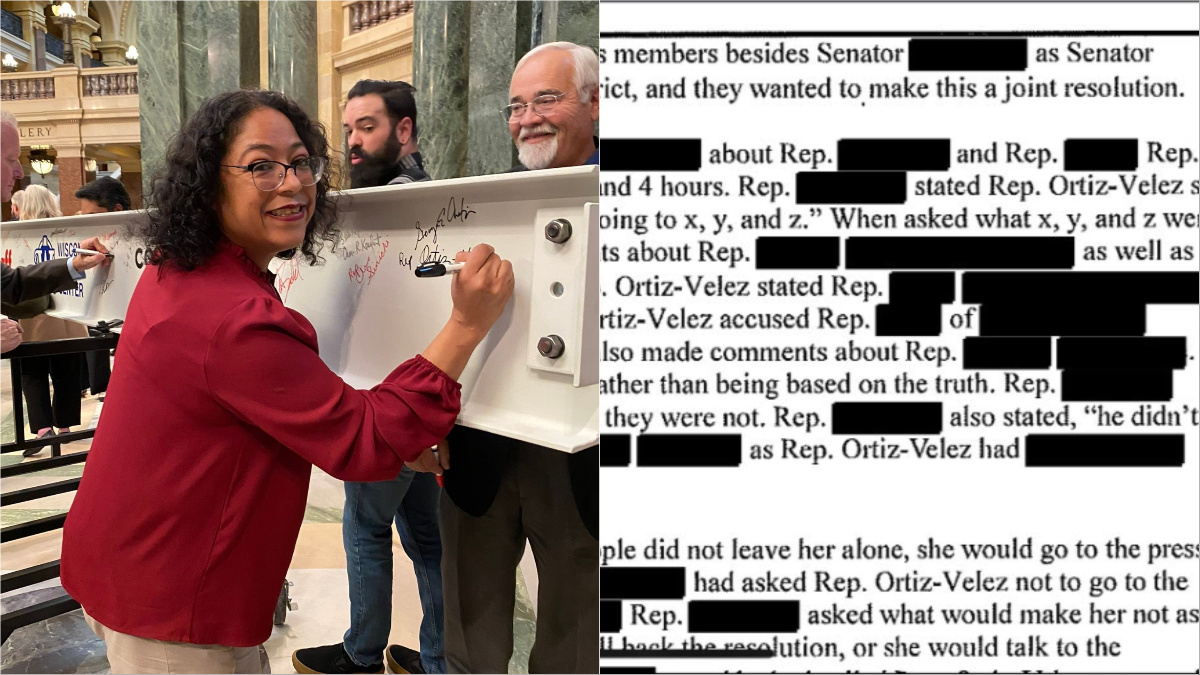
Gov. Tony Evers’ Department of Administration just released the police reports into the unprecedented Capitol Police investigation against Rep. Sylvia Ortiz-Velez, a Milwaukee Democrat who has been a rare independent voice in the Legislature.
However, they blacked out the names of the Democrat legislators who made the accusations against her.
They also blacked out all of Ortiz-Velez’s accusations against the Democrat legislators, even though those were the basis for the Milwaukee County District Attorney’s unprecedented misdemeanor criminal charge against her; the DA accused Ortiz-Velez of committing criminal disorderly conduct for her speech (essentially saying she would make accusations against fellow Democrat legislators to the news media.) The police reports – which show a detective even wanted Ortiz-Velez charged, in part, for telling the Legislature that another legislator was “cruel” – are riddled with redactions preventing the public from learning the nature of Ortiz-Velez’s own allegations. Here are examples:
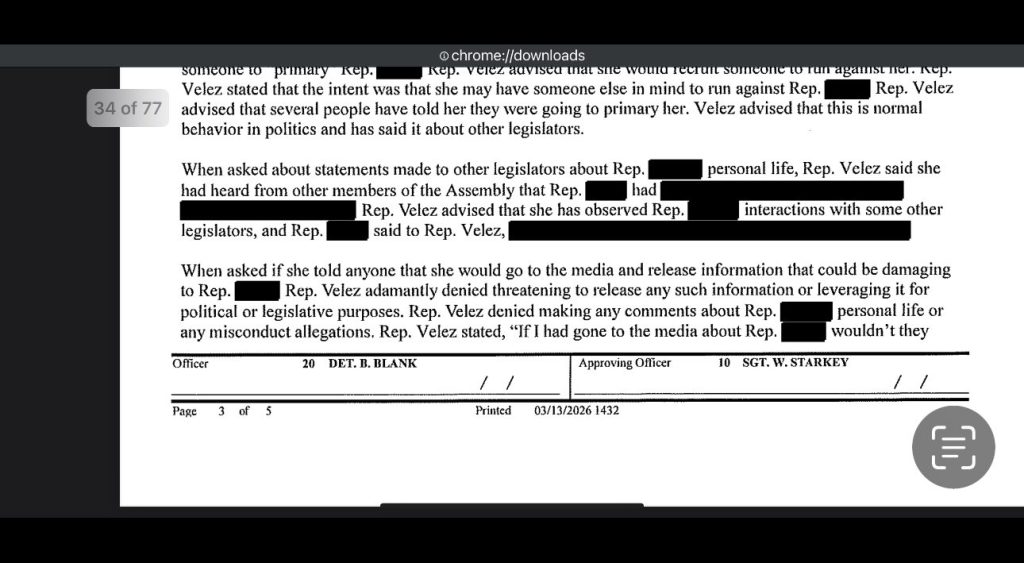
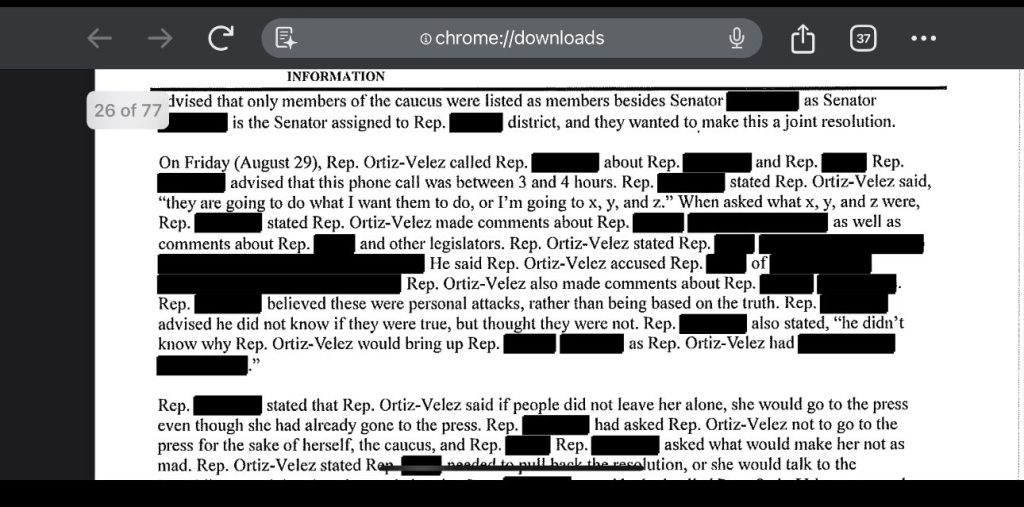
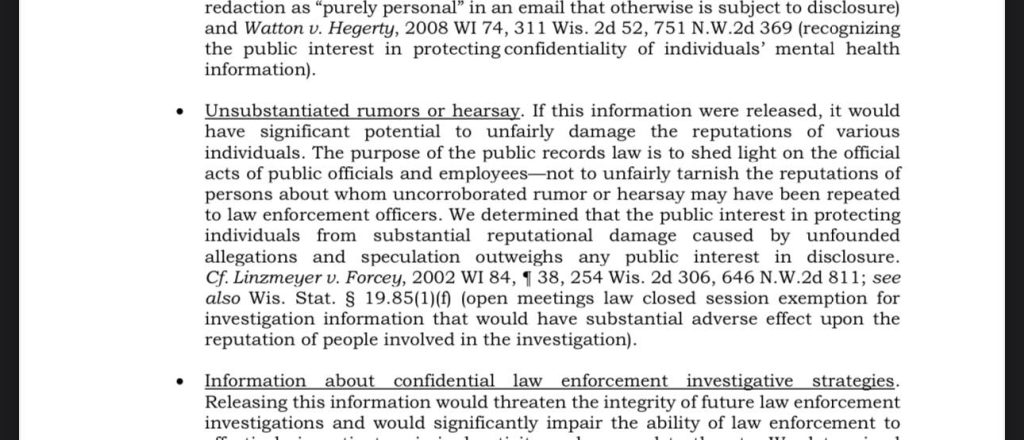
The state made an unusual legal argument to justify the redactions: That it’s in the public interest somehow to keep the public from learning about accusations that a sitting legislator made about other legislators that so alarmed them that they called the cops and got her criminally charged for speech. Case law makes it clear that the private reputational interest isn’t the test; the public interest in preventing the reputational embarrassment is; however, the supposed public interest in restricting the public’s right to know about its public officials here is not fully explained by Evers’ DOA.
The decision appears to fly counter to established case law. A court of appeals decision from 2023 appears relevant. In that case, the court sided with news outlets that sued after the Assembly denied records requests and then redacted records relating to a sexual harassment accusation against a then-Democrat legislator named Staush Gruszynski. The court found that the “Assembly violated the public records law when it initially denied outright the records requests because its purported
justifications did not sufficiently demonstrate that the public interest in non-release
outweighed the public interest in release.” The court also found that the Assembly violated the public records law in all but one redaction and ordered the payment of the news outlets’ attorney’s fees.
In that case, the appeals court wrote that the public “has a strong interest in being
informed about both an allegation that an elected official has sexually harassed a government employee and also how the allegation has been investigated and resolved by the legislature.” Of course, in the Ortiz-Velez case, the exact nature of the accusations is not even clear because of the redactions. The appeals court in the Gruszynski case noted that there is a strong public interest in “shedding light on the workings of government and the official acts of elected officials and employees.”
Of course, the agency charged with investigating Ortiz-Velez’s accusations in the first place is the Capitol police, which is listed under the hierarchy of Evers’ DOA (note that a Joint Audit Committee letter in 2024 referred to the Capitol police as being “part of the Department of Administration,” which is run by an Evers’ cabinet secretary.)

Thus, Evers’ DOA is also preventing the public from fully assessing how an agency under its control handled the investigation. The redacted police reports don’t provide much evidence that the Capitol police fully investigated Ortiz-Velez’s own claims before DOA deemed them “unsubstantiated rumors or hearsay.” But it’s hard to fully assess that without knowing what was blacked out or what they even were. Jim Piwowarczyk, a legislator who is the co-founder of this site, also filed an open records request and received the same blacked out reports as WRN.
“We determined that the public interest in protecting individuals from substantial reputational damage caused by unfounded allegations and speculation outweighs any public interest in disclosure,” Evers’ DOA wrote. The letter was signed by the Division of Legal Services for DOA.
Note: Wisconsin Right Now has decided to only release the full police reports when we get them WITHOUT redactions and when we can, thus, tell readers the full story. We aren’t going to play into a possible strategy of releasing only accusations against Ortiz-Velez, but not the accusations she made about other legislators. That’s unfair to her.
“What the state did here is that kind of stuff conspiracy theories are made from,” wrote Victor Huyke, publisher of the El Conquistador Latino newspaper in Milwaukee. “Not even the Epstein files have these many black lines.”
Evers’ Department of Administration released the accusations against Ortiz-Velez in full – including a gun-related metaphor for which she was never charged but which ended up in headlines anyway. The accusations against her boiled down to her using a metaphor, getting angry at fellow Democrat legislators for excluding her from a Latino veterans’ resolution, her telling a fellow legislator that she wanted to “primary them,” and her allegedly saying she was going to tell the news media about THEIR alleged misconduct if a legislator didn’t pull a resolution that excluded her. Her accusers also made a big deal about Sylvia Ortiz-Velez having a concealed carry permit (which is her legal right.)
Was she a whistleblower?
Remember, that Democrats are trying to defeat Ortiz-Velez in a primary right now. It’s theoretically possible that control of the Assembly could come down to a single vote next November: hers. Due to the animosity, she likely would not vote for Democrat Greta Neubauer for speaker if that happens. Thus, if Democrats don’t manage to oust Ortiz-Velez, and they take the Assembly, Senate and governor’s mansion (no sure thing), it’s possible that Ortiz-Velez would vote for a Republican speaker, who, alone, could stand in the door of Democrats’ agenda.
Sources say the legislators who are involved in these accusations are Minority Leader Greta Neubauer, Kalan Haywood Jr. and Priscilla Prado.
Ortiz-Velez ended up pleading to a misdemeanor disorderly conduct charge and getting a $300 fine. An independent lawyer previously argued that the charge was unconstitutional because Ortiz-Velez had legislative immunity, not to mention the free speech concerns. She entered the plea because she was worried the DA would hit her with more unfair charges, even though she didn’t think she did anything wrong, sources said.
Some points to consider:
- How would the legislators’ reputations be damaged by releasing the accusations when their names are blacked out?
- Generally, it’s easier to get public records relating to prominent public officials because, in a balancing test, the public’s right to know is higher. For example, the accusations by Milwaukee Common Council President Jose Perez against Civic Leader Marty Brooks were released by MPD, even though Brooks was never charged because the DA didn’t think they could prove the case beyond a reasonable doubt.
- Evers’ DOA certainly didn’t care about protecting the reputation of Sylvia Ortiz-Velez, who is also a legislator. Why doesn’t the same justification apply to her, especially for claims that didn’t make it into the criminal complaint?
What the Case Law Says
Wisconsin Right Now also reviewed the case law Evers’ DOA cited in their response letter. The Linzmeyer vs. Forcey case they cite involved a teacher accused during a police investigation that did not result in charges. Parents of students wanted the police reports; he tried to block them. However, the court ruled FOR DISCLOSURE. In so doing, they found:
- There is a public interest in assessing a police investigation. That’s present here too; the public should be able to properly assess how Capitol police handled an unprecedented referral of criminal charges against a sitting lawmaker for her speech.
- The court found that there was a greater presumption of openness because Linzmeyer was a teacher, which is a position of public trust. They even said that presumption would be stronger if he was an elected official. The blacked out allegations in this report apply to people who are all elected officials and one is her party’s leader in the legislature. So the presumption for openness should be stronger here than in Linzmeyer.
- The court found that an exception to release would need to establish a “public” interest against it, not a private one. This is important. What is a public interest? The court cited examples like an ongoing investigation or when release would compromise someone’s safety (like a confidential informant.)
The court wrote: “This public interest is not equivalent to an individual’s personal interest in protecting his or her own character and reputation. For instance, we have recognized that the disclosure of certain public records might result in fewer qualified applicants for public positions where their privacy would be regularly intruded upon. Vill. of Butler v. Cohen, 163 Wis.2d 819, 831, 472 N.W.2d 579 (Ct.App.1991). Similarly, some personnel files might not be releaseable because the persons whose records are released might be less willing to testify in court when faced with the potential that they would be cross-examined on the contents of their personnel file. Id. Thus, the public interest in protecting individuals’ privacy and reputation arises from the public effects of the failure to honor the individual’s privacy interests, and not the individual’s concern about embarrassment.”
Evers’ administration also cites a closed meeting exemption. Yet, these comments were not said in a meeting or closed meeting.
Furthermore, the reports reveal that, after a police detective, lieutenant and the deputy chief of the Capitol police ALL deemed Sylvia Ortiz-Velez’s gun metaphor not to be a real threat, another detective named Bryn Blank took over the case and referred a disorderly conduct charge against Ortiz-Velez to the DA regarding the gun metaphor anyway. Several variations of the comment are listed in the reports. It’s noteworthy that the criminal complaint ultimately filed did not mention the gun comment at all.
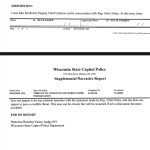
On top of it, Bryn Blank apparently wanted Ortiz-Velez charged with a crime for:
- Telling the media she was excluded by other legislators from a resolution honoring Latino veterans.
- Saying she would tell the media (BLACKED OUT.)
- Emailing the Legislature that another representative was “cruel.”
- Casting another legislator in a “negative light” for telling the media she was excluded from the resolution.
- Saying she’d tell the media about a legislator’s personal life (BLACKED OUT.)
Table of Contents