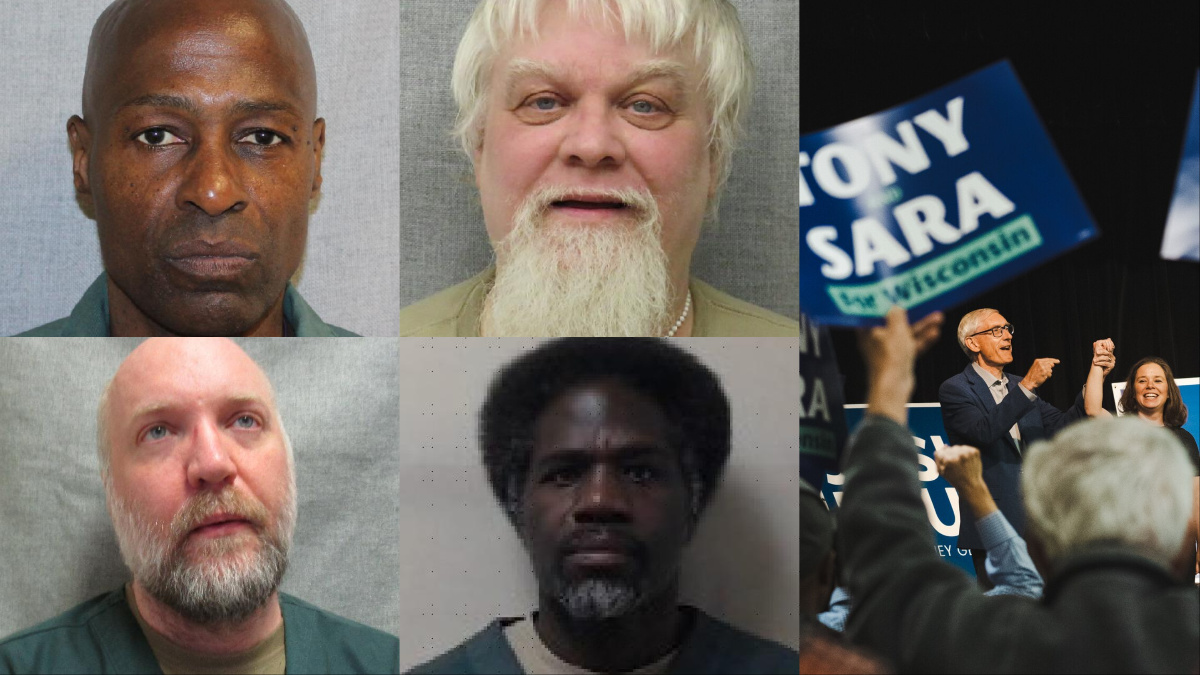
Even Steven Avery appears to qualify. Victims and their families will be put through the agony of fighting against potential releases they were promised would never come.
Some of the state’s most notorious cop killers and other murderers will qualify to seek release from prison under Gov. Tony Evers’ new sweeping commutation process, even those who were sentenced to life without parole for first-degree intentional homicide convictions, Wisconsin Right Now has learned.
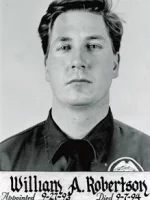
They likely include infamous Manitowoc killer Steven Avery; Jevon Jackson, who exececuted Christine Schweiger outside a Popeye’s restaurant in front of her child in an infamous case that drove truth-in-sentencing reforms in the first place; Andrew Krnak (Derek N. Anderson), whose entire family disappeared; Leonard McDowell, who murdered a high school assistant principal named Dale Breitlow in Wauwatosa; and Curtis Walker and Antonio McAfee, who murdered Milwaukee police officers William Robertson and Wendolyn Tanner in high-profile cases during the 1990s. Mark Jensen, who was convicted of poisoning his wife Julie, will now qualify to seek release after he’s served 20 years of a life without parole sentence.

 And it’s not only old cases. Any inmate who isn’t a sex offender or child abuser only has to serve half of their sentence before they qualify to seek release, with a few other caveats. People sentenced to life prison terms can get out in just 20 years, even if they were sentenced to life without parole.
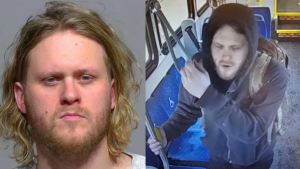
Take the horrific case of Maxwell Anderson, who was convicted last August of a life prison term with no chance for release. Or so it appeared then. In addition to homicide, he received a couple of shorter sentences for arson and concealing a corpse. He was convicted of dismembering Sade Robinson and scattering her remains throughout the city of Milwaukee. Due to Evers’ new commutation process, Anderson could now qualify to seek release in about 24.5 years.
Furthermore, we are told that District Attorneys all over the state weren’t consulted, it’s being left to the inmates to notify them (and judges) of applications for release, Evers will have the final say (supplanting his judgment for elected judges all over the state), and prosecutors and victim advocates were caught completely by surprise over the executive order, which came down on Good Friday.
“Any good lawyer can drive a semi through the holes in this,” one horrified judge told us. “I think nearly everyone can find an angle to petition.” A prosecutor and police officer expressed concern that inmates will flood DA’s offices with petitions before the November governor’s race. They find the commutation process Evers set up to be confusing, incongruent, and lack clarity. For example, a homicide lifer could theoretically get released after 20 years, but someone who received, say, 80 years for a couple of armed robberies would have to serve 40.
Although the governor has the right constitutionally to grant commutations, it was rarely done before and hasn’t occurred for 25 years. People in the system expect Evers to fast-track a flood of releases before November; after all, he once promised to reduce the prison population by 50 percent.
Republican Governor candidate Tom Tiffany called the commutation process “insane,” writing, “As governor, I will not allow this to stand. We will keep our streets safe, hold criminals accountable, and protect victims and their families.”
Evers’ supporters might say that Evers won’t approve the worst killers’ releases even if they apply, and certainly it would be up to him. But this misses key points. Why would Evers even give homicide lifers the chance to get out again in the first place? Why not put that guardrail on the process?
And, even if the commutation requests aren’t granted by Evers, the victims and their families will now go through hell, fighting against release or worrying about it happening, after being promised that they had closure and peace of mind. To put lifers without parole on the table at all is a stunning move.
The only caveat would be whether the defendants’ prison records show any violent misconduct incidents in the past five years. That would bar their release, and that’s not known. However, even if that’s the case, they would just need to go another five years without incident to qualify for release consideration. And if their prison records are clean, it appears they can ask to get out now. It appears that Jackson, who blew the head off a mother in front of her child at the Popeye’s parking lot, can seek release in about three to five years.
With the swoop of Evers’ pen, life without parole under the Evers/Sara Rodriguez administration now means “you can get out if the governor decides to let you.”
Why Is This Happening?
Evers, a Democrat who isn’t running for re-election, is giving some of the state’s most notorious killers a shot at a second chance. That’s the bottom line. It’s all the result of executive orders he signed on April 3, creating a new prison commutation board and process for the first time in 25 years. It’s essentially an end run around the Tommy G. Thompson-era truth-in-sentencing reforms that promised certainty in sentencing for victims and their families, i.e, “life means life,” and no more parole, starting in 1999.
It should be noted that the years following truth-in-sentencing reforms were generally marked by declines in crime, although many factors may have played a role.

Of course, just because someone qualifies to seek release doesn’t mean the governor will grant it. However, Evers’ track record on this question is not reassuring.
After all, Evers’ former two-time appointee to the Parole Commission, John Tate (which is a different process based on the old laws) has already released some of the worst killers in state history, including Burlington cop killer Wilson Brook and men who brutally murdered women, including the slayer of a stabbed Onalaska nurse, a sniper who shot and killed a Wauwatosa woman from the bushes, and an Oconomowoc man who cut his wife’s head off and burned it in a stove. Previous Evers-era early release programs, supposedly for non-assaultive substance abusers, had a 40% reoffense rate. The governor has been on a record-making pardon binge; pardons are different from commutations because pardons come after a sentence is served, but commutations can shorten a sentence. Furthermore, Evers’ former lieutenant governor, Mandela Barnes, called reducing prison populations “sexy.” Some prisons have melted down with severe staffing shortages.
And, if you’re a victim’s family member, you don’t want to trade certainty for the unknown.
 The outraged judge explained that sentencing decisions are carefully calibrated. Why should a politician undo them years later based on a colder review of paperwork?
It’s all shaping up to be the largest short-circuiting of truth-in-sentencing reforms since they were implemented. We asked Barnes, Lt. Gov. Sara Rodriguez, Rep. Francesca Hong, and Milwaukee County Executive David Crowley whether they support the commutation process and would continue it as governor. None responded. As Evers’ #2, though, Rodriguez has to own it.
But who qualifies exactly? And how does Steven Avery make that list? The real story may be the steadier drumbeat of lower-level violent cases that will slide through without much public scrutiny, leaving behind a trail of agonized victims. Still, the fact that some of the most notorious lifers appear to qualify underscores how far Evers is pushing this envelope. It’s almost hard to believe: The governor is really allowing homicide lifers to apply for release? Yes. His previous “earned release” programs were limited to supposedly non-assaultive substance abusers. Not this.
Here’s proof, straight off Evers’ website.

Check out how this defense firm is explaining the new commutation process to prospective clients:

In fact, allowing lifers to get out in 20 years seems to be a purposeful number. It comes close to mirroring the parole eligibility often set under pre-truth-in-sentencing laws, which have been blasted as racist by leftists eager to roll them back (but who can’t accomplish the law’s outright repeal due to a Republican-controlled Legislature).
Steven Avery: Killer of Photographer Teresa Halbach
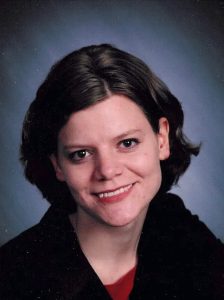
There are few Wisconsin murderers whose cases have been as high-profile as Avery’s. The Manitowoc County junkyard family member was convicted of murdering Teresa Halbach, a young photographer who came to his family’s junkyard to photograph a van. He’s been the subject of controversial Netflix documentaries arguing for his freedom.
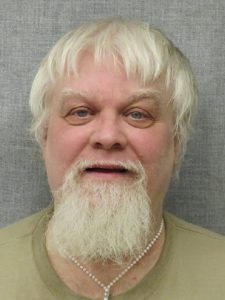
In his executive order, website, and the commutation application, Evers explains which inmates don’t qualify. They are sex offenders, and people convicted of sexual assault, physical abuse of a child, sexual exploitation of a child, trafficking of a child, incest, and soliciting a child for prostitution.
Inmates have to serve half their sentences, and in the case of lifers, at least 20. There is no prohibition on killers qualifying, even if they received life terms without parole. Inmates with violent misconduct incidents while behind bars in the last five years don’t qualify.
Let’s apply that to Avery.
Although he was charged with sexual assault, he was NOT convicted of it. The only charges he was convicted of were homicide and felon in possession of a firearm, to run concurrently. He’s already served 20 years. Avery is not a registered sex offender. Yes, he was convicted once of sexual assault, but he was famously exonerated in that case. It’s not clear whether he’s had violent misconduct incidents in prison. Barring that, Evers’ own website criteria indicate his case would qualify.
Although Evers’ executive order says that “particularly egregious” cases can be rejected, this is subjective and not defined. Furthermore, the order vaguely says they are “as determined by the governor.”
What of Avery’s nephew, Brendan Dassey? It appears he doesn’t qualify because, unlike his uncle, Dassey has a sexual assault conviction (in the Halbach case) and is a registered sex offender.
Cop Killers Could See the Light of Day Again
Equally disturbing: A number of cop killers appear to qualify for commutation consideration. Astonishingly, Evers chose not to exempt homicide cases, lifers without parole eligibility, and murderers of law enforcement officers from consideration.
For example, beloved Milwaukee police officers Matthew Rittner, Kendall Corder, and Michael Michalski were horrifically murdered in the last few years, leaving deep trauma in their families and on the force. Corder’s killer hasn’t been sentenced yet and has multiple offenses, so that one is unclear.
But consider:
- Jonathan Copeland Jr. killed Michalski. In 2019, he was convicted of a single count of homicide. It appears that he could ask to get out now in about 13 years. The family was promised that he would never get out again.
- Jordan Fricke killed Rittner. Fricke received a life prison term in 2019; two counts of seven years each for recklessly endangering safety, consecutive to each other; and 1 year concurrently for maintaining a drug house. It appears he would now be eligible to get out after serving 27 years, and he’s served seven already.
It’s striking that some of the killers who now qualify – or soon will – committed crimes so depraved that they drove truth-in-sentencing reforms in the first place. Although the commutation process doesn’t repeal that law, it short-circuits it by giving many inmates a chance to get out early anyway, removing the certainty that is the hallmark of that reform. Truth-in-sentencing eliminated the old parole, replacing it with a determinate term of confinement.
Consider the murders of Schweiger, the mom murdered outside a Milwaukee Popeye’s, and Breitlow, the slain Wauwatosa assistant principal. Both cases were cited by Gov. Tommy Thompson in a 1994 State of the State address, where he took aim at parole.
“MANDATORY PAROLE MUST END … AND IT MUST END NOW,” Thompson said. “AND LET’S THROW AWAY THE KEY FOR CAREER CRIMINALS.”
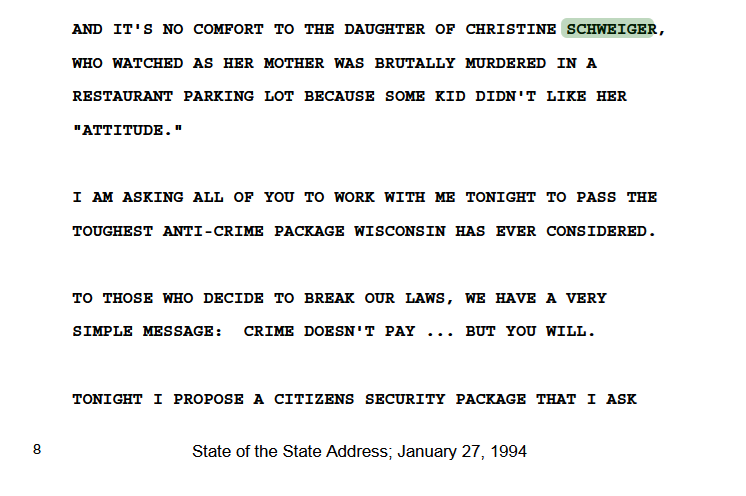
The judge had called the Schweiger execution-style slaying “unbelievable horror and depravity,” and both cases traumatized the state. “Wanton Murders Drive Residents to Cry: ‘Enough!'” read a news headline from the time, which also discussed them.
But it’s a very different era, and a very different governor. Now their killers appear to qualify to seek release now or soon.
There are some notorious killers who are ruled out. Jeffrey Dahmer (if he was alive) and parade attacker Darrell Brooks wouldn’t qualify for release as they are registered sex offenders. Dahmer’s killer Christopher Scarver has multiple homicides, so that would add up and likely prohibit release. Similarly, father-and-son cop killing duo James and Ted Oswald were hit with so many charges that they’d likely never qualify since the time adds up and presumably they must serve at least half of EACH conviction and 20 years for the homicide, if run consecutively.
However, a judge and police officer we spoke to expressed confusion over how the new Evers’ process handles multiple convictions stemming from the same incident. It’s also unclear if the physical abuse of a child prohibition refers only to a conviction for that same charge. Would it also apply, for example, to a person who kills a child, but is just convicted of first-degree intentional homicide?
Curtis Walker: The Ambush Killer of Milwaukee Police Officer William Robertson
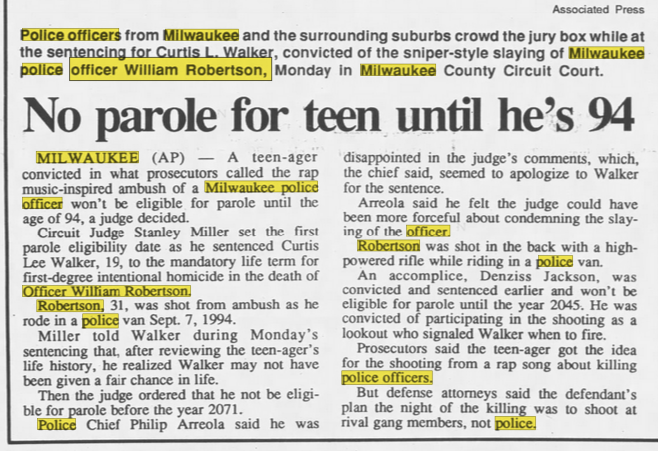
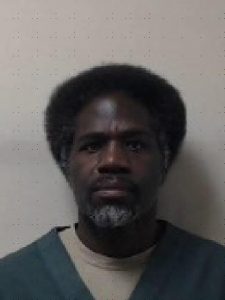
Today, Walker is 49 and incarcerated at New Lisbon Correctional Institution. The Associated Press story when he was sentenced declared, “No parole for teen until he’s 94,” but apparently no one considered Tony Evers might be governor someday. Walker, then 17, ambushed Milwaukee Police Officer Robertson, who was riding in a police van and who left behind a wife pregnant with twins.
The judge’s comments, which indicated some empathy for Walker, enraged then-Chief Phil Arreola. Prosecutors said Walker got the idea from a rap song about killing police officers and shot at the van with a high-powered rifle. It was random and unprovoked.
Walker only received a single homicide conviction for the 1994 slaying, and he’s served 20 years of it, according to CCAP. His parole eligibility date was set at 2071, “effectively making it a life without parole” case.
He has no sex offenses on CCAP, and is not on the sex offender registry. It’s unknown whether he’s had any violent misconduct cases while behind bars in the last five years.
What of his accomplice, Denziss Jackson? His parole eligibility was supposed to be 2045, according to state DOC records. He was convicted of a single homicide charge, as well, he’s not a sex offender, and he has also served 20 years, so, barring misconduct behind bars, he would qualify to seek release now, too.
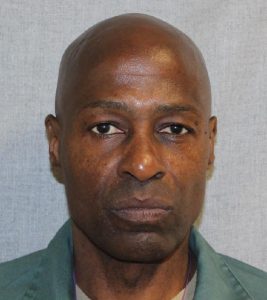
Today, McAfee is 58. He received a life sentence. But he’s served 20 years, so he likely qualifies for release, barring any misconduct behind bars. CCAP indicates he was convicted of a single count of homicide.
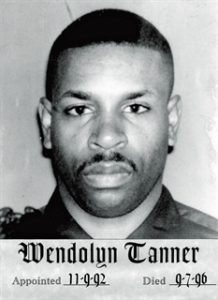
McAfee shot and killed Milwaukee Police Officer Wendolyn Tanner during a foot chase. He doesn’t appear to have any prior sex offenses and is not on the sex offender registry. “On Saturday, September 7, 1996, Officer Wendolyn Tanner was shot and killed during a foot chase of a known felon and parole violator that he and his partner were attempting to arrest,” the Milwaukee Police Department says. Tanner left behind a pregnant fiancée.
Leonard McDowell: Killer of High School Assistant Principal Dale Breitlow
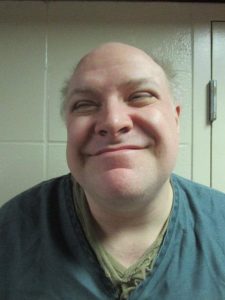
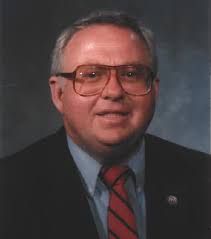
In 1993, Leonard McDowell, then 21, and a former student at Wauwatosa West, shot and killed assistant principal Dale Breitlow in the hallway of the school. Breitlow was described as “a gentle giant” and a “hard-working family man with a passion for sports and helping kids,” Tosa Compass reported.
McDowell was convicted of a single count of homicide. His parole eligibility is 2085. He was convicted in 1994. He has served more than 20 years. He has no other offenses. His prison misconduct history is not clear. Thus, he, too, appears to qualify.
Andrew Krnak AKA Derek N. Anderson: An Entire Family Missing
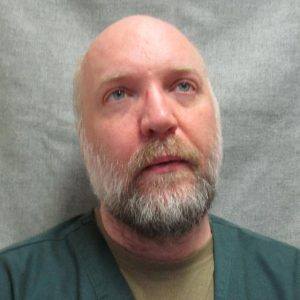
Derek N. Anderson, formerly Andrew Krnak, is the suspect in one of the most notorious disappearances in state history. His entire family disappeared.
However, Anderson was only convicted of one count of first-degree intentional homicide; he’s not a sex offender, and he’s served 20 years, so it would appear he qualifies.
“Thomas (Krnak), his mother Donna, and father Allen reportedly left family home on Thursday 7/3/98 in route to family cabin in Waushara County (WI), but never arrived,” the state missing person’s website says. “Thomas and Donna have not been seen or heard from since. His surviving brother, Andrew Krnak, who legally changed his name days after family disappearance to Derek Nicholas Anderson, is serving life sentence on Homicide of his father, Allen Krnak who reportedly left at the same time and date.”
Jevon Jackson: The Murder of Christine Schweiger Was ‘the Most Despicable Crime I’ve Dealt With on the Bench’
The murder of Christine Schweiger was one of the worst crimes of the 1990s. According to Time, in 1993, Christine, an accountant and mother of three, was “ordered to her knees outside a Popeye’s chicken by two teenagers, 15 and 16 years old, who demanded her money.”
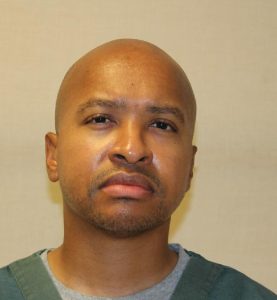
She said she didn’t have any, so the 16-year-old shot her in the head at close range with a 12-gauge sawed-off shotgun in front of her 10-year-old daughter. He told police, according to Time: “I’m the big man. I got the gun. Why does she have this attitude?”
Judge Christopher Foley described Schweiger’s murder as an “execution” and “the most despicable crime I’ve dealt with on the bench,” the AP wrote. The case was cited for helping toughen the juvenile code.
Evers also issued a separate executive order for juvenile lifers, giving them a chance at release if they’ve served 20 years. The triggerman who shot Schweiger, Jevon D. Jackson, was 16 at the time.
In 2017, he sought release. The court case indicates he received a life prison term with parole eligibility when he is 101. Appeals and trial courts rejected that bid. The court document indicates that Jackson said the other defendant indicated they should rob white people, as they were less likely to be armed. Police found “pieces of bone, scalp, and brain matter scattered over an approximate eighty-foot radius surrounding the victim.”
The 2017 court case indicates that the judge, in addition to the homicide sentence, gave Jackson “an additional thirty-two years, to be served consecutively.”
It appears that Jackson would qualify after serving 36 years. He’s already served between 33 and 35 years.
What of Booker Shipp, the killer of Glendale Police Officer Ronald Hedbany?
In 1994, Booker Shipp brutally executed Glendale Police Officer Ron Hedbany in his squad by shooting him point-blank several times with a .44 magnum. Shipp had just robbed a bank and ambushed Hedbany as he responded to the bank robbery call.
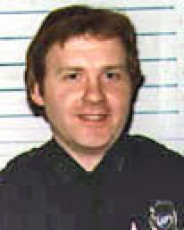
Shipp was eventually convicted of Hedbany’s murder and was sentenced to life in prison. Shipp has now served about 30 years of that sentence.
During that trial, Shipp was also convicted of two counts of armed robbery, in which he received two consecutive sentences of 40 years each. It turns out those armed robberies might keep him in.
Shipp was charged with battery by a prisoners last year, but the charges were dismissed by the prosecutor. It is unclear if that charge would play a role in any request to be released since inmates can’t have violent misconduct incidents, but his charge was dismissed.
Due to the fact that he received two armed robbery convictions as well as the homicide charge, it appears he must serve about 30 more years before seeking release. That’s not what the family was told when Shipp was sentenced, though. The headline back then read: “No parole for 100 years in slaying.”
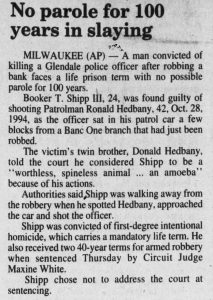
Table of Contents