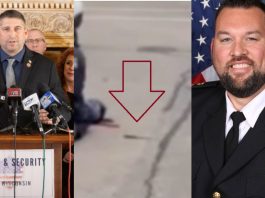
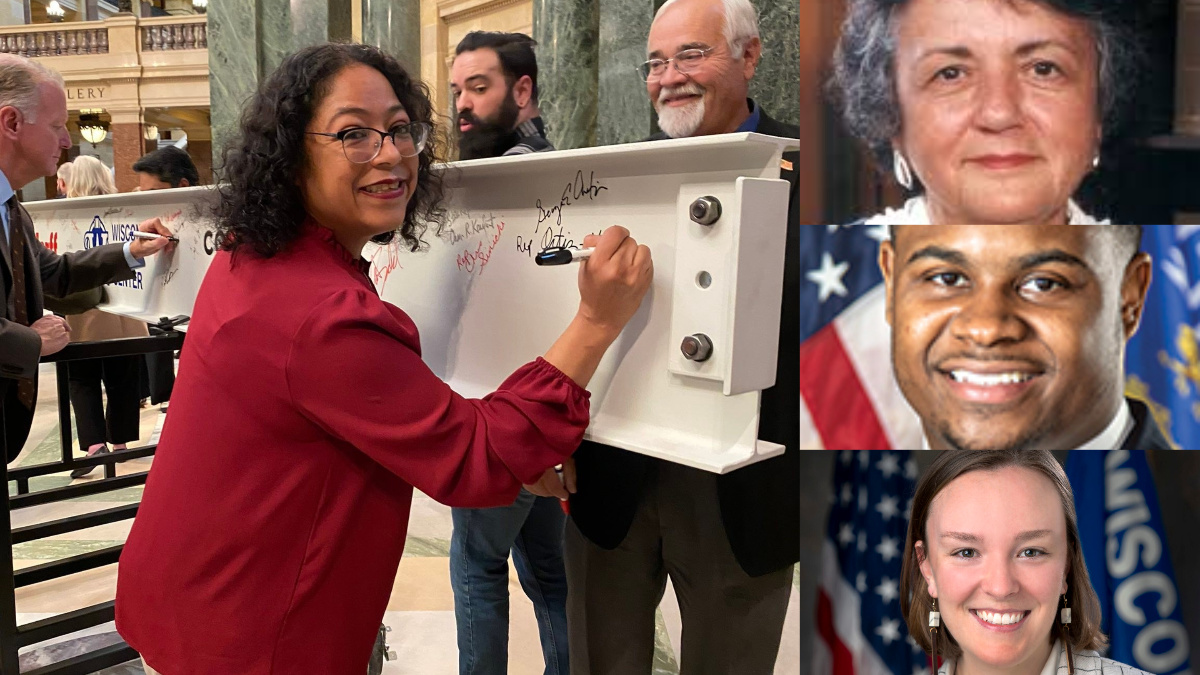
“Given that her conduct was speech-based and directed toward her colleagues in the Legislature, I think it would fall into that protection” – former prosecutor Dan Adams.
The vague, almost unprecedented disorderly conduct criminal charge filed against state Rep. Sylvia Ortiz-Velez (D-Milwaukee) for her speech appears to violate the state Constitution’s immunity protection clause for legislators, legal experts say.
The state Constitution gives legal immunity to legislators for “words spoken in debate.” “Privilege in debate. Section 16. No member of the legislature shall be liable in any civil action, or criminal prosecution whatever, for words spoken in debate,” it says. (See Article IV, Section 16 here.) Since the complaint is based on the accounts of three Democrat legislators and relates to Assembly resolutions, can any legislator trust speaking with a colleague in the future if their speech might be criminalized?
The state Constitution tries to prevent such a scenario; it intends to allow robust discussion of the legislative process. The Constitution’s annotated version, which explains existing case law, states: “The sphere of legislative action protected under this section is broader than floor deliberations.” In other words, Ortiz-Velez’s comments did NOT have to be made on the Assembly floor for the immunity protection to exist.
In fact, the late liberal legal icon Shirley Abrahamson authored a key state Supreme Court decision that makes it clear that the constitutional protection extends well beyond floor debates; Abrahamson also cited a U.S. Supreme Court decision indicating that such protections should be construed liberally.

As a result, several legal experts believe Ortiz-Velez has a very strong constitutional defense to the charge filed by the Milwaukee County District Attorney’s Office this week. They believe the same protection would extend to any more serious charge that could be filed based on the facts described in the complaint.
“Given that her conduct was speech-based and directed toward her colleagues in the Legislature, I think it would fall into that protection,” respected former prosecutor and defense attorney Dan Adams told Wisconsin Right Now.

The complaint alleges that Ortiz-Velez – a Democrat critic of Democrat governor candidate David Crowley and Democrat Party leaders – told a legislator that she would tell the news media about alleged “inappropriate personal actions” of another Democrat legislator because she was upset about being excluded from an Assembly resolution relating to Latino veterans, as her late husband was one. Ortiz-Velez is also Latina.
The complaint does not specify what the supposed actions were. Bizarrely, one line in the complaint accuses Ortiz-Velez of making “indecent” comments, defined merely as “they are going to do what I want them to do, or I’m going to x, y, and z,” followed by a paraphrase. She was also accused of making undefined “personal attacks.”
However, we have learned that the alleged “negative things” and “personal attacks,” while repeatedly described vaguely as personal in the criminal complaint, may allegedly also have a nexus to the Legislature, which would strengthen Ortiz-Velez’s argument. What exactly Ortiz-Velez said is not fully detailed in the complaint, so if you are confused what exactly she is being accused of saying, you are not alone.
It should be noted that the criminal charge was NOT based on previous accusations (by Minority Leader Greta Neubauer and others) that Ortiz-Velez made a shooting-related threat toward legislators, which she denies. Her lawyer, Michael Chernin, says the Capitol Police ruled that those accusations were without basis for a criminal charge because she used a common metaphor or hyperbole. The criminal complaint makes zero mention of that, so that accusation doesn’t factor into this analysis.
What Shirley Abrahamson Wrote
When the state Constitution’s Section 16 was crafted in the 1800s, the “privilege in debate” phraseology was crafted with great care. The limited Wisconsin case law on that section describes how the framers wanted to prevent the legislative branch from being intimidated by the executive or judicial branches.
 “The framers’ judgment was that the courts are not the proper place to hold legislators accountable as elected representatives for ‘words spoken in debate,'” says the 1984 Abrahamson-authored Wisconsin court case.
In fact, the Constitution presents another mechanism if a legislator’s behavior is “disorderly,” expelling a member, the decision notes. But that requires 2/3rds of all elected members, which her critics would likely never get against Ortiz-Velez.
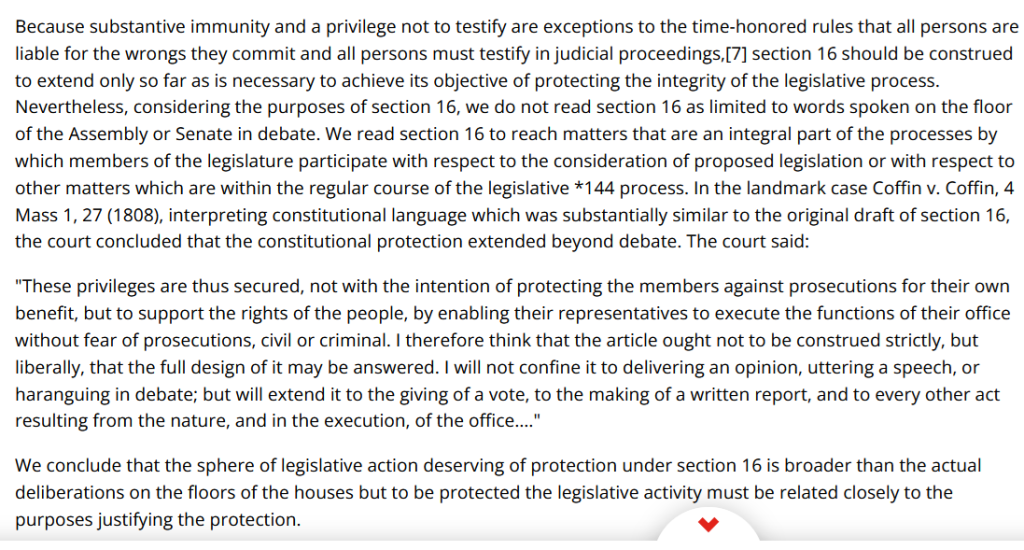
“Considering the purposes of section 16, we do not read section 16 as limited to words spoken on the floor of the Assembly or Senate in debate,” Abrahamson concluded. “We read section 16 to reach matters that are an integral part of the processes by which members of the legislature participate with respect to the consideration of proposed legislation or with respect to other matters which are within the regular course of the legislative process.”
Giving the DA’s office the benefit of the doubt, the state constitutional provision that protects Ortiz-Velez has rarely come up before. Perhaps they weren’t aware of it. That alone, though, shows how unprecedented the charge against the Milwaukee Democrat is.
Ortiz-Velez is accused of making the comments on the phone to other Democrat legislators. Importantly, the comments related to Assembly floor resolutions on public issues of concern (the recognition of Latino veterans, but also of Hispanic Heritage Month). That’s critical to this analysis because resolutions are legislative matters.
We’ve learned that the three unnamed “witnesses” described in the criminal complaint are Minority Leader Neubauer, state Rep. Kalan Haywood, and state Rep. Priscilla Prado. This also strengthens Ortiz-Velez’s immunity case, legal experts say. That’s because the immunity protection is not absolute, and the closer the speech is linked to the legislative process, the stronger the case.
The criminal complaint (read it here in full) repeatedly refers to official legislative business. For example, it says that Ortiz-Velez received “an email invitation in June of 2025 to participate in the Hispanic Heritage Month Resolution with other representatives” and “in an email to the entire Assembly, Ortiz-Velez attributed her hurt feelings to the fact her late husband was a Latino veteran.” It also states, “Witness 3 reported that there was ongoing animosity between Witness 1 and Ortiz-Velez regarding the Hispanic Caucus and different bills.” Ortiz-Velez “told Witness 2 that she would go to the press with negative things about Witness 1 if Witness 1 did not rescind her resolution,” it claims.
It should go without saying that legislators make personal attacks against other legislators all of the time, and it’s not criminalized. For example, Democrat state Rep. Lee Snodgrass recently slammed Republicans for getting spray tans and having hair extensions during a bizarre speech on the Assembly floor. Again, though, the immunity protection is meant to protect legislators’ robust speech, even when it pushes the edges of indecency or might be considered below the belt or offensive by some people (subjective terms). Do we want to live in a society where our lawmakers have to watch everything they say because it might be criminalized? Speaking of indecency, state Rep. Francesca Hong repeatedly uses the F word, but no one argues it should be criminalized (nor are we.)
Milwaukee County DA Kent Lovern, a Democrat, declined to comment through a spokesman because the case is pending. Several legal sources expressed skepticism to us that Lovern will let the charge stand once he reviews it (and the constitutional concerns) more fully, saying he is a career prosecutor they respect. The charge was filed by an assistant. Recently, Dane County DA Ismael Ozanne dismissed a charge filed against a local veteran in an unrelated case after taking a closer look.
‘Her Conduct Was Speech-Based’
We were first alerted to this constitutional protection defense by Adams, a respected former Milwaukee County prosecutor and criminal defense attorney who is considered a political independent (he ran as a Democrat for Assembly years ago). He told us that he believes this protection applies to Ortiz-Velez after Wisconsin Right Now contacted Adams because we wanted an opinion from a respected attorney who is not too heavily tied to EITHER the Democrat or Republican parties.

“Our state Constitution has protection for legislators to not be held legally liable for actions they take as legislators,” Adams explained. “We want our legislators to be able to speak freely and debate issues and have disagreements and not worry about being dragged into court. Given that her conduct was speech-based and directed toward her colleagues in the Legislature, I think it would fall into that protection.” He did caution that there is meager case law defining terms.
To get a second opinion, we ran Adams’ position past a respected Republican prosecutor who didn’t want his name printed because of his current job. He agreed with Adams that the constitutional provision would apply to Ortiz-Velez. He said the Milwaukee DA may just not have been aware of the provision and could possibly dismiss the charge after further review. According to this prosecutor, the provision has rarely come up before.
“There’s nothing that removes her protection,” he said, after reviewing the criminal complaint and the case law. He noted that her case involves official Assembly matters (resolutions), strengthening the constitutional argument. The prosecutor also noted that Ortiz-Velez’s emotions were heightened by grief over her late husband, questioning why prosecutors would want to take a stand on a legally questionable speech-based charge in this circumstance.
A third source, a Republican former prosecutor who can’t be named due to his job, said the prosecution might have some wiggle room on the constitutional question, as there isn’t a lot of case law on the topic. He said it would be important to know specifically what she said, as some of her comments are paraphrased in the complaint. This person thought the Ortiz-Velez case also requires a detailed analysis of a “true threat” under the law, which requires, per a recent U.S. Supreme court case, “a showing that a person ‘consciously disregard[ed] a substantial [and unjustifiable] risk that [his] conduct will cause harm to another.'” In short, it’s complicated.
So complicated that the third source also questioned why the Milwaukee County DA thinks Ortiz-Velez’s speech was allegedly so egregious as to warrant such a constitutional and legal battle. He thinks criminalizing a legislator’s speech is a big deal, especially as she is in the midst of a contested primary election. And he thinks the charge is deficient for other reasons.
He called the charge “ridiculous” because the complaint is so vague. The constitutional debate aside, Adams and the two Republicans questioned whether the complaint even demonstrates probable cause because it lacks sufficient detail to back up the charge.
If Ortiz-Velez were to fight the charge, Adams says, “A basic reading of the criminal complaint calls into question whether there’s probable cause, and, if it were challenged at an initial appearance, whether the case would go forward at all.”
Despite the unprecedented nature of the speech-based charge against Ortiz-Velez, the news media have simply regurgitated the state’s accusations without critically examining them or the law.
Furthermore, Wisconsin Right Now has learned that some Democrat-aligned lawyers have been urging Ortiz-Velez to rush a plea to the misdemeanor disorderly conduct charge by allegedly scaring her into believing the DA could hit her with a worse speech-based charge if she doesn’t, even though she doesn’t believe she did anything wrong.
Adams believes the complaint was vaguely written because it’s part of a negotiated plea on the front end.
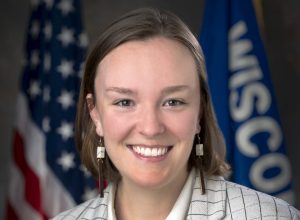
Ortiz-Velez is facing a primary challenge from another Democrat who once interned for Tammy Baldwin and who is already trying to capitalize on the criminal charge. Ortiz-Velez is a member of the Democrat Party who usually votes with Democrats. She has an independent streak and sometimes crosses over when it benefits her constituents. In short, she’s angered Democratic leaders on several fronts. Several days before she was charged, she alleged on the Assembly floor that she has been told to go home and not vote on some bills, apparently to block Republicans from being able to claim those bills are bipartisan.
Case Law
Let’s unpack the constitutional protection. The annotated version of the State Constitution lists only a couple of court cases on point.
The Abrahamson-authored decision, State v. Beno, involved a defendant (and lobbyist’s wife) who was being held in the Dane County Jail until she “testified and produced documents in accordance with a subpoena issued by the Wisconsin Department of Revenue.” The issue at question was whether “the circuit court erred in quashing defendant’s subpoena directed to Richard White, an administrative assistant to then Assembly Speaker Ed Jackamonis, on grounds of legislative privilege.” The aide made comments at a settlement conference in another suit against the state Assembly. Those circumstances appear very different.
In the 1984 Wisconsin Supreme Court decision, no other than Attorney General Bronson LaFollette helped argue the case for the legislative aide who wanted protection for speech. Despite the different circumstances, the decision does elaborate on the immunity section.
“Requiring a legislator to submit to the burden of testifying about ‘words spoken in debate’ might chill the ardor of a member to speak and act freely in the performance of legislative functions,” Abrahamson’s decision says, adding that the protection is not absolute. “The principle accorded legislators by section 16 exists only to the extent necessary for the adequate functioning of the state legislative body.”
Abrahamson cited an early 1800s-era U.S. Supreme Court decision. “These privileges are thus secured, not with the intention of protecting the members against prosecutions for their own benefit, but to support the rights of the people, by enabling their representatives to execute the functions of their office without fear of prosecutions, civil or criminal,” the court wrote. “I therefore think that the article ought not to be construed strictly, but liberally, that the full design of it may be answered. I will not confine it to delivering an opinion, uttering a speech, or haranguing in debate; but will extend it to the giving of a vote, to the making of a written report, and to every other act resulting from the nature, and in the execution, of the office….”
Abrahamson’s decision also quotes a justice in 1855 as admonishing people regarding the state Constitution: “We made it ourselves. We are bound to abide by it, until altered, amended or annulled, and we must construe it, and support it, not according to the vague, conjectural hypothesis of volunteer expounders, resident in other states, having no care or interest in the government, and having no knowledge of the constitution of our state, but according to its plain letter and meaning.”
A second court case in Wisconsin also dove into the section.
“Not all activities of a legislator are protected by this section insofar as that activity is not an integral part of the deliberative and communicative processes. While legislative acts are protected by the speech and debate clause, political acts are not. Hiring, directing, and managing legislative caucus staff to oversee political campaigns is not protected. By its very nature, engaging in campaign activity is political,” the annotated Constitution says. It cites, “State v. Chvala, 2004 WI App 53, 271 Wis. 2d 115, 678 N.W.2d 880, 03-0442. See also State v. Jensen, 2004 WI App 89, 272 Wis. 2d 707, 681 N.W.2d 230, 03-0106.” The Supreme Court decision on this case is here.
That case also seems far afield; it involved accusations that some legislators were using state resources for campaign purposes, which is not related to the accusation against Ortiz-Velez.
The appellate court decision in Chvala cites the Abrahamson decision, though. “The protections of art. IV, § 16 extend to matters integral to the legislative process and to the consideration of proposed legislation and other matters ‘which are within the regular course of the legislative process,'” it says.
A third case cited in the annotations relates to a state legislator being prosecuted federally, which is not germane here.
Table of Contents