

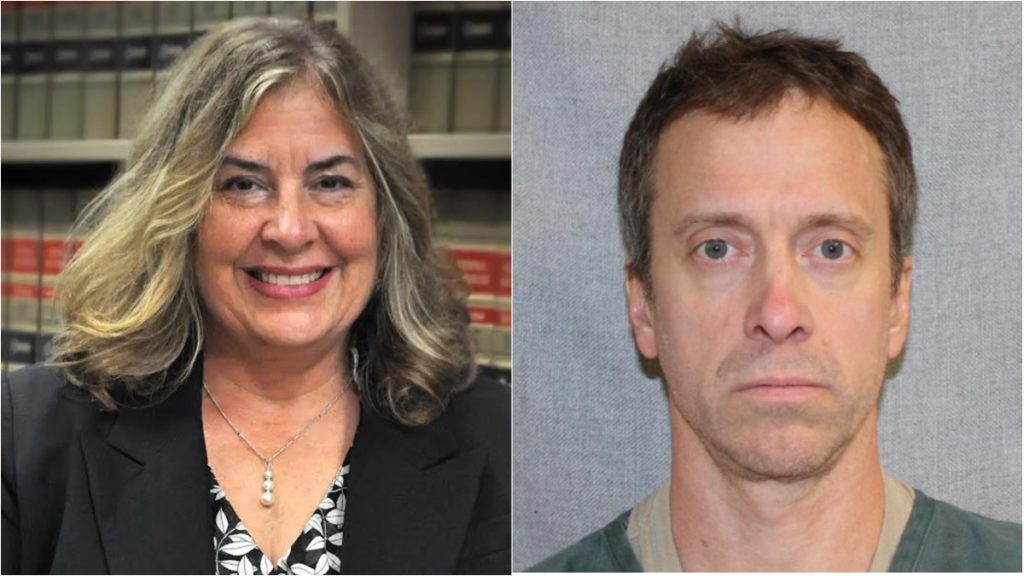
Ted Oswald, who was convicted with his father in the execution of a Waukesha police captain, a hostage taking, bank robbery, shootout with police, and more, is among the inmates from Waukesha County who are seeking a commutation from Gov. Tony Evers, according to Waukesha County DA Lesli Boese.
Boese, like other District Attorneys, is starting to receive multiple commutation notices from inmates. Oswald’s name is on the list she provided us.
However, there is a caveat where Oswald, now 50, one of the state’s highest-profile inmates, is concerned. “I believe Ted filed his request before the governor announced the creation of the Commutation Advisory Board, therefore I don’t believe he would have known about the qualifications,” Boese explained.
She said that Oswald filed the request in January, which is before Evers unveiled a new process and guidelines for commutations that expressly allow homicide lifers, including people who killed police officers, to seek release after 20 years. Oswald’s parole eligibility is listed in the system as 2187. He’s listed as being housed at Stanley Correctional Institution.
What Does Tony Evers Say About This? Nothing.
WRN subsequently asked Evers’ office to clarify whether the governor has already or will deny Oswald’s application and whether Oswald even qualifies to seek release under the governor’s new rules.
Evers’ office did not respond despite having more than a week to do so. We also asked Evers’ office for a list of all commutation applications he has received, and again received no response.
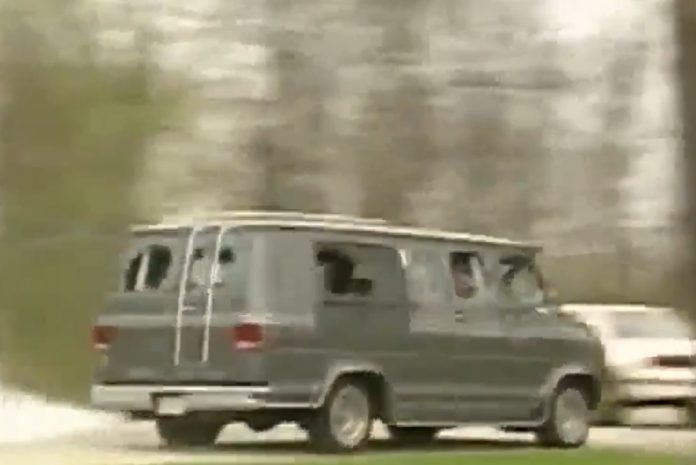
Oswald’s crime was captured in part on video when he and his father slammed a stolen van into a tree after a shootout with law enforcement. The father and son were convicted in separate trials of murdering Lutz as they fled a bank robbery. They then took a random woman hostage. James Oswald, who trained his son to commit the crimes, is now 81 and incarcerated at New Lisbon Correctional Institution.
We also asked Boese for the date that Ted Oswald sought the commutation. “His letter was dated 1/2/26, it was not the form rolled out by Evers,” she said. Oswald’s last attorney withdrew in 2013, according to CCAP.
The court records state, “Defendant’s Notice for application for waiver from eligibility requirement for clemency filed on 1/13/26.” There is no other court action listed after that, except for an assignment to a judge.
We asked Boese whether Oswald’s request had already been rejected or even heard. “I don’t know that we would receive notice when a decision is made. Frankly, I have never seen a sentence commutated before. I assume no news is good news,” she said.
Evers’ guidelines say an inmate on a life sentence for homicide only has to serve 20 years before qualifying to seek release under his new commutation scheme. On all other charges, inmates must serve half of their sentences. Offenders who commit sex offenses or physical abuse of a child are excluded from qualifying, which isn’t at play here.
Inmates are required to notify the DA and judge, but the DA and judge can’t overrule the governor. Evers established a commutation board, but he included a loophole in his executive order that allows applicants to bypass the board and go directly to his top lawyer, then to him. All governors have commutation powers, but no governors have granted commutations in Wisconsin for 25 years. Evers once pledged to reduce the prison population by 50%, so opponents are concerned that he will fast-track releases before his tenure ends. DAs around the state are vowing to fight all commutation requests, but they also say they were not included in the process on the front end, and their offices are already short-staffed.
Oswald, who was 18 at the time of the crimes, has been incarcerated since 1994. Evers’ website says that inmates qualify for a juvenile life sentence commutation if they were “age 19 or younger at the time of conviction.” However, Oswald was tried and convicted as an adult. Oswald was last in the news in 2024 when the Waukesha County DA, then Sue Opper, objected to his request to be transferred to a Canadian prison; he is a Canadian national.
Oswald has many convictions for a string of very serious offenses, and some of those were run consecutively. People in the system we’ve spoken to, including a judge and police detective, expressed confusion over how Evers’ new process handles consecutive charges stemming from the same incident, as the executive orders and his website are silent on that point; does that rule Oswald out? It may.
It’s clear that the homicide of Capt. James Lutz alone doesn’t rule Oswald out from trying for a commutation under Evers’ new guidelines; Evers made it clear that homicide lifers qualify to seek release. It’s all of the other charges added together that might disqualify him, since the judge at the time ran some of them consecutively. If each conviction is handled separately, he wouldn’t yet qualify.
Evers has not clarified this point. However, the uncertainty in the system speaks to the rapidity with which Evers unfolded his commutation process, not involving many stakeholders, including DAs, in its development.
WRN learned about Oswald’s request when, on May 2, we asked DA Boese whether her office had “received any commutation application notices and from whom and how many?” This was in response to Evers’ new process. We also made similar requests to DAs in Racine, Milwaukee, Fond du Lac, and Washington Counties.
Boese responded: “I have received three to date.” She listed the following:
Theodore W. Oswald—1994CF227
Dion J. Anderson—2024CF1728
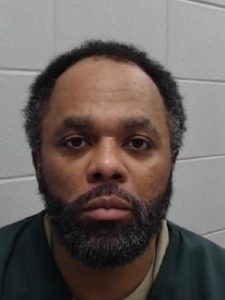
According to court records, Anderson was convicted of felony methamphetamine possession. He received a 60-day local jail sentence in July, so it’s not clear why he would be seeking a commutation. However, court records say he is in prison, with a mandatory release date in December 2026. That’s on a revocation for a different case for possessing a firearm as a felon.
Carmen-Elena Linguraru—2025CF750
 Court records say she was convicted of felony money laundering and misappropriating an ID. Both are felonies. Many other charges were dismissed but read-in at her sentencing. The court records indicate, “Notice to Court of Commutation Application filed by Defendant, with supporting documents.” In September, she received a 2-year prison sentence with a credit of 136 days served. Under Evers’ new scheme, she would only need to serve half of that time to qualify. The court had specifically ruled Linguraru out from other early release programs under Evers’ program, writing, “Defendant is NOT eligible for the Challenge Incarceration Program. Defendant is NOT eligible for the Substance Abuse Program.” Her mandatory release date is in 2027.
“Because they must attach the sentencing transcript to their request, this likely is the reason for the lack of applications to our office,” Boese added.
On May 15, we asked Boese if she had any updates on Oswald’s request and whether she had received additional requests. “I have received additional requests. At this time, I will assume everyone who meets the criteria to request a commutation will be doing so,” she added. “I have not received any information back on Ted Oswald’s request, nor do I know if I will receive updates on a decision or where they are at with the process. I can tell you the further I dig, the more questions I have.”
She has not yet provided us with the number of additional commutation requests or the names of the inmates.
“Although I am unwilling to share the applications themselves, I can tell you I will always object to applications for commutation,” she added. “The Court’s sentence in each case reflects the sentencing Court’s assessment of the character of the defendant, the seriousness of the offense(s) the defendant was convicted of as well as any charges which were dismissed and read-in, and the protection of the community.”
Added the Waukesha County DA: “To commute any defendant’s sentence not only unduly depreciates the seriousness of the offense(s), but it also minimizes the impact the defendant’s actions have had on the victim(s) and it minimizes the authority of the sentencing court.”
Ted Oswald’s Charges
Ted Oswald’s convictions are listed on CCAP as follows:
Armed Robbery with Use of Force [Modifiers: Party To, Concealing Identity], a class B felony, Wisconsin Statutes 943.32(2).
Armed Robbery with Use of Force [Modifiers: Party To, Concealing Identity], a class B felony, Wisconsin Statutes 943.32(2).
Armed Robbery with Use of Force [Modifiers: Party To, Concealing Identity, Use Of A Bulletproof Vest–commis Of Fel], a class B felony, Wisconsin Statutes 943.32(2).
1st-Degree Murder [Modifiers: Party To, Use Of A Bulletproof Vest–commis Of Fel, Use Of A Dangerous Weapon], a class A felony, Wisconsin Statutes 940.01(1).
Attempted–class B 1st-Degree Murder [Modifiers: Party To, Use Of A Bulletproof Vest–commis Of Fel, Use Of A Dangerous Weapon], a class B felony, Wisconsin Statutes 940.01(1).
Operate w/o Consent-Possess Weapon [Modifiers: Party To, Use Of A Bulletproof Vest–commis Of Fel], a class B felony, Wisconsin Statutes 943.23(1g).
Burglary-Armed w/ Dangerous Weapon [Modifiers: Party To A Crime–aid And Abet, Use Of A Bulletproof Vest–commis Of Fel], a class B felony, Wisconsin Statutes 943.10(2)(a).
Taking Hostages [Modifiers: Party To, Use Of A Dangerous Weapon–5 Yr Or Less, Use Of A Bulletproof Vest–commis Of Fel], a class A felony, Wisconsin Statutes 940.305(1).
Drive or Operate Vehicle w/o Consent [Modifiers: Party To, Use Of A Dangerous Weapon, Use Of A Bulletproof Garment], a class E felony, Wisconsin Statutes 943.23(3).
Attempted–class B 1st-Degree Murder [Modifiers: Party To–aid And Abet, Use Of A Dangerous Weapon–5 Yr Or Less, Use Of A Bulletproof Vest–commis Of Fel], a class A felony, Wisconsin Statutes 940.01(1).
Attempted–class B 1st-Degree Murder [Modifiers: Party To–aid And Abet, Use Of A Dangerous Weapon–5 Yr Or Less, Use Of A Bulletproof Vest–commis Of Fel], a class B felony, Wisconsin Statutes 940.01(1).
Attempted–class B 1st-Degree Murder [Modifiers: Party To–aid And Abet, Use Of A Bulletproof Vest–commis Of Fel, Use Of A Dangerous Weapon–5 Yr Or Less], a class B felony, Wisconsin Statutes 940.01(1).
Attempted–class B 1st-Degree Murder [Modifiers: Party To–aid And Abet, Use Of A Bulletproof Vest–commis Of Fel, Use Of A Dangerous Weapon–5 Yr Or Less], a class B felony, Wisconsin Statutes 940.01(1).
Attempted–class B 1st-Degree Murder [Modifiers: Party To–aid And Abet, Use Of A Dangerous Weapon–5 Yr Or Less, Use Of A Bulletproof Vest–commis Of Fel], a class B felony, Wisconsin Statutes 940.01(1).
Attempted–class B 1st-Degree Murder [Modifiers: Party To–aid And Abet, Use Of A Dangerous Weapon–5 Yr Or Less, Use Of A Bulletproof Vest–commis Of Fel], a class B felony, Wisconsin Statutes 940.01(1).
Attempted–class B 1st-Degree Murder [Modifiers: Party To–aid And Abet, Use Of A Dangerous Weapon–5 Yr Or Less, Use Of A Bulletproof Vest–commis Of Fel], a class B felony, Wisconsin Statutes 940.01(1).
1st-Degree Recklessly Endangering Safety [Modifiers: Party To–aid And Abet, Use Of A Dangerous Weapon–5 Yr Or Less, Use Of A Bulletproof Vest-commis Of Fel], a class D felony, Wisconsin Statutes 941.30(1).
Table of Contents