

Analysis: Staggers Rail Act deregulation has enabled rail industry to thrive even during times of national crisis

spot_img

(The Center Square) – October 14, 2020, marks the 40th anniversary of the enactment of the Staggers Rail Act signed by former President Jimmy Carter. The bipartisan legislation primarily deregulated the freight rail sector, which was on the brink of collapse in the 1970s.

The rail industry’s success after 40 years of rail deregulation provides “an important case study on matters related to competition, markets, rate regulation and capitalism writ large,” the Association of American Railroads argues.

The Staggers Rail Act eliminated many of the regulations still in place since 1887, when Congress passed the Interstate Commerce Act. The act established the Interstate Commerce Commission (ICC) to regulate monopolies controlling the railroads.

By the 1970s, the regulations had not changed. Combined with competition from other transportation sectors, major railroads were facing bankruptcy, the industry was facing ruin and rail infrastructure was so deficient that cars were falling off the tracks.

Deregulation enabled the rail industry to take a customer-focused and market-based approach. Since then, freight railroads have invested more than $710 billion of their own dollars back into the national rail network.

Since 1980, rail traffic has doubled but, because of deregulation, rail rates are down by more than 40 percent when adjusted for inflation. Customers can ship double the amount of goods for roughly the same price they could 40 years ago. And because of technological advancement, increased volume of heavy freight has been carried on rail lines instead of on congested or failing public roads making transportation safer.

“The freight rail industry is one of the most cost-effective and efficient transportation networks in the world,” the Association of American Railroads (AAR) argues. “Fueled by billions of dollars in annual private investment – $25 billion on average – railroads maintain and modernize the nation’s nearly 140,000-mile private rail network to deliver for America.”

Research from Towson University’s Regional Economic Studies Institute found that in 2017, Class I railroads’ operations and capital investment supported over 1.1 million jobs, $219.5 billion in economic output, and $71.3 billion in wages, while also creating nearly $26 billion in total tax revenue.

In a typical week, railroads deliver roughly 60,000 carloads of food and agricultural products. A single rail car moves enough wheat for 258,000 loaves of bread, enough corn for 480,000 bags of Fritos, or enough barley for 94,000 gallons of beer, AAR states.

Throughout the economic downturn due to statewide coronavirus shutdowns, the rail industry did not seek federal bailout money and continued to provide services. This has been possible because the U.S. Surface Transportation Board has avoided utility-style rate or earnings regulation in the sector.

Before the coronavirus shutdown, the agency was considering capping how much railroad companies could earn in a year, including imposing an across-the-board utility-style rate regulation.

“For railroads, the impact of imposing these regulations would have a devastating effect on liquidity,” Steve Pociask at RealClear Policy argues.

If rate caps were imposed, “it stands to reason that investment in the rail network would fall, and quite likely so would its dependability and efficiency – just as companies that ship over rail will need those qualities during the hard slog back to economic recovery,” he adds.

Compared to the heavily regulated transportation airline and mass transit industries that were reporting losses before the coronavirus ever hit, federal bailouts for the airlines, airports and mass transit totaled nearly $90 billion.

By Bethany Blankley | The Center Square
Go to Source
Reposted with permission

spot_img
Palestinian Refugees Tiffany Blueprint

Tom Tiffany Unveils 8-point Affordability Plan in Race for Wisconsin Governor

U.S. Rep. Tom Tiffany, the Republican gubernatorial candidate, on Tuesday announced his eight-point plan on affordability including lowering property taxes, sales taxes, gas prices and utility costs along with returning a state surplus.

Tiffany is running against Democrat David Crowley in the Nov. 3 general election.

Tiffany said he would end a 400-year property tax increase that was implemented with a partial veto from Gov. Tony Evers that allows for a $325 per student per year school funding increase for the next 400 years.

Voters will vote statewide on a constitutional amendment that will eliminate the governor’s partial veto power to “create or increase or authorize the creation or increase of any tax or fee” on the November ballot.

Tiffany vowed to cut state income taxes by 10% for families earning less than $150,000 annually along with eliminating taxes on tips and overtime and returning a state surplus to voters, both aspects of a plan that failed in the Wisconsin Senate this spring after Republican leaders of the Assembly and Senate and Evers agreed on a deal for both.

Tiffany also vowed to prevent state sales tax increases, to appoint commissioners to the Public Service Commission that will reduce citizen’s utility costs while embracing next-generation nuclear energy.

He also vowed to end Wisconsin’s minimum markup law and government-mandated higher prices on gas. The law, called the Unfair Sales Act, requires retailers to include a 9.18% markup on motor vehicle fuel.

"Wisconsin families work hard for every dollar they earn, but government at every level keeps taking more," Tiffany said in a statement. "Property taxes are too high, utility bills have soared, and everyday purchases cost more. Meanwhile, David Crowley has never met a tax hike he didn't like. He raised Milwaukee County’s sales tax by 80%, raised property taxes five times, and even voted against a 10% middle-class income tax cut. We cannot afford Tax Collector Crowley taking more of your paycheck just to spend more in Madison."

Tiffany also vowed to “lower taxes, cut red tape, speed up permitting, and reform occupational licensing” to create more good-paying jobs in the state.

Wisconsin Flat Tax Wisconsin's Social Security wisconsin charter schools

Wisconsin Lawmakers Looking for Errors, ‘Bad Actors’ With Food Stamp Audit

(The Center Square) – Wisconsin lawmakers plan to take their first hard look at the state’s food stamp program in more than a decade.

The legislature’s Joint Legislative Audit Committee authorized an audit of the FoodShare program.

"The biggest thing I'd look at is that the federal requirements have changed, and the state is in a position where there's close to a $300 million risk if we don't look at and have in place the things we need to do to comply with the [Big Beautiful Bill]," Audit Committee co-chair Rep. Bob Wittke, R-Caledonia, said at Tuesday's hearing.

President Donald Trump’s Big Beautiful Bill sets new requirements that punish states if error rates are too high. Any state with an over-payment or under-payment rate more than 6% will be fined by the federal government.

Wisconsin's Department of Health Services, which runs FoodShare in the state, said Wisconsin's error rate was 5.72% for fiscal year 2025.

"We collectively should be very proud of our state administration of FoodShare," DHS Secretary Kirsten Johnson told lawmakers Tuesday.

But it's not just errors. Lawmakers say Wisconsin last audited its FoodShare program in 2012.

"What I was seeing towards the end of my practice was the act of [a SNAP recipient] paying [a] drug addict, for instance, a dollar amount to go shop for them, or the drug addict going in and buying a bunch of meat and then selling it on the street. What are the mechanisms you use to stop that?" Sen. Eric Wimberger, R-Gillet, said during the hearing.

Wimberg also pressed DHS managers for a plan to deal with FoodShare abuse.

"For the bad actor who is going to do those methods to basically get money by allowing other people to get food, what do you have that stops that sort of behavior?"

There are nearly 700,000 people in Wisconsin who are enrolled in FoodShare, though that number could drop.

The Big Beautiful Bill requires people who are not parents, elderly, or who have developmental disabilities to work 20 hours a week, go to school, or enroll in a job training program to continue receiving benefits.

van wanggaard parole

Sen. Van Wanggaard Calls Out Conflict of Interest on Evers’ Commutations Board

(The Center Square) – A Wisconsin lawmaker is raising concerns that one of nine members of Gov. Tony Evers’ commutations board has a conflict of interest as his work colleagues advocate for applicants being considered by the board.

Restorative Justice Director Jonathan Scharrer is one of nine members of the board that heard the arguments of 12 applicants on Friday. Scharrer’s colleagues are advocating for four of the 12 applicants, but he only recused himself from one of the four applicants, according the state Sen. Van Wanggaard, R-Racine.

Wangaard published the names of the 809 felons requesting commutations through Evers’ board.

A commutation shortens the sentence of an inmate. Applicants must have at least a year remaining and have served half of the full incarceration term or 20 years of a life sentence.

Those imprisoned for sexual assault, physical abuse of a child, sexual exploitation of a child, trafficking of a child, incest and soliciting a child for prostitution are not eligible for commutation.

“It is a rigged system!” Wanggaard said in a statement. “Board members are considering applications their close colleagues are urging. The supposed “consideration” of releasing killers early seems like a guarantee now.”

Wanggard said he has received 1,800 pages of documents from the governor’s office in a partial response to an Open Records Request related to application materials for those seeking commutations.

“As we combed through the documents, we realized the Law School’s Remington Center wrote a letter in support of 4 of the 12 applicants,” Wanggaard said. “Jonathan Sharrer is listed on the Remington Center’s letterhead. He is also a member of Governor Evers’ Commutation Board. If that’s not a conflict of interest, I don’t know what is.”

Wanggaard’s office said the senator is still seeking the records of the remaining 797 applicants.

josh kaul

Josh Kaul’s DOJ Funded ‘Abolish the Police’ Group That Trashed America, Bailed Out Madison Rioters, and Wrote, ‘F*ck the Pigs’

“F*ck the p*gs,” Freedom Inc. wrote. Josh Kaul’s agency has funded its efforts by funneling federal grants to the non-profit for years. The group...
josh kaul

Josh Kaul Listed as Keynote Speaker at ‘Immigration Summit’ Held By Leftist Group That Wants to Close Prisons and ‘Liberate’ Inmates

Attorney General Josh Kaul, who is supposed to be the state's "top cop," was listed as the keynote speaker at an "immigration" summit held...

Gov. Tony Evers Says Some Kids Aren’t Worth Fighting For: ‘Those Kids…Aren’t Ever Gonna Read Anyway’

In a viral video clip, Gov. Tony Evers said people should give up on some kids because "those kids that are struggling in those...

David Crowley SUED the Milwaukee Police Department, Accusing Officers of Racism, and Costing the City at Least $1.9 Million

“I used to be very proactive,” one officer told us. “Now, I act like a fireman. I sit and wait for a call, go...

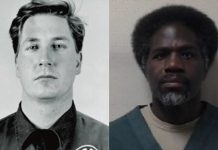
Curtis Walker, Who Assassinated Milwaukee Police Officer William Robertson, Is Among More Than 800 Commutation Applicants to Gov. Evers

We asked Gov. Tony Evers for the list of commutation applicants since he restarted the process. There are more than 800... so far. See...
david crowley

‘Data Center’ David Crowley Fumbles KEY Issue After His Establishment Coronation

Data Center David Crowley is a name that might stick, as Tom Tiffany is now calling him. It has the same ring as “Diamond...

Liberal Pundits Hunt Desperately for a Single David Crowley ‘Accomplishment,’ and What They Picked Is Hysterical

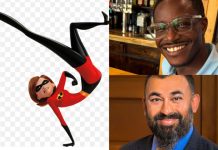
It’s been humorous the last few days watching Wisconsin’s liberal intelligentsia turn themselves into Elastigirl in the Incredibles, bending and stretching and twisting, because...

David Crowley SUPPORTS DATA Centers and Won’t Ban Them; He Wants Wisconsin to be the ‘Data Hub’ for the World

Milwaukee County Executive David Crowley has expressed support for data centers and opposes banning them. He wants Wisconsin to be the "data hub" for...
sara godlewski

David Crowley, Wealthy Sarah Godlewski LAUGH at the Way Rural Wisconsinites Talk – and It’s on Video

Milwaukee County Executive David Crowley and wealthy Lt. Gov. candidate Sarah Godlewski laughed hysterically at the way rural Wisconsinites speak, and it's on video....
chris lawrence

Winners and Losers From Wisconsin Primary Election Night

We all know the top line results: Milwaukee County Executive David Crowley defeated socialist Francesca Hong to win the Democratic primary for governor, in...

Francesca Hong’s Support WAS the Equivalent of Beer Foam: 8 Reasons Why David Crowley Won the Primary. Can Tom Tiffany WIN?

What the h*ll just happened? It turns out that the answer was embedded in a memo that Democratic primary winner David Crowley released about...
David Crowley

Will Wisconsin Democrats Pick a Socialist Today, David Crowley as Tony Evers’ SOCK PUPPET, and Other Election Day Notes

Tony Evers messed this up badly. He engaged too late. Normal Democrats did. They helped build, and are now pandering to, their own Frankenstein...
john gscheidmeier

Correctional Guard, Bank Examiner Say THEY Complained About John Gscheidmeier and Students; Photos Emerge

This is the 5th story in a five-part series on the Waukesha County Sheriff's race. You can read the other stories here, here, here,...
Brian Fredericks

The Waukesha County Sheriff’s Race PART 4: The Deputies Union Endorses, as Baseball Caps Emerge as a Bone of Contention

This is part 3 in a multi-part series on the Waukesha County Sheriff’s race. The primary is Aug. 11. Read part 1 here: “Eric...
nick ollinger

Waukesha County Sheriff’s Race PART 3: John Gscheidmeier, Nick Ollinger Discuss the Issues, From Body Cams to Flock

This is part 3 in a multi-part series on the Waukesha County Sheriff's race. The primary is Aug. 11. Read part 1 here: "Eric...
nick ollinger

The Waukesha County Sheriff’s RACE PART 2: Nick Ollinger, John Gscheidmeier Open Up—on Themselves, Eric Severson

This is the second in a multi-part series on the Waukesha County Sheriff's Primary. You can read part 1 here: "Eric Severson Ponders His...

The Waukesha County Sheriff’s Race PART 1: Eric Severson Ponders His Legacy as the Primary Rages

This is the first in a multi-part series exploring the various issues in the Waukesha County Sheriff's race. The primary is Aug. 11. Read...