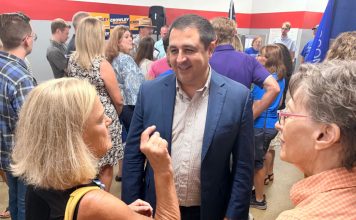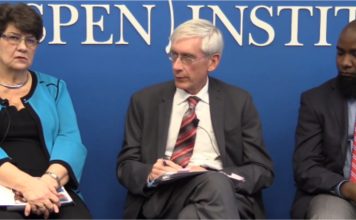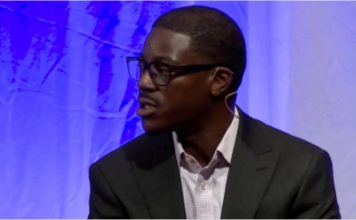

A Wisconsin lawmaker is raising concerns that one of the members of Gov. Tony Evers’ commutations board has a conflict of interest as his work colleagues at the University of Wisconsin’s Remington Center advocate for the release of convicted killers being considered by the board.
Restorative Justice Director Jonathan Scharrer is one of nine members of the board that heard the arguments of 12 applicants on Friday. Scharrer’s colleagues are advocating for four of the 12 applicants, but he only recused himself from one of the four applicants, according the state Sen. Van Wanggaard, R-Racine.
“As we combed through the documents, we realized the Law School’s Remington Center wrote a letter in support of 4 of the 12 applicants,” Wanggaard said. “Jonathan Sharrer is listed on the Remington Center’s letterhead. He is also a member of Governor Evers’ Commutation Board. If that’s not a conflict of interest, I don’t know what is.”
Wisconsin Right Now wrote UW-Madison’s and the Universities of Wisconsin’s PR teams and asked,
Can you please tell me how much it has cost the university and/or taxpayers for the Remington Center’s work toward getting prison inmates commutation, specifically those convicted of homicide? Daniel Cerney is an example. The Remington Center advocacy for him is on their letterhead.
How many homicide inmates has the Remington Center advocated for commutations for?
How much staff time was used for this?
Why is this appropriate?
Van Wangaard says Remington Center is advocating for commutations for four people out of the 12 with hearings so far – which, why and what is the cost? Does the UW system consider this an appropriate use of staff time?
UW-Madison dodged all of the questions. The Universities of Wisconsin’s spokesman did not respond.
Wisconsin Right Now and Wangaard published the names of the 809 felons requesting commutations through Evers’ board. WRN was first to publish the names, which we received through an open records request.
A commutation shortens the sentence of an inmate. Applicants must have at least a year remaining and have served half of the full incarceration term or 20 years of a life sentence. However, some victims’ family members have raised grave concern about inmates getting a chance for early release, especially since Gov. Tony Evers is allowing homicide lifers to apply.
Those imprisoned for sexual assault, physical abuse of a child, sexual exploitation of a child, trafficking of a child, incest and soliciting a child for prostitution are not eligible for commutation.
“It is a rigged system!” Wanggaard said in a statement. “Board members are considering applications their close colleagues are urging. The supposed “consideration” of releasing killers early seems like a guarantee now.”
Wanggaard said he has received 1,800 pages of documents from the governor’s office in a partial response to an Open Records Request related to application materials for those seeking commutations. WRN received the same documents.
Wanggaard’s office said the senator is still seeking the records of the remaining 797 applicants.

Gilliam Drummond, Public Affairs Director for UW-Madison, responded:
“The Frank J. Remington Center is one of the nation’s first clinical law programs. The center expands access to justice for individuals and communities while preparing law students with practical experience to develop substantive knowledge, professional skills and judgment to excel as attorneys in all areas of practice. Among the eight clinics within the center is the Restorative Justice Project (RJP), which facilitates a process to support victims or surviving family to meet with the individual who committed the crime against them in a safe, structured setting with the shared purpose to provide opportunities for questions, accountability and healing. Only victims and their survivors can initiate this process with RJP, and interactions with incarcerated offenders are coordinated through the Wisconsin Department of Corrections through their office of Victim Services and Programs. RJP serves as a neutral third party and provides no legal representation. Due to the nature of this work, RJP maintains a separate client management system from the clinics in the Remington Center.
Professor Jonathan Scharrer, the director of the RJP, was chosen to serve as one of 10 members of the Governor’s Commutation Advisory Board due to his status as a nationally respected restorative justice practitioner. The board is an advisory body and has no legal authority to issue commutations; only the governor can issue a final decision on commutation requests.”