
By David Keating
Imagine spending years in court because a powerful individual didn’t like what you wrote about them and filed a meritless lawsuit against you. Even if you ultimately win, you still lose—because the costly, time-consuming litigation effectively silenced you and chilled others into not speaking in the first place.
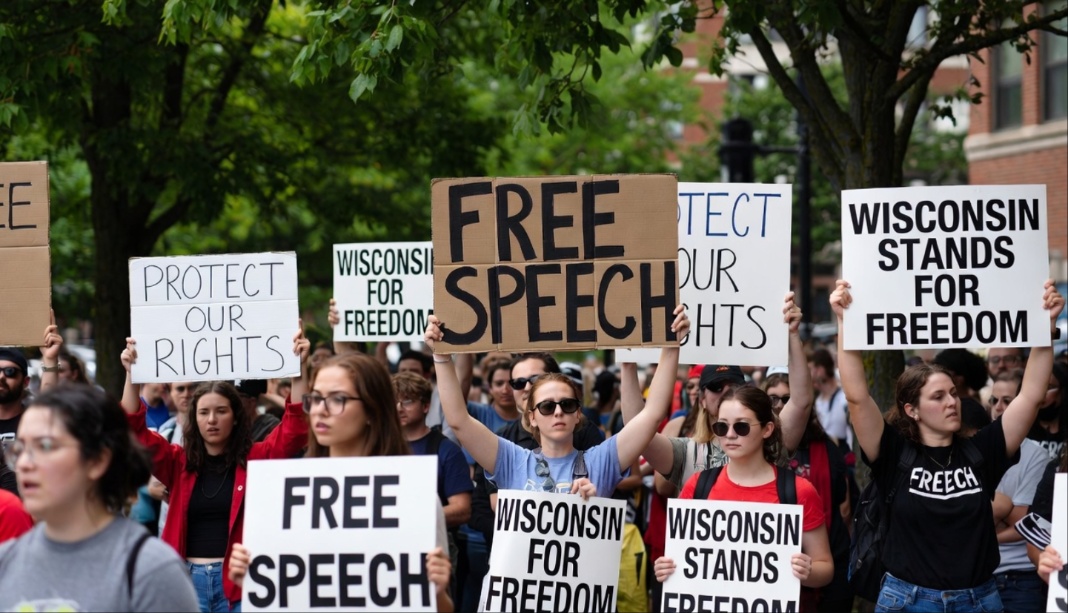
The right to speak freely on matters of public concern is a core First Amendment freedom. Yet baseless lawsuits filed by unscrupulous plaintiffs can severely undermine this right.
Thirty-nine states already provide protections against this form of lawfare. Sadly, Wisconsin isn’t one of them. Here, citizens are defenseless against such frivolous suits, called SLAPPs—Strategic Lawsuits Against Public Participation. SLAPPs usually are meritless defamation suits that aren’t about winning in court. They’re about punishing critics and making journalists, activists, or ordinary citizens think twice before speaking up again.
Plaintiffs can weaponize SLAPPs to shut down all kinds of speech on matters of public concern, whether it’s criticism of a politician, reporting on a local employer’s business practices, a negative online review, or anything else.
Wisconsin is one of just 11 states that offer citizens no legal protection against SLAPPs. That’s why my organization, the Institute for Free Speech, awards the Badger State a grade of “F”—zero out of 100 points—in our national Anti-SLAPP Report Card, which rates anti-SLAPP protections in all 50 states and the District of Columbia.
The good news is that Wisconsin may be on the verge of fixing this problem. Assembly Bill 701 / Senate Bill 666, the Wisconsin Public Expression Protection Act, has now passed the state Assembly. The bill is based on the Uniform Public Expression Protection Act (UPEPA), a model law crafted by the nonpartisan Uniform Law Commission and adopted by a growing number of states.
Crucially, the Wisconsin bill includes the provisions that make anti-SLAPP laws effective. It requires plaintiffs to show they have a legitimate claim before dragging defendants through a costly discovery process, such as turning over records and being interrogated by a lawyer. If they can’t, a judge must promptly dismiss the case. Defendants also get the right to an immediate appeal if an anti-SLAPP motion is wrongly denied—a critical safeguard, since prolonged litigation is often the whole point of a SLAPP. And courts would be required to award attorney’s fees to prevailing defendants, shifting costs back onto those who abuse the legal system to silence critics.
Passing this bill would allow Wisconsin to catch up with the overall anti-SLAPP trend, especially in this region. Neighboring Minnesota and Iowa already have “A-minus” and “A+” anti-SLAPP laws, respectively. Michigan just adopted a UPEPA-based law last December, bumping it from an “F” to an “A+” as well. Ohio enacted its version of UPEPA in January 2025, likewise earning an “A+.”
In both Michigan and Ohio, UPEPA passed without a single “nay” vote in either chamber, speaking to the widespread, cross-ideological appeal of protecting free speech rights against weaponized lawsuits. Indeed, Wisconsin’s Assembly also passed the bill unanimously, and it enjoys bipartisan support, with Republican sponsorship and Democratic Governor Tony Evers signaling that he would sign it into law if it reaches his desk.Yet UPEPA now faces an uncertain future in the Senate.
The Senate meets in mid-March. If Wisconsin’s lawmakers want to protect journalists, advocacy groups, whistleblowers, and everyday citizens from being legally bullied into silence, they should pass this bill.
Wisconsin prides itself on its tradition of open democratic participation. Passing UPEPA would instantly move the state from the dwindling ranks of the unprotected to among the nation’s most vigorous defenders of free speech against frivolous lawsuits. That’s an achievement the entire Wisconsin Legislature—and the whole state—should be able to celebrate.
David Keating is the President of the Institute for Free Speech and a co-author of the Institute’s Anti-SLAPP Report Card.
This piece originally appeared at the Wisconsin State Journal on March 3, 2026. It has been re-published with permission. Representative Jim Piwowarczyk is the author of AB701 and the co-founder of Wisconsin Right Now.