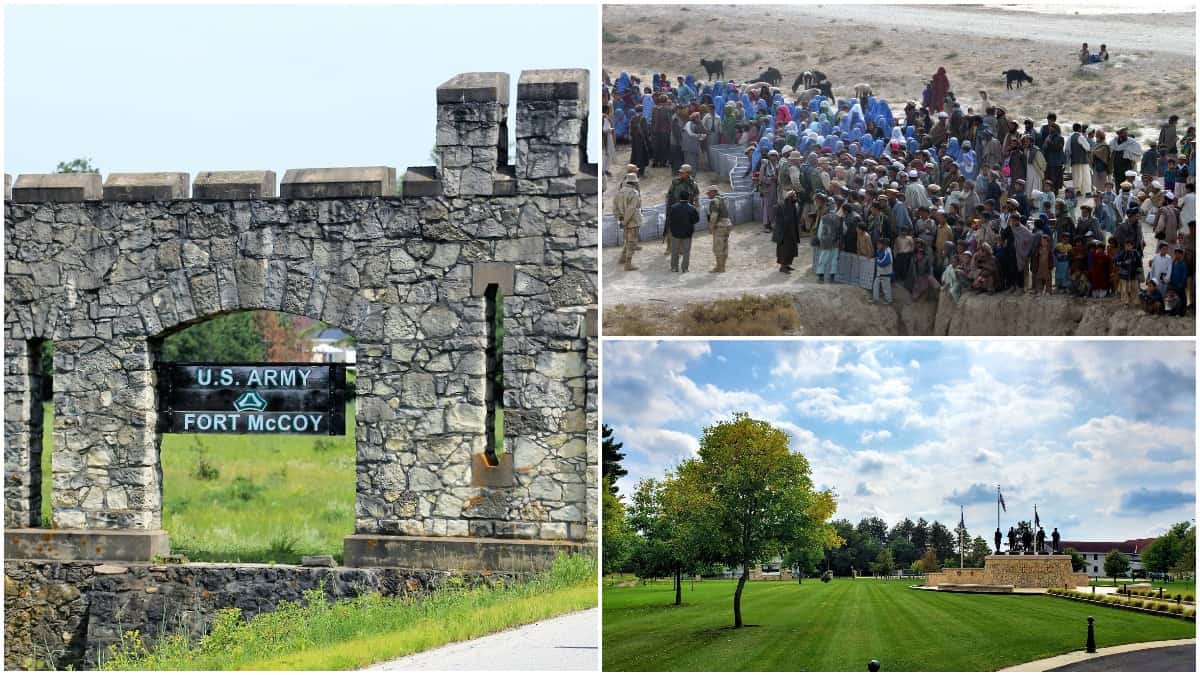

Tens of thousands of Afghan evacuees, including the gunman charged in the shootings of two National Guard members, killing one just blocks from the White House, were eligible for a slew of benefits, including housing and medical at the expense of the American taxpayer.
Following the pullout of American forces from Afghanistan in 2021, the Biden administration admitted nearly 200,000 evacuees between 2021 and 2023, including two recently arrested on terrorism charges. Through various reports and testimony by government officials, it was revealed that many of the Afghan nationals couldn’t be properly vetted.
Afghans who entered the U.S. on a Special Immigrant Visa (SIV), under a special immigrant parole (SQ/SI), and were granted humanitarian parole as part of the Biden Administration’s Operation Allies Welcome were eligible for over a dozen taxpayer benefits, many continuing four years later.
The benefits include: Supplemental Security Income (SSI), Supplemental Nutrition Assistance Program (SNAP), Women, Infants and Children (WIC), HUD Public Housing and Section 8 housing vouchers, emergency Medicaid, Affordable Care Act health plans and subsidies, full-scope Medicaid, Children’s Health Insurance Program (CHIP), federal student aid and Pell grants, REAL ID, Workforce Innovation and Opportunity Act services, refugee resettlement programs through the Office of Refugee Resettlement and Temporary Assistance for Needy Families (TANF), according to the National Immigration Law Center.
For those who didn’t qualify for SSI or TANF, refugees were eligible for up to 12 months of Refugee Cash Assistance (RCA) through the ORR.
In addition, many refugees qualified for employment assistance through Refugee Support Services, which included: childcare, transportation, “employability services,” job training and preparation, job search assistance, placement and retention, English language training, translation and interpreter services and case management, according to the Administration for Children and Families Office of Refugee Resettlement.
The ORR also noted that “some clients may be eligible for specialized programs such as health services, technical assistance for small business start-ups and financial savings.”
Many refugees also qualified for “immigration-related legal assistance” to assist them “on their pathway to obtaining a permanent status.”
Despite the multitude of services provided to Afghan refugees, “they are less likely to be proficient in English, have lower educational attainment, and lower labor force participation” compared to other immigrants in the U.S., according to the Migration Policy Institute. Additionally, “compared to both the native born and the overall foreign-born population, they are much more likely to be living in poverty.”
The institute noted that Afghans “tend to have lower educational attainment” compared to American and foreign-born populations, citing a 2022 statistic showing 28% of Afghan immigrants age 25 and older “reported having at least a bachelor’s degree” as compared to 36% of Americans and 35% of all foreign-born populations.
While 29% of Afghan adults reported having less than a high school diploma, compared to 25% of other immigrant populations, there were some slight improvements among those who arrived in the U.S. between 2020 and 2022, with 36% having at least a four-year degree. However, that figure is 12 points less than other immigrant populations arriving during the same period.
The institute highlighted the “relatively low labor force participation rate” of Afghan immigrants ages 16 and older, showing that in 2022, 61% were in the civilian labor market, compared to 67% of other immigrant populations and 63% of U.S.-born individuals.
Afghan immigrants have a higher poverty rate compared to the American and foreign-born populations. As of 2022, 39% of Afghan nationals were living in poverty, compared to 12% of Americans and 14% of other immigrant populations.
Among the many benefits Afghan refugees are eligible to receive, one of the most costly may be housing in the form of public housing and the Section 8 program.
The institute showed that a majority of immigrants from Afghanistan are concentrated in some of the regions with the highest housing costs in the nation, including the metro areas of Washington, D.C., Sacramento, San Fransico, Los Angeles, New York City, Seattle and San Diego.
When asked if Afghan refugees are still receiving housing benefits, a HUD official told The Center Square that the department “is working in coordination with appropriate agencies to align the Department’s guidance related to immigration status to ensure taxpayer-funded benefits are not used for any unintended purpose.”
Adding to housing benefits, The Center Square reported Tuesday exclusively that amid a national housing crisis, the Biden administration’s Department of Housing and Urban Development produced guidelines encouraging property owners to forgo some fair housing practices to favor Afghan refugees, which the Trump administration directed to be terminated.
The Center Square obtained a HUD directive from the Office of Fair Housing and Equal Opportunity rescinding the Biden-era guidance document, “Operation Allies Welcome: Frequently Asked Questions (FAQs) on Fair Housing Issues,” and withdrawing from a FHEO guidance document “Frequently Asked Questions (FAQ) Renting to Refugees and Eligible Newcomers,” which the agency claims violates the Fair Housing Act.
HUD Secretary Scott Turner argues the Biden-era guidelines prioritized nearly 200,000 Afghan refugees who were admitted following the 2021 pullout of American forces from Afghanistan by encouraging landlords and property owners to forgo credit checks, occupancy limitations, and engage in targeted marketing toward Afghans.
“After President Biden’s disastrous withdrawal from Afghanistan, his administration made a bad situation worse by prioritizing housing assistance for Afghan refugees, who we now know were unvetted and unchecked,” Turner told The Center Square. “Since day one, our mission has been clear: to serve the American people and end the misuse and abuse of American taxpayer-funded resources. That is why we rescinded this Operation Allies Welcome guidance, which encouraged landlords and property owners to violate federal civil rights law to protect Afghan refugees. Under President Trump’s leadership, the days of putting Americans last is over.”
Sarah Roderick-Fitch
Go to Source
Reposted with permission