
One question people ask us a lot is where the two candidates stand on Flock cameras? There are two candidates running in the Aug. 11 GOP primary to replace retiring Sheriff Eric Severson.
They are John G. Gscheidmeier, a retired Glendale police officer who is a realtor and County Board supervisor, and Sheriff’s Capt. Nick Ollinger. We asked each man for his position on flock, and here are their comments in their entirety, without edits.

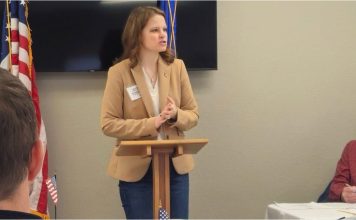
Nick Ollinger on Flock
In my time leading the Waukesha County Detective Bureau, I’ve had the opportunity to see Flock cameras in action. When used with proper guardrails in place, I believe they can be an important tool to locate missing and endangered individuals through Silver Alerts, recover stolen vehicles, and ultimately help solve crimes.
Let me be clear: I do not support and will not stand for the creation of a surveillance state in Waukesha County. I support the automatic deletion of Flock footage after 30 days, clear policies governing when and how the system may be accessed, regular audits to ensure compliance, and meaningful consequences for anyone who misuses it. Any officer who abuses or attempts to abuse the Flock system will be swiftly held accountable to the fullest extent of the law. That expectation applies to every member of law enforcement, including myself. Accountability strengthens public confidence and reinforces the integrity of our profession.
The conversation about public safety and privacy should not be framed as an either-or-choice. We can use effective technology while respecting civil liberties by establishing strong safeguards, maintaining independent oversight, and enforcing clear standards of conduct.
When used within the law and under proper oversight, Flock cameras are a valuable investigative resource that helps law enforcement solve crimes, protect vulnerablemembers of our communities, and improvepublic safety. The focus should not be on whether we have the tool, but on ensuring it is used lawfully, ethically, and with the accountability the public deserves.
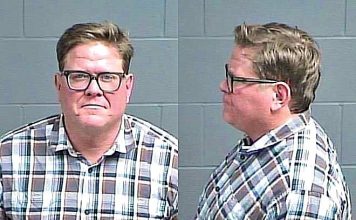
John G. Gscheidmeier on Flock
Position Statement on Flock Safety Cameras and Automated License Plate Readers (ALPRs) Background
Flock Safety began deploying its camera systems in 2018. The privately owned company is best known for its Automated License Plate Reader (ALPR) technology, although Flock is only one of several companies across the United States that provide ALPR systems utilizing artificial intelligence.
Like many emerging technologies, ALPR systems have generated public debate. Some citizens have raised concerns about privacy, the Fourth Amendment, government overreach, and how vehicle data is collected, stored, and accessed. Others believe these systems allow government agencies to track an individual’s movements across communities or even state lines. These concerns deserve to be taken seriously.
Research
Based on my research, there are conservatively 100 Flock cameras operating throughout Waukesha County by both public and private groups. The Waukesha County SheriƯ’s Department has funded two of these cameras—one located at each end of the county along Interstate 94. The remaining cameras are funded and operated by municipal law enforcement agencies or municipalities that have chosen to share ALPR data with the SheriƯ’s OƯice.
Law enforcement agencies routinely collaborate by sharing authorized ALPR data during criminal investigations. Beyond government use, this technology is also widely utilized by the private sector. Businesses, healthcare facilities, parking structures, homeowners associations, retail centers, airports, and toll authorities all employ similar technology to protect their property and customers. Based on my observations, the private sector may actually operate more ALPR cameras than law enforcement, although additional research would be needed to quantify that number.
When used responsibly, ALPR technology is an invaluable investigative tool. Investigators can enter information related to stolen vehicles, homicide investigations, robbery suspects, organized retail theft, missing persons, and other serious crimes. If a monitored vehicle passes a participating camera, investigators receive an alert that can help guide an investigation. Importantly, a Flock alert alone does not establish probable cause to stop a vehicle. OƯicers must still comply with all constitutional protections and legal standards before initiating enforcement action.
Within Waukesha County, these cameras are positioned to capture vehicles traveling on public roadways. License plates are already visible to anyone lawfully observing traƯic, and vehicle registration information has long been available through lawful governmental processes. ALPR technology simply allows oƯicers to search that information more eƯiciently during legitimate criminal investigations.
The technology has contributed to numerous successful investigations, including recovering stolen vehicles, locating wanted suspects, identifying vehicles involved in violent crimes, and finding missing or endangered individuals, including those experiencing mental health crises.
Unfortunately, recent media reports have highlighted instances in Wisconsin where oƯicers improperly accessed ALPR databases for personal reasons unrelated to legitimate law enforcement purposes. Those individuals were identified through audit logs, criminally charged, and terminated from their positions. Several now face felony charges. Those incidents demonstrate two important realities: misuse is unacceptable, and strong auditing and accountability systems work.
My Position
I support the responsible use of Flock Safety cameras and other ALPR technology because they are proven tools that help protect our communities, solve crimes, and save lives. However, public trust is just as important as public safety.
Access to ALPR data must be limited to legitimate law enforcement purposes, every search should be documented and auditable, and misuse must result in swift discipline and, when appropriate, criminal prosecution. Strong cybersecurity measures and clearly defined data retention policies are
also essential to protecting the public’s information.
If elected SheriƯ, I will conduct a comprehensive review of the SheriƯ’s OƯice ALPR and FLOCK policies and compare them with best practices from agencies throughout Wisconsin and nationally. My goal will be to ensure that our policies protect both public safety and the constitutional rights of every citizen.
I also believe the SheriƯ’s OƯice should be transparent with the public about how this technology is used, what safeguards are in place, and how misuse is prevented. There is no question that ALPR technology has made Waukesha County safer. It has helped apprehend dangerous criminals, recover stolen vehicles, locate missing persons, and alert law enforcement when wanted oƯenders enter our communities. As SheriƯ, I will continue to support technology that makes our county safer while ensuring it is used responsibly, lawfully, and with respect for the privacy and constitutional rights of every law-abiding citizen. Public safety and individual liberty are not competing values—they are both fundamental responsibilities of eƯective law enforcement.
Table of Contents