
Wisconsin Right Now took a deep dive into the two “online sports betting giants” that are trying to kill the stalled online gaming bills here. The maneuvers of multibillion-dollar out-of-state companies could hurt Wisconsin taxpayers, some say. This is part 1, which will focus on DraftKings. Part 2 will focus on FanDuel.
Two major out-of-state “online sports betting giants” are leading the opposition to online sports betting legislation that is currently stalled in the Wisconsin state Legislature.
The Sports Betting Alliance, the trade association that represents behemoths DraftKings and FanDuel, warned legislators that the bills would prevent them from operating here.
But would that be a bad thing?
If the out-of-state companies succeed in killing Assembly Bill 601 and its companion piece in the state Senate, SB 592, state taxpayers would get nothing.
As they have received almost no scrutiny in the news coverage of the rare bipartisan bills, Wisconsin Right Now decided to take a closer look at DraftKings and FanDuel, including the experiences of other states. We are starting with DraftKings in this story. Wisconsin Right Now found a series of concerns dating back years, including lawsuits, bipartisan accusations of anti-competitive behavior, and a trail of Democratic campaign donations.
Sports betting “has taken off in the U.S. since it was legalized by a 2018 Supreme Court decision, with nearly $150 billion wagered across 38 states and Washington, D.C., last year,” Politico reported.
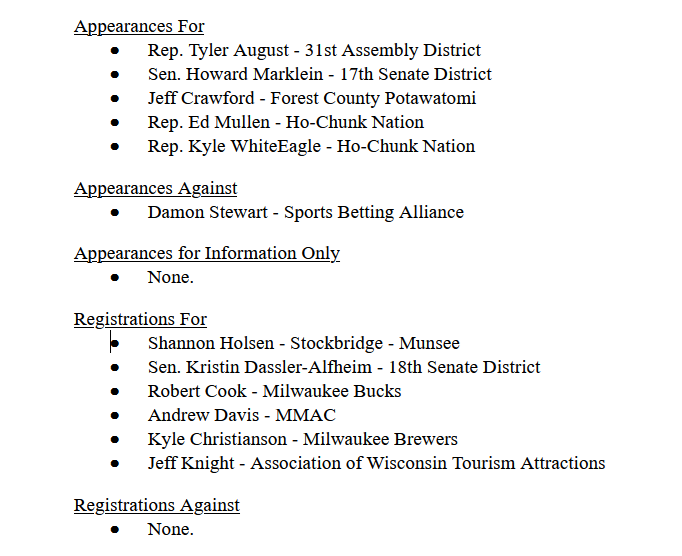
Most of the organizations supporting the bills are Wisconsin-based, including the Milwaukee Brewers, Milwaukee Bucks, Milwaukee Metropolitan Chamber of Commerce, the Green Bay Packers, the Association of Wisconsin Tourism Attractions, the North Central States Regional Council of Carpenters, and, of course, the state’s tribes. At a recent public hearing, SBA’s representative was the only speaker opposed, yet the bills have stalled all the same.
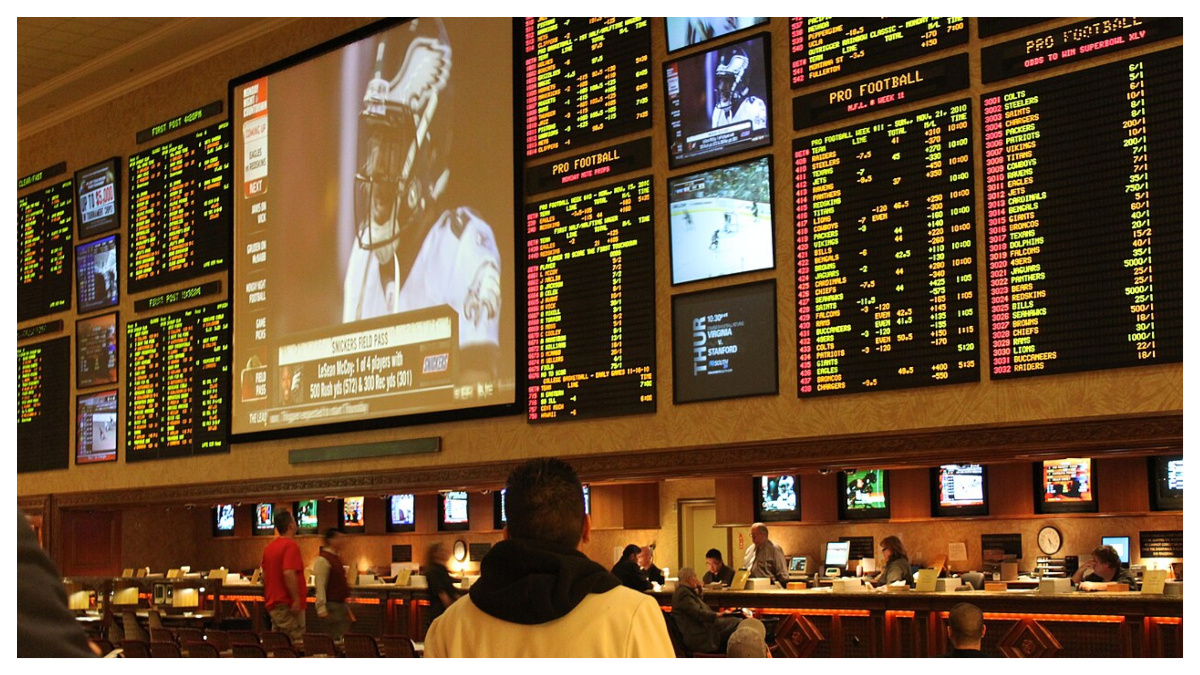
The bills would create an exception to criminal law, allowing online sports betting statewide if it’s run through tribal servers and approved in compacts, with state taxpayers getting a share. Supporters say unregulated online sports betting happens now, but illegally, with the state getting nothing. The tribes already offer sports betting in casinos, but their profits have been sliced by illegal online markets.
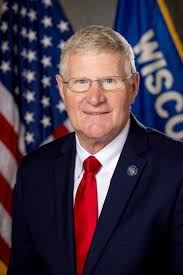
State Sen. Howard Marklein, a Republican who co-sponsored the bill, testified that the bills would legalize “an activity that is already occurring, allowing both the state and tribes to benefit.”
In staunch opposition stand the two massive out-of-state companies, DraftKings and FanDuel, which want to kill the whole thing, leaving the state taxpayers and tribes with nothing. SBA accounted for about 39% of lobbying efforts overall by itself on the Assembly bill, state records show.
Opening online gaming to all – including them – is highly unlikely to happen as an alternative, although it could be the real goal; it would take a constitutional amendment, which doesn’t appear likely to happen. The state Constitution bans the legislature from approving new gaming; supporters argue the new bills don’t violate that provision because they simply allow the state to consider amending tribal compacts to do so, although this is disputed. The Assembly bill passed the state affairs committee unanimously, a Senate committee passed it 5-3, and then it stalled. However, there has been action with co-sponsors signing on, meaning it might come to a vote at last.
Who owns DraftKings? “Headquartered in Boston, and launched in 2012 by Jason Robins, Matt Kalish, and Paul Liberman, DraftKings is the only U.S.-based vertically integrated sports betting operator,” DraftKings says. Robins became a billionaire in 2021; he once rented the New England Patriots stadium for his wife’s birthday.
The Wisconsin tribes have different realities; the tribes say gaming proceeds help them become more self-sufficient and less reliant on state services. The Ho-Chunk nation, for example, testified that its statistics mirror devastating national data for Indian people, which include a 25% poverty rate (twice the national average), almost double the unemployment rate, and a 10% rate of homelessness.
Although opponents of the bills often make a free-market argument, DraftKings, while often touted in its Boston hometown as a tech success, has been accused of anti-competitive behavior, Wisconsin Right Now found.
Here’s what we learned:
Lawsuits, Democratic Donations & Accusations
- More than 75% of DraftKings’ employees’ federal donations go to Democrats, including attempts to flip Republican House seats, according to Open Secrets, a non-partisan, non-profit website. Robins, the CEO, donated money to Democratic New York Gov. Kathy Hochul’s campaign and other Democrats, although he’s occasionally given to Republicans. The other co-founder, Matt Kalish, donated to a Democratic congressional candidate who vowed to “take the fight directly to Trump,” as well as to Chris Christie.
- Two bipartisan U.S. Senators, Mike Lee of Utah and Peter Welch of Vermont, recently accused DraftKings of antitrust violations. The Republican and Democratic senators accused the company of “anticompetitive conduct” in 2024. Through their trade association, the Sports Betting Alliance, the two companies have “undertaken a coordinated effort to pressure crucial business partners not to do business” with new players, the senators alleged. Wrote Lee in 2024, “We can’t allow online gambling companies like @FanDuel & @DraftKings to violate antitrust laws, especially as more Americans grapple with the effects of this industry on our society.”
- DraftKings “recently purchased an artificial intelligence company. What they have is the capacity not only to control markets but to use the technology to target vulnerable customers with the most addictive forms of what is called micro-betting,” Dr. Harry Levant told Congress, calling for federal standards in the market. He is the director of Gambling Policy with the Public Health Advocacy Institute at Northeastern University. The bill did not pass.
- DraftKings and FanDuel “allegedly control 80% of the online sports betting market,” according to Legal Dive, which reports that their proposed 2017 merger “was blocked by the FTC due to concerns it would virtually eliminate competition in the daily fantasy sports space.”
- DraftKings has been hit with a string of lawsuits spanning the country, including class-action suits and investigations. DraftKings denies the accusations, which include claims of compulsive gambling problems, deceptive marketing, and cancelled bets. In 2025, class action lawsuits were filed in Illinois, Massachusetts, New York, Kentucky, and New Jersey. DraftKings has won some lawsuits and denies wrongdoing. “I got hooked and lost everything,” said a Pennsylvania man.
- The experience of Missouri may be instructive. DraftKings and FanDuel helped fund a successful initiative to get that state to authorize sports betting; the campaign cost $43 million, and “voters were told it would be a windfall to education, allowing increased teacher pay and other benefits for public schools,” the Missouri Independent reported in January 2026.
- What actually happened? “Missourians placed more than half-a-billion dollars in bets on sporting events in December, but promotional offers offset the taxable profits, leaving less than $1 million to help problem gamblers and public education,” according to the Missouri Independent.
- The mayor and City Council of Baltimore brought a lawsuit alleging that both DraftKings and FanDuel engaged in “deceptive and unfair practices by targeting and exploiting vulnerable gamblers.”
- “These companies are engaging in shady practices, and the people of our city are literally paying the price,” alleged Baltimore Mayor Brandon Scott.
- The Department of Consumer Protection in Connecticut announced a settlement agreement with DraftKings in July, “following an investigation into alleged violations of Connecticut’s gaming laws related to marketing and advertising.”
- In Illinois, where DraftKings is legal, the company added a transaction fee after the state Legislature increased taxes on sports wagering.
- Early on, DraftKings pushed back against a high-profile accusation of insider trading, saying an investigation proved otherwise.
Wisconsin Right Now reached out to DraftKings for comment. We have tried to incorporate the company’s side through its previous public statements and the testimony of SBA.
Why Supporters Want the Online Gaming Bill to Happen

Interestingly, the bill to allow limited online gaming has drawn rare bipartisan support as it is co-sponsored by both Republicans and Democrats in the state Legislature.
Supporters liken the approach to the “hub and spoke” model used in Florida, although opponents say there are key differences. “In 2021, Florida announced a 30-year, multibillion-dollar gaming compact with the Seminole Tribe that shook the gaming industry,” according to Foley.com. “Not only was the compact notable due to its sheer size, but it was also unique in that it granted the Seminoles the exclusive authority to offer sports betting across the entire state, not just on its tribal lands.”
Other states, like Kansas, followed suit when the US Supreme Court declined to review a federal court decision allowing it.
“People are already betting online through offshore or illegal sites, and hundreds of millions of dollars a year are leaving our state with zero regulation and no benefit to Wisconsin,” Republican Assembly Majority Leader Tyler August testified in support of the tribal server bill.
In a rare display of bipartisanship, the bill has several Democrats on it as well. State Sen. Kristin Dassler-Alfheim, a Democrat, testified, “By creating a legal avenue for tribes to offer mobile sports betting, we can tap into a market that we already know exists and ensure that the necessary regulations are in place to prevent bad actors from taking advantage of Wisconsin consumers.”
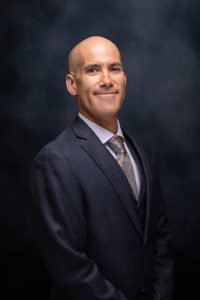
Representative Edward Mullen, of the Ho-Chunk Nation, testified that “much of the illegal sports betting comes in the form of offshore sites people can access on their phones or computers, as well as a new threat from American companies that are offering internet sports betting under the guise of future event prediction commodities trading. In fact, the Nation recently filed a federal court action against two companies that are blatantly offering sports betting in Wisconsin because of the harm it is causing our current gaming operations.”
“Not only is sports betting already rampant in Wisconsin, it is being conducted illegally, in an unregulated fashion, and is taking away revenue from the current legal gaming being offered by Tribes,” he added.
“This also means that the State of Wisconsin is missing out on revenue that it could receive through the gaming compacts with Tribes. The Nation provides support to many State services including police, fire, and infrastructure,” Mullen said.
What the Opponents Say
So what does the other side say? Opponents have mostly adopted a free-market or constitutional argument.
The Sports Betting Alliance also represents BetMGM, Fanatics and Bet365.
“Major sportsbooks reject Wisconsin’s idea of online sports betting,” explained SBC Americas.
Sports Betting Alliance (SBA) representative Damon Stewart provided legislative testimony last fall indicating that, if the bill becomes law, the two companies would stay out of Wisconsin. “If passed as is, Wisconsin adults who want to bet online on sports will not be able to use sites like DraftKings and FanDuel,” he insisted. He agreed that “illegal and unregulated online sports betting is already rampant in the state…Offshore websites advertise in the state, and so-called social casinos provide numerous options online to make bets on sports. None of these sites pay gaming taxes in the state and they do not tether to tribes.”
SBA indicated that the companies would like an opportunity to partner with tribes and are fine with “tethering online sportsbooks to the state’s 11 tribes.” But they say they can’t be involved in Wisconsin online sports betting under the approach in the bills.
“That’s because national brands who are members of the SBA, cannot operate in Wisconsin under this bill,” he said, adding that the bills have “dubious legal underpinnings” due to a Colorado court decision. He said the Florida law was upheld because the state already allowed online sports betting statewide.
According to Stewart, the problem with the Wisconsin bills from SBA’s perspective is that the Indian Gaming Regulatory Act requires tribes to get too high of the cut, 60 percent, when they align with other service providers: “It is simply not economically feasible for a commercial operator to hand over 60% or more of its revenue to an in-state gaming entity, just for the right to operate in the state,” he added.
In addition to the Sports Betting Alliance, the Wisconsin Catholic Conference and Wisconsin Family Action registered against the Assembly bill. Their opposition appears to be focused on the dangers of gambling addiction. “Gambling is unjust when it surpasses entertainment and becomes a source of enslavement, depriving people of what they need. Online sports gambling harms individuals and families,” the Wisconsin Catholic Conference wrote.
The Wisconsin Institute for Law and Liberty did not register for or against the bill. However, the respected organization did send legislators an informational memorandum that raised constitutional concerns. WILL believes that the bills could be struck down in court, are race-based because they create monopolies for tribes, and run afoul of the state Constitution. Supporters allege that an old court decision allows the existing compacts with tribes to be amended without running afoul of the Constitution, WILL noted, considering it shaky.
In Illinois, DraftKings has argued it brought tax revenue and jobs.
Slew of Lawsuits
Let’s take a closer look at some of the lawsuits and investigations launched into DraftKings.
A law firm is investigating the possibility of a class action lawsuit. The investigation into “online gambling addiction centers on allegations that the company’s app design and marketing strategies encouraged compulsive betting and caused significant,” the firm says on its website. TorHoerman Law alleged on its website, “Online gambling platforms like DraftKings have been accused of using design tactics and marketing strategies that exploit the addictive nature of gambling.”
According to a December 2026 article by Sportico, “In Indiana, U.S. District Judge James Patrick Hanlon certified a class action on behalf of 99 Indiana residents who placed 140 bets with DraftKings.” The lead plaintiff alleged that DraftKings cancelled his bets, arguing that “markets … were offered for incorrect odds.” DraftKings argued that its “house rules” allow it to cancel bets in some circumstances, Sportico reported. However, a judge in another state dismissed “a lawsuit brought by four sports bettors who claim DraftKings’ advertisements and use of VIP hosts amounted to negligence, products liability, misrepresentation and related wrongdoing,” the site reported.
In August 2025, an Iowa man filed a lawsuit accusing DraftKings of “denying him $14.2 million in purported winnings,” which responded that “it retains the right to void any bets due to errors,” according to the Des Moines Register. DraftKings argued its decision was allowed under its house rules.
In February 2025, DraftKings “agreed to pay a $10M settlement to resolve a class action lawsuit that alleged the sports betting giant unlawfully sold NFTs.”
Northeastern Law’s Public Health Advocacy Institute brought a class action lawsuit against DraftKings in Boston. The suit “alleges that the online gambling website’s 2023 offer of a $1,000 signup bonus constituted unfair and deceptive marketing practice and false advertising,” according to Northeastern Law.
More Than 75% of DraftKings Employees’ Federal Campaign Donations Went to Democrats
Open Secrets shows a trail of donations to Democrats by the organization’s individual members, employees or owners, and those individuals’ immediate family members. For example, more than $80,000 went to ActBlue (which supports Democrats) and more than $15,000 to Kamala Harris.
This Democrat donation trend is most pronounced in U.S. House races, which is on the line; the Open Secrets chart shows a spike in DraftKings employees’ donations to Democrats in U.S. House races. All of the House recipients were Democrats. U.S. Senate recipients also tilted Democrat.
Overall, 86.35% of the congressional donations went to Democrats, with more than half of them aimed at taking out incumbents, according to Open Secrets, a nonpartisan nonprofit. More than 75% of all federal candidate donations went to Democrats. The organization itself can’t donate. In Wisconsin, U.S. Sen. Tammy Baldwin received money.
The company’s lobbying expenditures spiked dramatically in 2025, according to Open Secrets.
In June 2025, Politico reported that DraftKings was starting a political PAC. DraftKings gave money to President Trump’s inaugural committee. DraftKings told The Hill that the company wants to use the PAC to “improve the online gambling experience for consumers.”
Jessica McBride is the owner of Wisconsin Right Now and an award-winning Wisconsin journalist with 30 years of experience.
Table of Contents