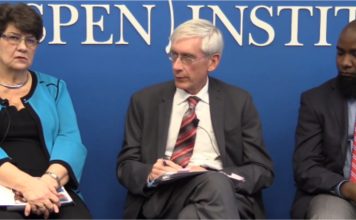

Gov. Tony Evers issued a significantly consequential executive order on April 3, but it flew almost entirely beneath the public’s radar. He created a new “commutation” board to release prison inmates early for the first time in 25 years, even murderers and people serving life prison terms.
And almost no one noticed.
With the stroke of a pen, Evers, for all practical purposes, ended truth-in-sentencing in Wisconsin as we know it, by creating an end run around that law, at least for people who aren’t sex offenders or child abusers. He just short-circuited it for almost everyone else.
“So much for truth-in-sentencing,” a concerned Wisconsin judge told us, sending us an email that the deputy director of state courts sent to all judges in the state that makes it clear the governor is preparing to ramp this up fast. In fact, the applications are already available online. Wisconsin has more than 23,000 prison inmates; liberal-leaning Wisconsin Watch declared that excitement has rippled throughout Wisconsin prisons. The site ran a story that is basically a how-to advice manual for convicted criminals on how to get a commutation.
Who did Evers exempt? Here’s the list of people who don’t qualify, right off his website:
“You must not be seeking a commutation for a conviction of any of the following crimes,” his website says, listing:
- Sexual assault
- Physical abuse of a child
- Sexual exploitation of a child
- Trafficking of a child
- Incest
- Soliciting a child for prostitution
Note that murderers, even first-degree murderers serving life terms, are not prohibited from applying.
Evers’ executive order further says that “application for commutation relating to particularly egregious crimes as determined by the governor, which may include crimes of a sexual nature, or crimes by adults against children, will not be considered by the board.” Our bold. Yet, Evers’ website only lists the above bulleted offenses as being excluded. His executive order also prohibits registered sex offenders or those who would have to register upon release from applying.
The other rules for people to qualify:
- “You must currently be incarcerated in a correctional institution for a Wisconsin conviction with more than 1 year of your incarceration term remaining.”
- “You must have served at least half of your incarceration term or at least 20 years of a life sentence.”
- ”You cannot be currently serving an incarceration term for a sex offense or be required to register as a sex offender (either currently or upon release).”
- “You cannot have any unresolved criminal charges or outstanding warrants in any jurisdiction.”
- “You cannot have any incidents of violent misconduct within the last 5 years of your current incarceration term.“
How Tony Evers’ Action Ends Truth in Sentencing as We Know It, By Doing an End Run Around It
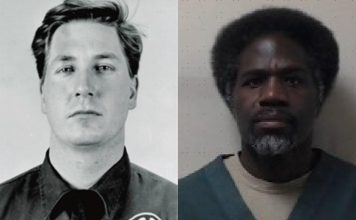
Truth-in-sentencing was a sentencing reform passed during the tenure of former Gov. Tommy Thompson. It ended the old parole, which allowed inmates to get out early. Now, inmates receive a term of confinement behind bars and a term of extended supervision in the community without the possibility of parole. Some may remember that Tony Evers’ former appointee as parole commission chairman freed some of the worst killers in state history a few years ago, causing headlines all over the state. That was different. Those inmates only qualified for parole because they were sentenced before truth-in-sentencing laws went into effect, before 2000. Inmates sentenced after 2000 didn’t have a way to get out early on parole or commutation because commutations were not done, and parole was eliminated by truth-in-sentencing reforms.
Although Evers’ executive order here doesn’t repeal the truth-in-sentencing reform law, it guts it – ie ends it for all practical purposes for many inmates – by creating an end run around it, and allowing many inmates to get out early anyway (through a “commutation”), meaning the original goal, that victims and their families wouldn’t have to worry about inmates getting out early and could be certain that “life meant life” and the sentence meant the sentence, has just ended.
The period of certainty for victims’ families and victims is over in Wisconsin, with a new commutation board in place that can recommend the governor free many inmates, even those convicted after 2000, early.
The state public defender’s office took aim at truth in sentencing in a press release applauding Evers’ new commutation system. “For the first time in a generation, thousands of Wisconsinites written off by the state’s legal system will have a clear path to returning home. The Wisconsin State Public Defenders (SPD) today commended Gov. Tony Evers for establishing a commutation board – a vital strike against the sentencing laws that have long fueled mass incarceration,” they wrote.
That’s a reference to truth-in-sentencing. “Wisconsin has maintained one of the most rigid sentencing structures in the nation for nearly 30 years. The Truth in Sentencing laws that went into effect in 1999 created a system of punishment with no off-ramp, ignoring the possibility of rehabilitation and removing people from the community support and treatment programs that are proven to reduce recidivism,” wrote the public defender.
“This reliance on lengthy prison sentences has left a profound mark on Wisconsin’s communities, particularly communities of color. The newly announced Commutation Advisory Board offers a second look at the products of systemic injustice.”
In other words, it lets convicted killers serving life terms – and other violent criminals – get out early anyway, as long as they aren’t sex offenders, with the governor supplanting the wisdom and decision-making of judges all over the state.
Although Evers is not running again, his lieutenant governor, Sara Rodriguez, is, and she is part of the administration which created the new commutation process. His former lieutenant governor, Mandela Barnes, once said prison reform was “sexy,” and another Democrat governor candidate, Francesca Hong, has indicated support for abolishing prisons completely. Evers infamously promised to reduce the prison population by half.
The email sent to judges throughout the state makes it clear that judges don’t control the outcome anymore. The person applying for the commutation has to “provide notice to the circuit court that oversaw the conviction” and judges “have an opportunity to provide written feedback to the Governor’s Commutation Advisory Board regarding the application, as well as the opportunity to participate in any applicable hearing,” the email says. But judges don’t have the final say anymore.
The governor does, and he’s been on a pardon binge.
“The Commutation Advisory Board reviews eligible commutation applications and makes recommendations to the Governor on who to grant a commutation to and how that person’s sentence should be shortened. Only the Governor can grant a commutation for a Wisconsin conviction,” the website says.
Some of the most shocking elements of Evers’ new process, which creates a “commutation board” that will have the power to overrule elected judges:
- He didn’t exclude murderers or a host of other violent criminals unless they’re registered sex offenders. For most crimes of an “egregious nature,” it’s up to the governor to decide, his executive order says.
- The board will make its recommendations in closed session, kicking the media and public out. The governor has the final say.
- The process leaves it up to (and requires) the inmate to notify the DA and clerk of courts. It’s unclear from the website and application process whether anyone will check that this was actually done. And the executive order adds a loophole: “if they can be found.”
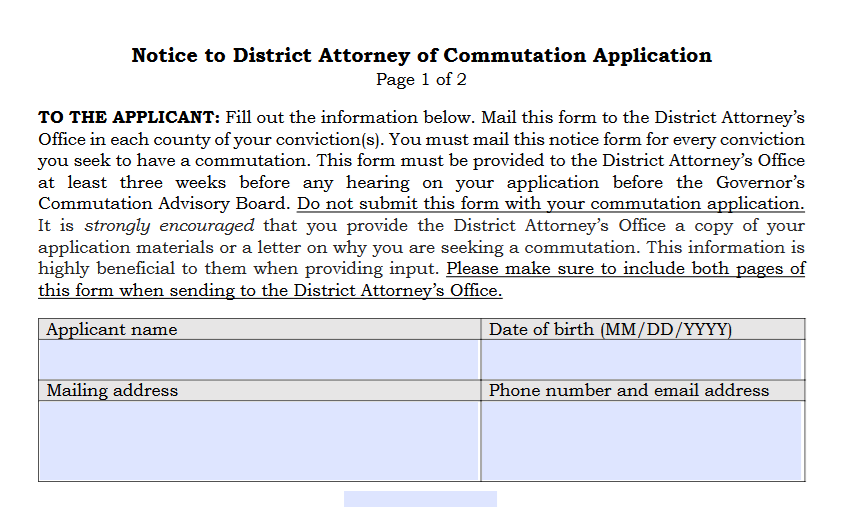 It’s important to remember that these are not pardons. People can only receive pardons after they serve their sentence. Commutations reduce the sentences people are currently serving.
- People with life sentences can get out in 20 years.
- He named his top legal counsel the board chair.
- People without life sentences only have to serve half their time to qualify.
- People who also committed violent acts while behind bars qualify as long as they are more than 5 years ago.
- It doesn’t appear that every commutation will require a hearing, as the application says, “A select group of qualified applicants may be invited to a hearing in front of the Board.”
The application urges inmates to consult with one of three groups:
Legal Action of Wisconsin
Milwaukee Justice Center
Legal Assistance to Incarcerated People Project
Evers Makes a Disingenuous Comparison to Tommy Thompson
In a press release, Evers had the audacity to compare himself to former Gov. Tommy Thompson, who presided over an era of “truth in sentencing” reforms, which represented the end of the old parole. The goal was for victims, their families, and the public to have certainty about how long a person would serve.
Evers’ tenure has been dominated by a series of controversies at the state Department of Corrections, including staffing shortages, lack of required victim notification for paroles, and even a criminal charge against a prison warden.
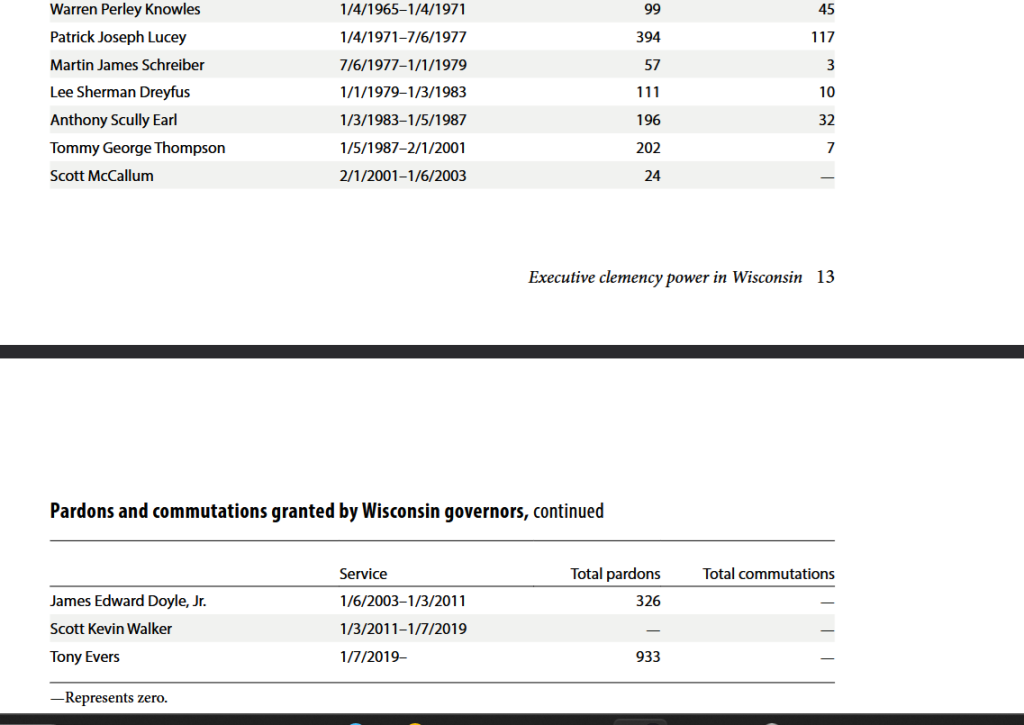
A chart released by the non-partisan Legislative Reference Bureau shows that Thompson only commuted the sentences of SEVEN people during the 14 years he served.
Governors Jim Doyle, Scott McCallum, and Scott Walker issued zero commutations because they held office in the wake of Thompson’s truth-in-sentencing reforms. Until now, as a result, Evers had issued no commutations either, although he’s been on a pardon binge. The far right column represents commutations.
Evers apparently learned nothing from the hue and cry that erupted when his two-time appointee paroled some of the state’s most heinous killers and rapists several years ago.
Previously, “an individual is eligible for a pardon only if at least five years have passed since the completion of his or her criminal sentence,” a 2023 memo from the non-partisan Legislative Reference Bureau says.
“However, in the nineteenth and early twentieth centuries, governors granted pardons to individuals serving terms of imprisonment. In fact, some early governors—such as Governor Alexander Randall (1858–62), with 172 recorded pardons—exclusively granted clemency to individuals housed in state prisons…As another example, in 1955–56, Governor Walter Kohler, Jr., (1951–57) pardoned several persons convicted of murdering (or attempting to murder) their spouses.” In more recent times, Governors Pat Lucey and Gaylord Nelson issued some commutations.
Table of Contents