
The Death of Robin Hood Movie Review: Short version
Interminably boring for at least 40 minutes, this is a revisionist, dark take on Robin Hood better watched at home. Don’t waste a trip to the theater. But it has some interesting themes.
Longer version (I will reveal some plot points but not the ending or the major twist)
Hugh Jackman is no Errol Flynn. He’s not even Kevin Costner. His Robin Hood is a haunted, broken-down man coming face-to face with the realities behind his own mythology. He’s an outlaw, not the legendary guy who robbed the rich (or just the oppressive nobility) to give to the poor.
He’s not a hero as the movie poster reminds you in case you don’t get the point. “NOT A HERO,” it says. This revisionist version of the romanticized Robin Hood character was probably a high-concept studio pitch that went something like, “Kind of like the witch became the protagonist in ‘Wicked,’ let’s do the reverse and make Robin Hood the antagonist. You know, we’re reimagining a famous character!” Good high-concept pitch in theory and based on an old ballad besides. Miserable in reality. Anyway Russell Crowe already played a more brutal Robin. This is him in old age, decrepit, I guess, a man consumed by the weight of his choices when time has run out, played by Hugh Jackman with long scraggly white beard and hair. Frankly, he needs a shower, and I’m surprised there’s not a bird nest in that beard.
It turns out that watching someone being miserable is pretty miserable especially when they’re covered in grime for half the movie, and we never learn what turned them bad.
The first 30 minutes largely consist of an unrecognizable Jackman (Robin Hood), face covered with muck, staring off into the darkness before an orgy of violence erupts. I suppose this is hell on earth. It’s the reality of who Robin Hood really is, the man behind the propaganda (imagine if he’d had the benefit of modern propaganda tools like TikTok! It’s medieval Scotland, so he’s just got word-of-mouth.)
Looking for Jamie Fraser in the Highlands
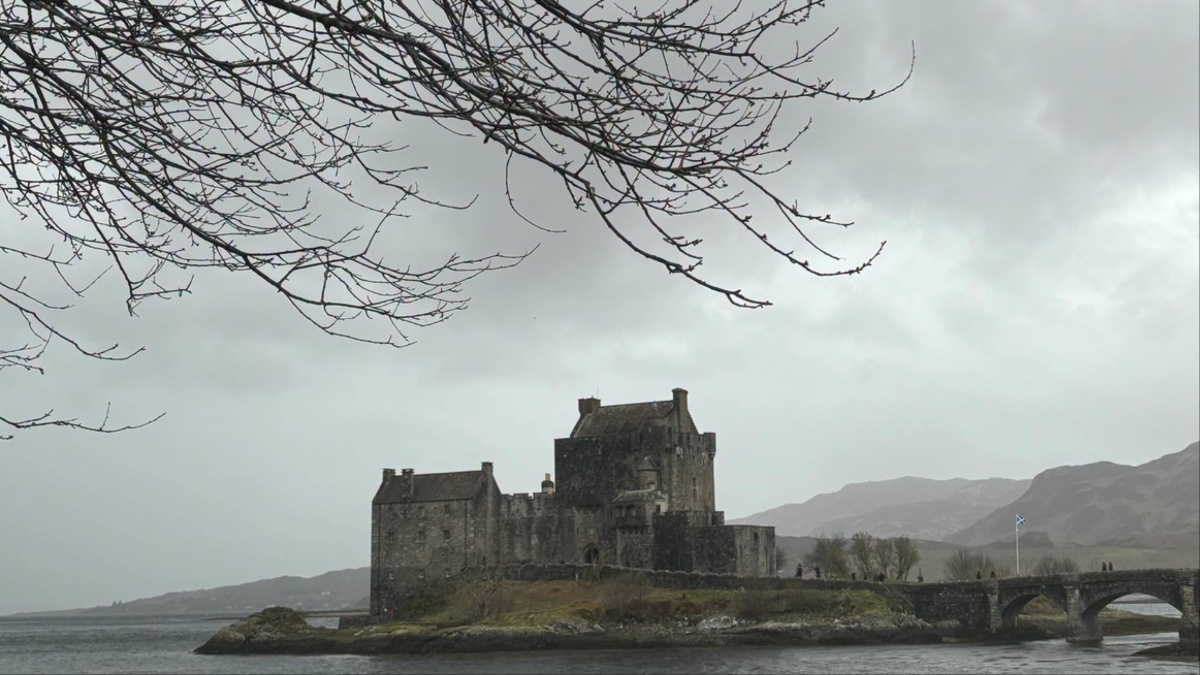
I am fascinated by the Highlands milieu, to be clear. I loved Braveheart, Rob Roy, and Outlander (until it got so dark and twisted.) I liked the latter so much that I went to Inverness and walked around the battlefield of Culloden, where Bonnie Prince Charlie’s forces were decimated, leading to the crushing of Highland culture. Then, I drove through the bleak and desolate beauty of the Highlands (wow those roads are narrow). A castle emerged through the mist. I ended up on a Celtic enclave, the Isle of Skye, where my ancestors are from. I didn’t see a single guy who looked like Liam Neeson (Rob Roy) or Mel Gibson (Braveheart). Or Hugh Jackman. Not that I was looking or anything. But the landscape didn’t disappoint.
But this movie made the austere mysticism of the Highlands into a grim and depressing slog. They even made Hugh Jackman unattractive, which was sort of the point I suppose (you know, the romantic hero reimagined, so let’s get an actual romantic hero and reimagine him!) But for at least half of the movie, there was no one to root for. Heck, I couldn’t even understand half of what they were saying because of the thick Scottish brogue.
We then see Robin Hood, masquerading as a man named Randalf, waking up on an island in an abbey presided over by a gentle and spiritual nun. He is darkness, she is light and now heaven on earth is unveiled, and the power of redemption becomes tantalizingly possible. Herein, we get the interesting themes: can there be good in a monster? Could you love or forgive the murderer of your loved ones? Can an outlaw forgive himself when face-to-face with the realities of who he was?
Deeper Themes
These are deep themes, and Robin Hood, surrounded by such essential goodness (including the innocence of a little girl), starts to show hope and goodness as slivers of humanity emerge beneath the grime. He reveals that he couldn’t even remember why he kept killing or who he killed by the end of it, just that his violence begat an endless cycle of the same as families sought revenge.
That was briefly interesting. Unfortunately lengthy stretches of abbey life consist of watching the outlaw doing mundane things. It’s just not terribly interesting to watch someone hobble around, skin a rabbit, ramble about philosophy to a leper and so forth.
I won’t give away the hook or the ending. But suffice it to say that the ending was as grim as the beginning, abandoning the redemption arc, at least on earth, that I had found somewhat interesting.
Can a monster be redeemed? How far can the desire to heal and forgiveness stretch? Unfortunately, these limits are tested yet not fully explored.
If you’re expecting an action movie, don’t. The pacing is as thick and slow rolling as a Scottish fog. It’s a character study.
The director is Michael Sarnoski, who made Quiet Place 1 and something called Pig. That movie was literally about Nicolas Cage searching for a foraging pig which sounds like a card from the board game Balderdash (who greenlights this stuff?)
Look, I get that the Middle Ages were harsh. And I’m all for revisionism and reality. But I’d rather see Jamie Fraser in a kilt or Errol Flynn in green tights, I guess. Reality is dark enough in the world these days.
Table of Contents